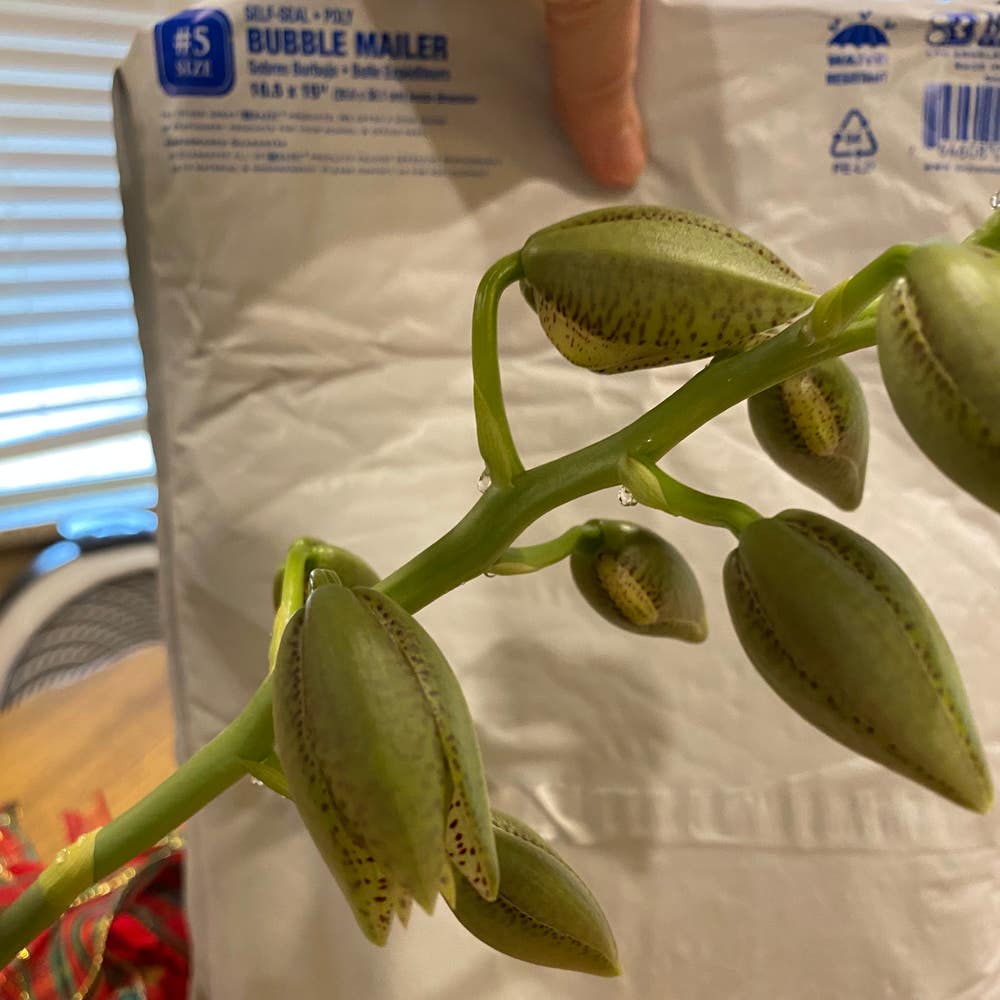
Best Soil Potting Mix for Catasetum 'Susan Fuchs'
Catasetum 'Susan Fuchs'
By the Greg Editorial Team
Apr 21, 2024•3 min read
This article was created with the help of AI so we can cover more plants for you. May contain errors. See one? Report it here.
Ensure your Catasetum 'Susan Fuchs' thrives 🌱 with this definitive guide to the perfect potting mix! 🌼
- Mold signals overwatering: Increase airflow and consider fungicide if persistent.
- Homemade mix: Bark, charcoal, perlite, and sphagnum moss for balance.
- Commercial mix must-haves: Drainage, aeration, and pasteurization for health.
Spotting Trouble: When Your Catasetum's Soil Goes Bad
🚩 Telltale Signs of Soil Distress
Mold and fungal foes in your Catasetum 'Susan Fuchs' soil are like red flags at a bullfight—they demand immediate attention. Musty smells or visible mold indicate that your soil is too wet, and your orchid is not happy about it. If the soil feels like a soggy sponge, it's a cry for help from the roots, which are likely suffocating from lack of air.
🛠 Quick Fixes for Soil Emergencies
Banishing Mold
At the first sign of mold, cut back on watering and crank up the airflow around your plant. If the mold is more persistent than a door-to-door salesman, scoop out the affected soil and consider a fungicide. For a full-blown mold takeover, it's time to repot with a sterile soil mix.
Dealing with Waterlogged Soil
Aeration is like CPR for your waterlogged soil. Mix in materials like perlite or coarse sand to give those roots some breathing room. Remember, roots need oxygen just as much as water, so ensure your potting mix isn't suffocating them. If you've accidentally created a mini swamp, it's time to intervene before your Catasetum needs a lifeboat.
Crafting the Ultimate Homemade Soil Mix
🌱 The Building Blocks of a Thriving Mix
Bark is the backbone of your Catasetum 'Susan Fuchs' soil mix, providing essential structure. Charcoal acts as a purifier, warding off impurities and keeping the mix fresh. Perlite is the aeration ace, ensuring your orchid’s roots have room to breathe. And sphagnum moss? It's the hydration hero, keeping moisture levels just right without waterlogging your precious plant.
🌿 Mixing It Right: Recipes for Success
To tailor the mix to your Catasetum 'Susan Fuchs', start with a basic recipe: equal parts bark, perlite, and sphagnum moss, with a dash of charcoal. This blend should feel like a well-wrung sponge—moist, but not drenched. Over time, observe your orchid's response. If the mix seems too dense, add more perlite. If it's too dry, increase the sphagnum moss. It's about finding that sweet spot where your orchid thrives.
Choosing the Best Commercial Potting Mix
🏷️ What to Look for on the Label
When you're scanning labels for your Catasetum 'Susan Fuchs', think 'drainage and aeration'. Perlite, orchid bark, and charcoal are the dream team here. They're like the bouncers at the club, keeping soggy soil at bay.
Labels can be tricky, but here's the gist: peat moss or coco coir should be making an appearance for that light, airy feel. And if you see words like 'pasteurized' or 'sterilized', that's a green light—these mixes are primed to fend off unwanted fungi and pathogens.
🌿 Top Picks for Catasetum 'Susan Fuchs'
A few commercial mixes that get the nod for Catasetum 'Susan Fuchs' include Orchid Mix and Aroid Mix. They've got the balance of moisture and airflow down pat. If you're leaning green, Nature's Care Organic & Natural Potting Mix is a solid choice, marrying eco-friendliness with plant perks.
Remember, the right mix might still need a personal touch. Don't be afraid to tweak it. Your Catasetum is unique, and sometimes it demands a mix as individual as it is.
⚠️ Safety First
This content is for general information and may contain errors, omissions, or outdated details. It is not medical, veterinary advice, or an endorsement of therapeutic claims.
Always consult a qualified healthcare professional before using any plant as food, medicine, or supplement.
Never eat any plant (or feed one to pets) without confirming its identity with at least two trusted sources.
If you suspect poisoning, call Poison Control (800) 222-1222, the Pet Poison Helpline (800) 213-6680, or your local emergency service immediately.
Spotted an error? Please report it here.
Craft the ultimate potting mix for your Catasetum 'Susan Fuchs' and count on Greg 🌿 to guide you through personalized watering reminders for a flourishing orchid.