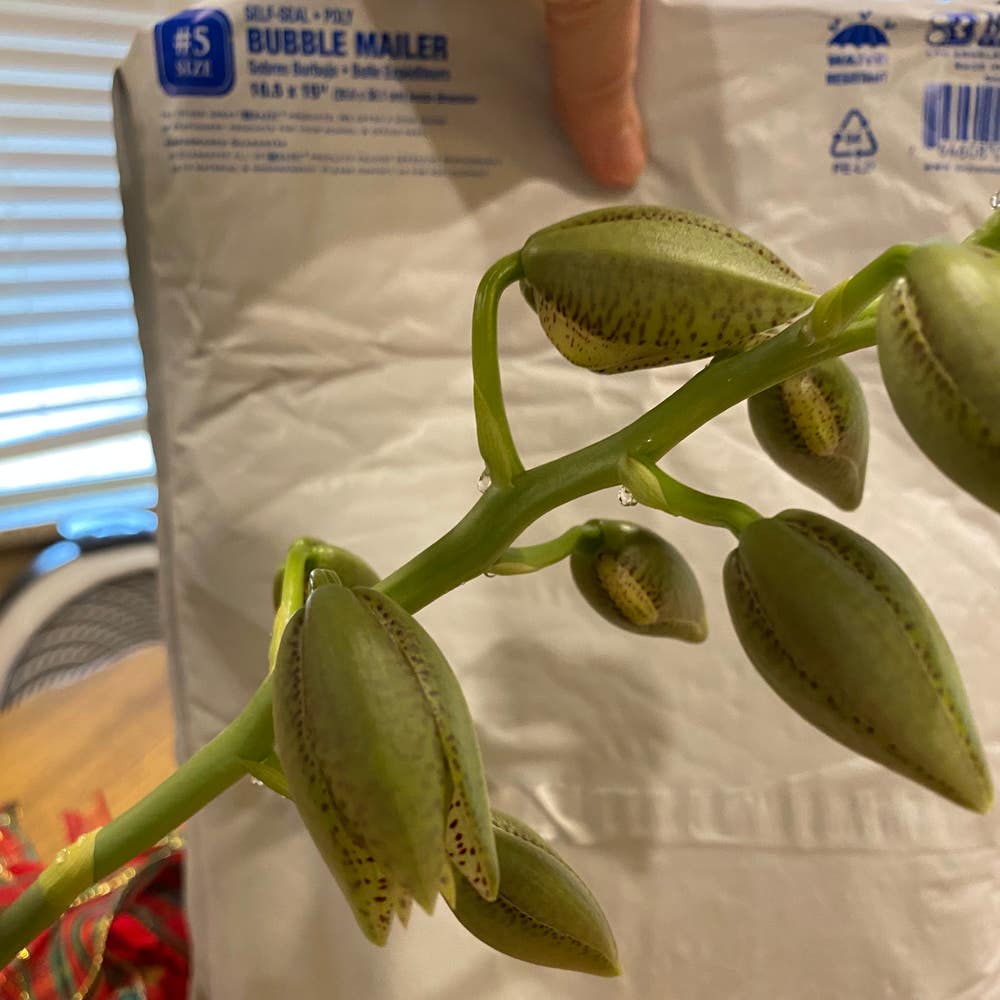
Full Grown Size of Catasetum
Catasetum 'Susan Fuchs'
By the Greg Editorial Team
Jan 06, 2025•5 min read
This article was created with the help of AI so we can cover more plants for you. May contain errors. See one? Report it here.
Unlock the secrets to thriving Catasetum orchids 🌱 by mastering their size, growth, and care for a stunning garden display!
- 🌱 Catasetum orchids grow 1 to 3 feet tall, depending on species and conditions.
- 🌞 Optimal light and humidity are crucial for healthy growth and size.
- ✂️ Pruning encourages new growth and helps manage height and spread effectively.
Mature Height and Spread
Height 🌱
Catasetum orchids vary significantly in height, typically ranging from 1 to 3 feet, depending on the species.
- The 'Giant' variety can reach impressive heights of up to 3 feet, making it a standout in any collection.
- In contrast, the 'Dwarf' species usually stays under 1 foot, perfect for those with limited space.
Spread 🌿
When it comes to spread, Catasetum orchids generally range from 1 to 2 feet.
Several factors influence this spread:
- The size and number of pseudobulbs play a crucial role in determining how wide the plant will grow.
- Additionally, the growth habit—whether the plant tends to clump or spread—can significantly affect its overall spread.
Understanding these dimensions can help you choose the right Catasetum for your space and care routine. As you consider your options, keep in mind how height and spread will impact your growing environment.
Next, let’s explore the growth rate and time it takes for these fascinating orchids to reach their full size.
Growth Rate and Time to Full Size
🌱 Growth Rate
Catasetum orchids typically exhibit a moderate to fast growth rate, which can vary based on specific conditions. Factors such as species traits and environmental conditions play a significant role in determining how quickly these plants thrive.
⚖️ Factors Affecting Growth Rate
- Species-Specific Traits: Different species have unique growth patterns that influence their speed.
- Environmental Conditions: Light, temperature, and humidity levels can either boost or hinder growth.
⏳ Timeline for Growth
Under optimal conditions, Catasetum orchids can reach their full size within 2 to 4 years. This timeline can fluctuate depending on various factors.
📅 Factors Influencing Growth Timeline
- Species Type: Some species naturally grow faster than others.
- Growing Conditions: Adequate light, temperature, and humidity are crucial for timely growth.
Understanding these growth dynamics can help you nurture your Catasetum effectively. By providing the right conditions, you can enjoy the beauty of these orchids as they flourish over the years.
Next, we’ll explore how size variability among different Catasetum species can impact your gardening experience.
Size Variability Among Species
🌱 Factors Contributing to Variability
Catasetum orchids showcase fascinating size variability, primarily due to genetic differences among species. These genetic traits dictate not only the overall size but also the growth habits that each species exhibits.
Environmental adaptations also play a crucial role in size changes. For instance, species that thrive in more challenging conditions may develop smaller sizes as a survival mechanism.
📏 Examples
The 'Giant' Catasetum is a standout, known for its impressive stature and robust growth. It can reach heights of up to 3 feet, making it a striking addition to any collection.
In contrast, the 'Dwarf' variety typically remains under 1 foot, making it perfect for those with limited space.
Other species, such as Catasetum fimbriatum and Catasetum tenebrosum, fall somewhere in between, offering a range of sizes to suit different preferences and environments.
Understanding these variations can help you choose the right Catasetum for your growing conditions and space constraints.
As we explore the influence of growing conditions next, you'll see how light, temperature, and humidity can further impact these size differences.
Influence of Growing Conditions
💡 Light
Catasetum orchids thrive in bright, indirect light. This optimal lighting is crucial for their growth; insufficient light can lead to stunted growth and smaller plants.
🌡️ Temperature
Maintaining the right temperature is essential for these orchids. The ideal range is between 70°F to 85°F (21°C to 29°C), as extreme temperatures can slow growth or even reduce the size of the plants.
💧 Humidity
Humidity plays a significant role in the health of Catasetum orchids. They prefer humidity levels between 50% to 70%, and low humidity can result in smaller pseudobulbs and an overall reduction in size.
🌱 Nutrient Availability
Balanced fertilization is key to enhancing the size of Catasetum orchids. Nutrient deficiencies can lead to smaller growth and poor health, so ensuring they receive the right nutrients is vital for robust development.
Understanding these growing conditions can significantly impact the size and health of your Catasetum orchids. By providing the right environment, you can encourage them to reach their full potential.
Size Control Techniques
Pruning Methods ✂️
Pruning is essential for maintaining the health and size of your Catasetum. One effective technique is removing older pseudobulbs, which encourages new growth and keeps the plant vibrant.
Timing is crucial; the best moment to prune is after flowering. This allows the plant to recover and focus its energy on new growth.
Container Size 🪴
The size of the container plays a significant role in the growth of your Catasetum. Smaller containers can restrict growth and limit the size of your plant, while larger containers provide ample space for root systems to expand.
Choosing the right container size can lead to healthier plants with more robust growth.
Managing Height and Spread 📏
Managing the height and spread of your Catasetum involves a few straightforward methods. Regularly pruning flower spikes and leaves helps control the overall size and encourages a bushier appearance.
Additionally, adjusting light exposure can influence growth direction. Providing the right amount of light can help your plant grow more evenly.
Seasonal Considerations 🌱
Timing your size control activities is key to success. Early spring is the ideal time for pruning and repotting, as the plant is gearing up for its growing season.
Throughout the growing season, keep an eye on your Catasetum's growth. Monitoring allows for timely adjustments, ensuring your plant remains healthy and well-sized.
With these techniques, you can effectively manage the size of your Catasetum, promoting a thriving and beautiful plant.
⚠️ Safety First
This content is for general information and may contain errors, omissions, or outdated details. It is not medical, veterinary advice, or an endorsement of therapeutic claims.
Always consult a qualified healthcare professional before using any plant as food, medicine, or supplement.
Never eat any plant (or feed one to pets) without confirming its identity with at least two trusted sources.
If you suspect poisoning, call Poison Control (800) 222-1222, the Pet Poison Helpline (800) 213-6680, or your local emergency service immediately.
Spotted an error? Please report it here.
Unlock the full potential of your Catasetum orchids 🌿 with Greg's tailored care reminders and tips, ensuring they thrive and reach their ideal size!