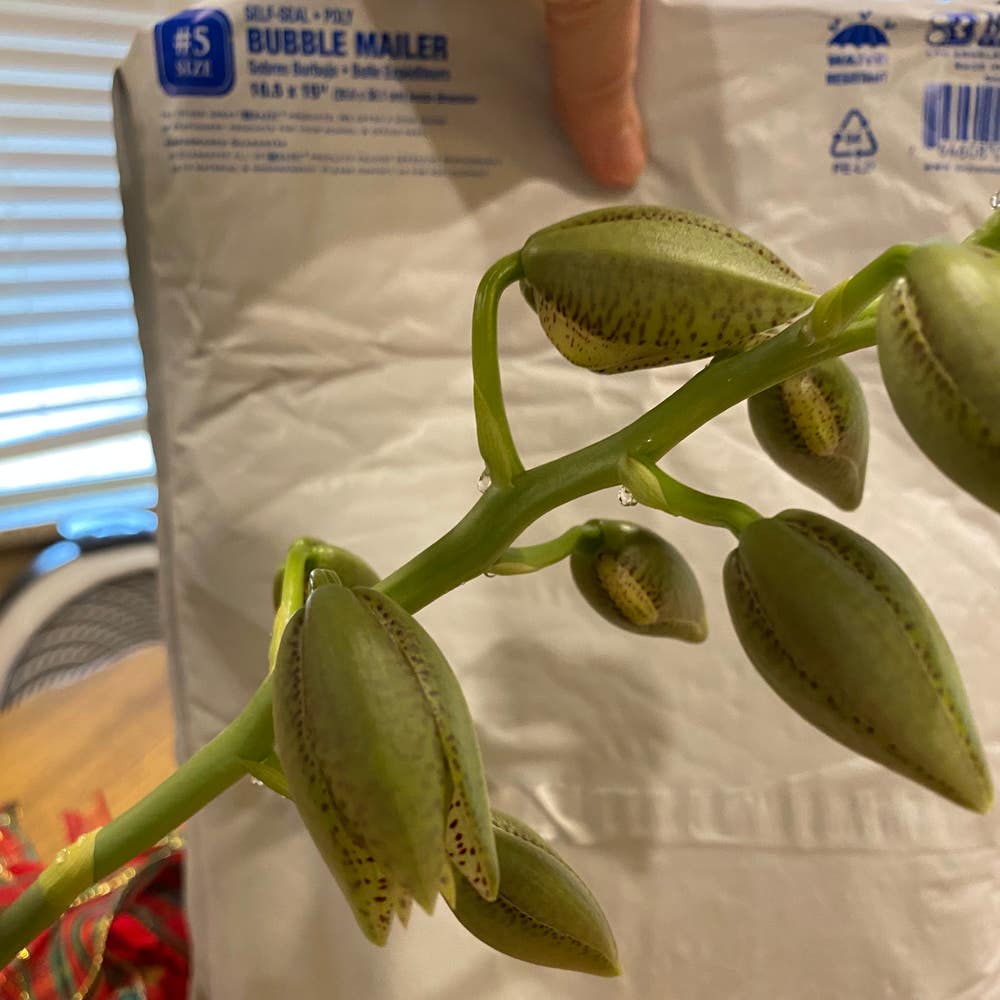
What Temperature Does My Catasetum 'Susan Fuchs' Need?
Catasetum 'Susan Fuchs'
By the Greg Editorial Team
Apr 21, 2024•4 min read
This article was created with the help of AI so we can cover more plants for you. May contain errors. See one? Report it here.
Nurture vibrant Catasetum 'Susan Fuchs' blooms 🌡️ by mastering their ideal temperature range!
- Ideal range 70-85°F (21-29°C) for thriving Catasetum 'Susan Fuchs'.
- Consistent temps signal bloom time; avoid drafts and swings.
- Monitor humidity around 50% for temperature balance and health.
Hitting the Sweet Spot: Ideal Temperature Range for 'Susan Fuchs'
♨️ The Goldilocks Zone: Pinpointing the Perfect Temperature
Catasetum 'Susan Fuchs' thrives in a temperature range of 70-85°F (21-29°C). This is the sweet spot where the plant is most content, avoiding the extremes that trigger stress.
Keeping the Heat Just Right: Tips for Temperature Control
Consistency is your best friend when it comes to temperature control. Avoid placing your 'Susan Fuchs' near drafty windows or heat sources that could cause sudden shifts.
Curtains and blinds are simple tools that can shield your plant from intense sunlight or insulate against cold.
Consider a small fan or space heater to maintain a stable temperature, especially in areas prone to fluctuations.
For those embracing technology, smart home devices can be a game-changer, automating climate control to keep conditions ideal.
Remember, your 'Susan Fuchs' doesn't want to live in a sauna or an igloo. It's all about finding that perfect balance.
When Things Heat Up: Recognizing Temperature Stress
🌡️ Telltale Signs: Spotting the Symptoms of Temperature Stress
Wilting leaves and discoloration are the drama queens of temperature stress, signaling your Catasetum 'Susan Fuchs' is in a horticultural hot seat. If the foliage starts looking like it's been sunbathing too long—think crispy, dry edges—it's time to reassess your plant's location. Bleached spots or a leathery texture are the plant's version of waving a white flag at the sun's relentless rays.
🌋 Hot and Bothered: What Causes Catasetum 'Susan Fuchs' to Sweat
Your 'Susan Fuchs' isn't trying to set a trend with brown spots—it's heat stress, as uncomfortable as a fur coat in a heatwave. Browning stems aren't a new aesthetic; they're a cry for help, a sign of cold damage. When it comes to temperature, consistency is key; avoid sudden fluctuations that can send your orchid into shock. Drafts are the silent saboteurs of stable temperatures, so keep your plant away from erratic airflows. Remember, your plant's not being dramatic—these symptoms are its way of telling you it's time to tweak the thermostat.
Flower Power and Degrees: Temperature's Role in Blooming
🌡️ Timing is Everything: How Temperature Influences Flowering Cycles
For the Catasetum 'Susan Fuchs', temperature is the maestro conducting the orchestra of flowering. Ideal warmth cues the plant to shift from green growth to its vibrant floral performance. This transition isn't just about hitting a specific degree on the thermometer; it's about maintaining a consistent temperature range that signals to the plant it's showtime.
🌞 Warmth and Wonders: Ensuring Ideal Conditions for Spectacular Blooms
To achieve a bloom worthy of bragging rights, your 'Susan Fuchs' requires a steady climate. Think of it as keeping your plant in a cozy bubble where the thermostat is fixed on its happy place. Avoid drafts and sudden temperature swings that could throw your plant off its rhythm. And remember, while warmth is crucial, it's part of a broader ensemble that includes light and humidity, all working in harmony to set the stage for those spectacular blooms.
Side Note: A Quick Touch on Humidity
💦 Humidity's Supporting Role in Temperature Balance
Humidity is the unsung hero in the Catasetum 'Susan Fuchs' saga. It's not the headliner like temperature, but its role is pivotal.
🕺 The Humidity-Temperature Tango
Warm air holds more moisture. As you tweak the thermostat, remember to adjust humidity too. It's a dance, and you're the choreographer.
🕵️♂️ Hygrometer: Your Secret Weapon
Guesswork won't cut it. A hygrometer is your go-to gadget for keeping tabs on moisture levels. It's the reliable informant in your plant care toolkit.
💧 Humidity's Hidden Effects
Too low, and you'll spot crispy leaf tips. Too high, and you're inviting a fungal fiesta. Aim for that sweet spot, around 50% humidity, to keep your 'Susan Fuchs' thriving.
🌦 Seasonal Shifts and Indoor Climates
As seasons change, so does indoor humidity. Stay vigilant. Group plants or use a humidifier to stabilize your microclimate and prevent your 'Susan Fuchs' from throwing a fit.
⚖️ The Balancing Act
It's all about equilibrium. Keep the air from turning into a dry desert or a steamy swamp. Your 'Susan Fuchs' will thank you with lush growth and vibrant blooms.
⚠️ Safety First
This content is for general information and may contain errors, omissions, or outdated details. It is not medical, veterinary advice, or an endorsement of therapeutic claims.
Always consult a qualified healthcare professional before using any plant as food, medicine, or supplement.
Never eat any plant (or feed one to pets) without confirming its identity with at least two trusted sources.
If you suspect poisoning, call Poison Control (800) 222-1222, the Pet Poison Helpline (800) 213-6680, or your local emergency service immediately.
Spotted an error? Please report it here.
Keep your Catasetum 'Susan Fuchs' thriving 🌡 with Greg's personalized reminders, ensuring a perfect bloom-friendly climate without the stress.