What Does It Mean When Catasetum 'Susan Fuchs' Blooms?
Catasetum 'Susan Fuchs'
By the Greg Editorial Team
Apr 21, 2024•4 min read
This article was created with the help of AI so we can cover more plants for you. May contain errors. See one? Report it here.
Unlock the bloom code 🌸 for Catasetum 'Susan Fuchs' and elevate your orchid care savvy!
- Blooms late spring to fall after reaching maturity.
- 🌞 Bright, indirect light and 65-75°F are ideal for flowers.
- Rest period and consistent watering key for blooming cycle.
When to Expect Fireworks: Timing Catasetum 'Susan Fuchs' Blooms
🌸 Seasonal Blooming Habits
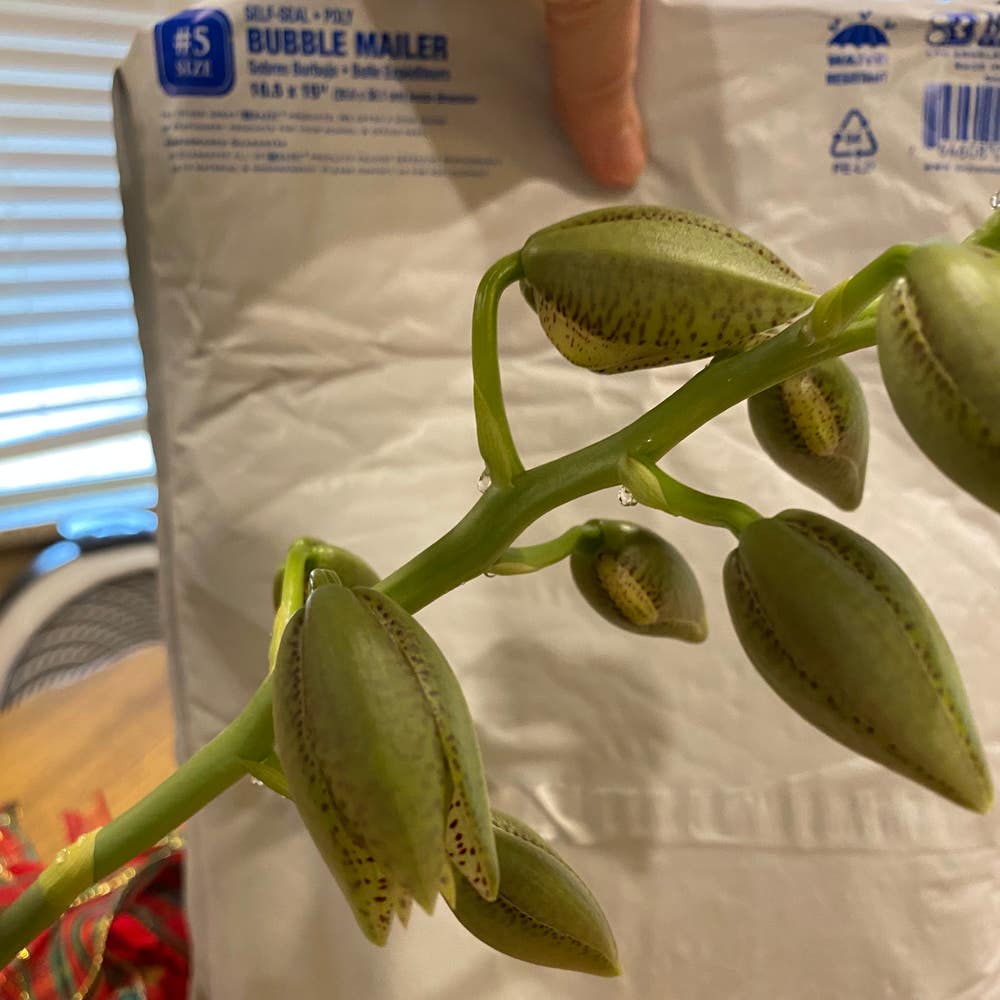
Typical blooming seasons for Catasetum 'Susan Fuchs' vary, with most action happening from late spring to fall. This is when your orchid will strut its stuff, provided you've been a good plant parent. To catch the pre-show, look for new growth or a spike; that's your cue the main event is near.
🕰 Age and Maturity: When Will Your Orchid Show Its Colors?
Don't expect your Catasetum 'Susan Fuchs' to be an overnight sensation. It needs to hit a certain maturity before it dazzles you with blooms. Youngsters are just warming up, so patience is key. Once mature, they'll likely bloom annually, but remember, plants are as unpredictable as a plot twist in a telenovela.
Setting the Stage for Spectacular Blooms
💡 Light: The Spotlight on Blooming
Bright, indirect light is the golden ticket for coaxing Catasetum 'Susan Fuchs' into bloom. This orchid thrives under conditions that mimic the dappled sunlight of its natural habitat. East-facing windows are ideal, as they provide the morning sun without the harsh midday rays. If you're using artificial lighting, full-spectrum bulbs are your best bet, set to follow the natural rhythm of day and night.
🌡️ Temperature: The Warmth That Wakes the Blooms
Temperature is a critical trigger for blooming in Catasetum 'Susan Fuchs'. Orchids of this variety favor a cozy range between 65-75°F (18-24°C). A slight dip in temperature at night can mimic their natural environment and encourage flower development. However, avoid drastic temperature swings; consistency is key to prevent stress on the plant.
🛌 Rest Period: The Quiet Before the Bloom
Every star needs a break, and Catasetum 'Susan Fuchs' is no exception. After the growth season, a rest period is essential. During this time, reduce watering and keep the plant in a cooler spot. This simulates the orchid's natural cycle and prepares it for the next round of flowering. Think of it as a winter's nap that recharges the plant for a springtime spectacle.
Feeding for Flowers: Fertilization and Watering
💪 The Right Food at the Right Time
To ignite the blooming potential of your Catasetum 'Susan Fuchs', think of fertilizers as the plant's protein shake. A balanced water-soluble fertilizer, or an organic option like manure or bonemeal, provides a slow-release feast. Apply during the growing season, but ease off in winter—it's their time to chill.
🌊 Watering Rhythms for Blooming
Your orchid's thirst for water needs to match the seasons. Consistency is key. In the summer, water more to combat the heat, but reduce the amount when it's cooler. If your tap water is high in minerals, opt for filtered or rainwater to prevent leaf browning. Remember, too much water can dilute the fertilizer, too little can stress the plant. Keep the soil moist but not soggy, and always allow the topsoil to dry out a bit between waterings.
Troubleshooting: When Blooms Are Bashful
🕵️ Common Issues That Prevent Blooming
In the world of Catasetum 'Susan Fuchs', blooms can be as elusive as a good hair day in high humidity. If your orchid is playing hard to get, it's time to play plant detective. Lighting is often the first suspect; this orchid thrives in bright, indirect sunlight. Too much shade, and it's a no-show; too much sun, and it's sunburn city. Next, check your watering habits. Overwatering can drown its blooming ambitions, while underwatering leaves it too thirsty to strut its stuff.
🌴 Environmental Fine-Tuning
If your orchid's environment feels more like a storage closet than a tropical paradise, it's time for an intervention. Temperature is a big deal – Catasetum 'Susan Fuchs' likes it warm, but not too warm. Think cozy spring day, not scorching summer afternoon. And don't forget about airflow; stagnant air is about as helpful as a screen door on a submarine. Pests, those uninvited guests, can also throw a wrench in the works. Keep an eye out for aphids and spider mites, and show them the door with prompt eviction.
Remember, your Catasetum 'Susan Fuchs' isn't trying to give you the silent treatment. With a little tweaking of its care routine, you'll be on your way to a blooming spectacle that'll have you grinning like a Cheshire cat.
⚠️ Safety First
This content is for general information and may contain errors, omissions, or outdated details. It is not medical, veterinary advice, or an endorsement of therapeutic claims.
Always consult a qualified healthcare professional before using any plant as food, medicine, or supplement.
Never eat any plant (or feed one to pets) without confirming its identity with at least two trusted sources.
If you suspect poisoning, call Poison Control (800) 222-1222, the Pet Poison Helpline (800) 213-6680, or your local emergency service immediately.
Spotted an error? Please report it here.
Embrace the thrill of witnessing your Catasetum 'Susan Fuchs' bloom by nurturing it with Greg's tailored care reminders for a flawless flowering season 🌸.