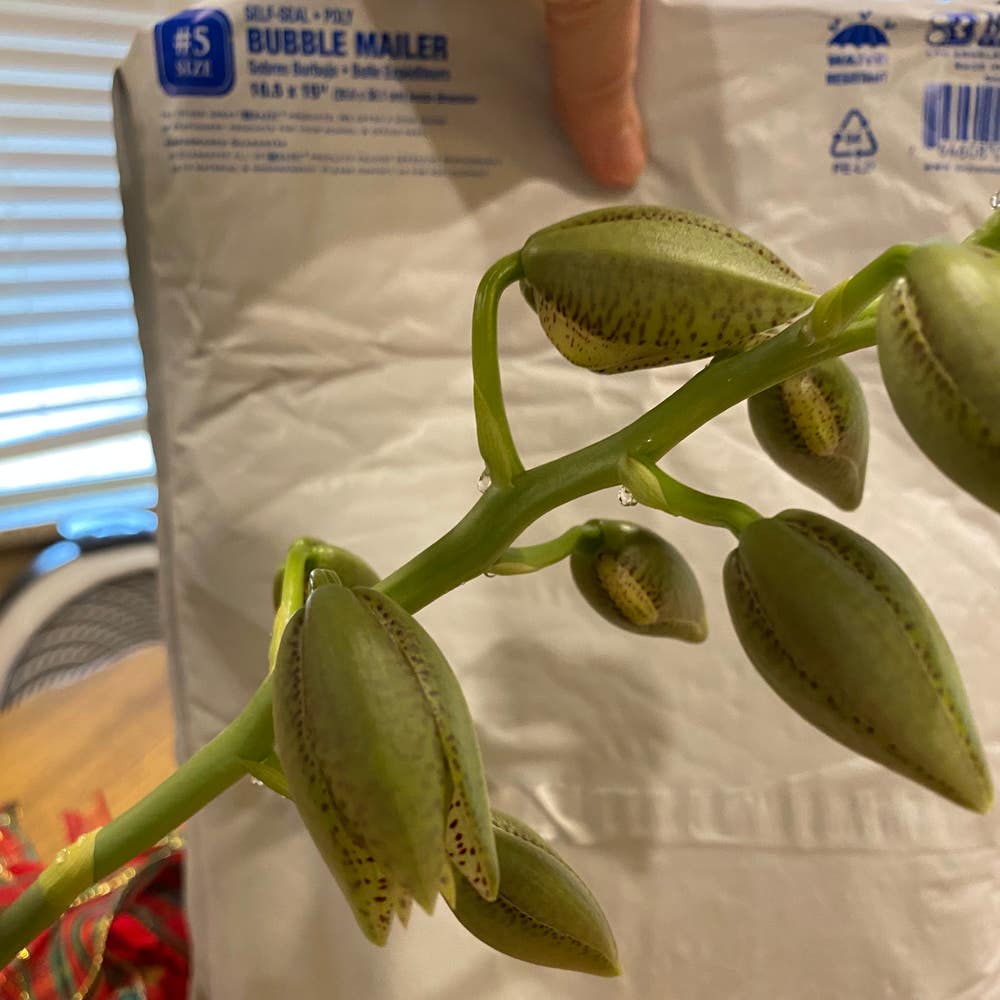
Choosing Fertilizer For My Catasetum 'Susan Fuchs'
Catasetum 'Susan Fuchs'
By the Greg Editorial Team
Apr 21, 2024•3 min read
This article was created with the help of AI so we can cover more plants for you. May contain errors. See one? Report it here.
Nurture vibrant Catasetum 'Susan Fuchs' blooms 🌸 with the ideal NPK fertilizer balance—find out how!
- NPK ratio is key for Catasetum 'Susan Fuchs' growth and blooms.
- Organic vs. Synthetic: Choose based on nutrient release and soil health.
- Monitor fertilization to prevent over-fertilization symptoms and plant stress.
Picking the Perfect Fertilizer
💡 Understanding the NPK Ratio
NPK stands for nitrogen (N), phosphorus (P), and potassium (K), the three key nutrients in fertilizers. The numbers represent their percentage by weight. For Catasetum 'Susan Fuchs', a balanced NPK ratio is crucial for vibrant growth and blooms. While some suggest a high-nitrogen mix, others advocate for less phosphorus. The truth? Your orchid thrives on a balanced diet. An NPK ratio of 13-3-15 or 7-5-6 can be the sweet spot, fostering both foliage and flowers.
🌱 Organic vs. Synthetic: Making the Right Choice
Organic fertilizers release nutrients slowly, improving soil health over time. They're like a slow-cooked meal for your orchid, packed with secondary nutrients and micronutrients. Synthetic options, on the other hand, offer a quick fix with precise NPK ratios. They're the fast food of plant nutrition—efficient, but potentially harsh. Choose organic for a sustainable approach or synthetic for targeted, rapid results. Remember, the health of your Catasetum 'Susan Fuchs' depends on the quality of its diet.
Timing is Everything: When to Fertilize
🌱 Growth Cycle Awareness
Fertilizing your Catasetum 'Susan Fuchs' isn't a set-it-and-forget-it deal. Tailor your approach to its growth stages. During the growth phase, it's gobbling up nutrients to bulk up and bloom. This is when your fertilization game should be strong.
🍂 Seasonal Adjustments
As the seasons turn, so should your fertilization strategy. When your orchid enters dormancy, it's time to dial back. Think of it as a plant's hibernation; it's not the time for a nutrient feast. Reduce your fertilization frequency to match your orchid's slowed pace.
Serving the Right Amount: Fertilization Dosage and Techniques
🌿 Measuring Up: How Much Fertilizer Does Your Orchid Need?
When it comes to dosage, less is often more for your Catasetum 'Susan Fuchs'. Start with half the recommended dose of a general plant fertilizer, and observe your orchid's response. For orchid-specific fertilizers, follow the manufacturer's guidelines. Adjust the quantity gradually, aiming for lush, green growth without tipping into over-fertilization territory.
🌱 Application Mastery
Foliar feeding versus root zone application is a hot debate among orchid enthusiasts. For Catasetum 'Susan Fuchs', foliar feeding can provide a quick nutrient boost, but make sure to do this during the cooler parts of the day to avoid leaf burn. Meanwhile, applying fertilizer at the root zone ensures a more sustained uptake of nutrients. The verdict? Use a combination of both methods for a balanced approach to fertilization.
Keeping an Eye Out: Over-Fertilization and Plant Health
🚨 Spotting Trouble: Symptoms of Over-Fertilization
Yellowing leaves or browning at the edges? Your Catasetum 'Susan Fuchs' might be crying out from a nutrient overdose. Crusty mineral deposits on the soil's surface are a dead giveaway of too much fertilizer love. If the leaves look like they've been through a desert storm, dial back on the plant food, stat.
🛠️ The Recovery Plan
First, stop the fertilizer—your orchid isn't at an all-you-can-eat buffet. Flush the soil with water to wash away the excess—think of it as a detox for your plant. Ensure good drainage; soggy soil will only add insult to injury. Hold off on the next feed until your orchid shows signs of forgiveness in the form of new growth. Going forward, embrace the less-is-more philosophy and keep a close watch. Your orchid will thank you with vibrant blooms.
⚠️ Safety First
This content is for general information and may contain errors, omissions, or outdated details. It is not medical, veterinary advice, or an endorsement of therapeutic claims.
Always consult a qualified healthcare professional before using any plant as food, medicine, or supplement.
Never eat any plant (or feed one to pets) without confirming its identity with at least two trusted sources.
If you suspect poisoning, call Poison Control (800) 222-1222, the Pet Poison Helpline (800) 213-6680, or your local emergency service immediately.
Spotted an error? Please report it here.
Ensure your Catasetum 'Susan Fuchs' thrives 🌿 with Greg's tailored fertilization reminders, adapting to growth stages and seasons for perfect blooms.