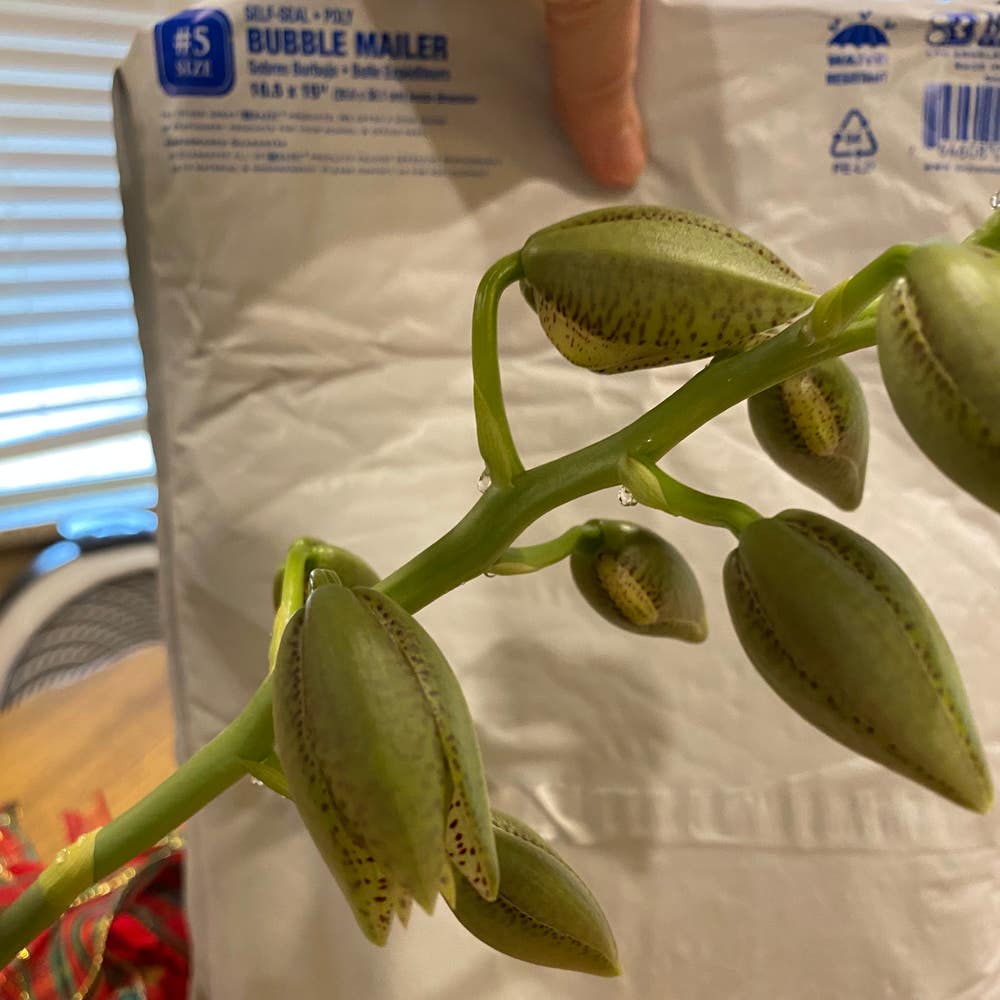
Why Are My Catasetum 'Susan Fuchs' Leaves Curling?
Catasetum 'Susan Fuchs'
By the Greg Editorial Team
Apr 21, 2024•4 min read
This article was created with the help of AI so we can cover more plants for you. May contain errors. See one? Report it here.
Unravel the mystery of curling Catasetum leaves 🍃 and reclaim your orchid's elegance with expert care tips.
- Temperature, humidity, and light directly impact leaf curling.
- Nutrients and watering are key to preventing curling.
- Pests and diseases require immediate treatment to stop curling.
Pinpointing the Culprits Behind Leaf Curling
🌡️ Temperature and Humidity Troubles
Extreme temperatures and humidity levels are silent killers for Catasetum 'Susan Fuchs'. Leaves curling could be a distress signal for more moisture or a plea to escape a dry, hostile environment. Keep the humidity steady; think comfortable, not extreme. Avoid temperature fluctuations—consistent warmth is key, so steer clear of drafty spots that could send your plant into shock.
🚰 The Watering Balancing Act
Overwatering and underwatering both lead to leaf curling drama. A heavy pot signals a waterlogged situation, while a light one hints at thirst. Wait for the top inch of soil to dry before watering again, and when you do, water deeply. During growth spurts, keep the soil moist but not soggy. In cooler months, ease up on the hydration.
🌞 Light Exposure: Finding the Sweet Spot
Light is like a plant's personal trainer—too much and your Catasetum 'Susan Fuchs' might curl up in defense, too little and it'll stretch out, desperate for more. Aim for bright, indirect sunlight and rotate your plant for even exposure. Remember, the right light keeps your plant's leaves flat and fabulous, avoiding the curl.
Nourishment and Deficiencies: The Nutritional Angle
💪 Essential Nutrients for Healthy Leaves
Nitrogen, phosphorus, and potassium are the NPK trio essential for plant health. A lack of these can cause leaves to curl as a distress signal. Magnesium and calcium also play crucial roles; without them, leaves may start to resemble crumpled paper. Yellowing leaves often point to a nitrogen shortage, while burnt tips could indicate a potassium deficit.
🌱 Soil Health and Fertilization Fixes
Soil quality is non-negotiable. It's the foundation that supports your plant's nutritional needs. Ensure it's nutrient-rich and well-draining. Think of it as a buffet—if it's poorly stocked, your plant's going to have a bad time. Conduct a soil test to identify specific deficiencies. Then, tailor your fertilization approach accordingly. Remember, balance is key—over-fertilization can lead to nutrient burn, just as harmful as a deficiency. Use a balanced, water-soluble fertilizer, but don't get heavy-handed. Keep the soil's pH slightly acidic to neutral for optimal nutrient uptake.
Battling Biotic Stress: Pests and Diseases
🐛 Common Invaders to Watch Out For
Leaf curling in Catasetum 'Susan Fuchs' can often be a red flag for pest or disease presence.
🐜 Pests
Spider mites and aphids are frequent offenders, treating your plant's leaves like an all-you-can-eat buffet. Look for fine webbing or sticky residue as telltale signs of their unwelcome visit.
🦠 Diseases
Fungal villains like powdery mildew and bacterial leaf spot are also known to cause leaf curling. They leave behind a ghostly residue or dark, soggy spots, respectively.
🛠️ Treatment Tactics
When it comes to treatment, timing and accuracy are everything.
🚨 Immediate Action
At the first sign of trouble, insecticidal soaps or neem oil can be your go-to. These treatments show pests the exit without an RSVP.
🌿 Long-Term Strategy
For a more sustainable approach, introducing beneficial insects such as ladybugs can help keep the pest population in check.
🍄 Fungal Foes
If you're dealing with a fungal issue, ensure good air circulation and keep foliage dry. In severe cases, a targeted fungicide may be necessary, but always as a last resort.
🛡️ Integrated Pest Management (IPM)
Adopting IPM involves a combination of physical, cultural, and sometimes chemical methods. Quarantine new plants and keep your gardening tools pristine to prevent introducing new problems.
Remember, a healthy plant is your best defense. Regular check-ups and maintaining a clean environment can make your Catasetum 'Susan Fuchs' less susceptible to biotic stress.
Turning Things Around: Remedies and Prevention
🌿 Revamping Environmental Conditions
Creating a stable environment is essential for the health of your Catasetum 'Susan Fuchs'. To prevent leaf curling, ensure that your plant is not exposed to drastic temperature fluctuations or direct drafts. Keep the humidity consistent; neither a desert nor a rainforest climate will do. A pebble tray or humidifier can help maintain the ideal moisture level in the air.
💧 Water Wisdom: Perfecting Your Technique
Watering is more science than art. Aim for soil that's moist like a wrung-out sponge—hydrated but not waterlogged. Use room-temperature water to avoid shocking the plant's roots. In winter, water less; in summer, water more. It's all about adapting to the plant's needs. Consider using a moisture meter for precision, or at least do the good old finger test.
🌱 Proactive Plant Care
Routine inspections are non-negotiable. They're your first line of defense against leaf curling. Adjust your fertilization schedule to the plant's growth cycle—more during growth periods, less in the dormant season. Ensure good air circulation to ward off pests and diseases; think of it as the bouncer keeping the riff-raff out. Lastly, keep a care log. It's not just a diary, it's a troubleshooting guide that could save your plant's life.
⚠️ Safety First
This content is for general information and may contain errors, omissions, or outdated details. It is not medical, veterinary advice, or an endorsement of therapeutic claims.
Always consult a qualified healthcare professional before using any plant as food, medicine, or supplement.
Never eat any plant (or feed one to pets) without confirming its identity with at least two trusted sources.
If you suspect poisoning, call Poison Control (800) 222-1222, the Pet Poison Helpline (800) 213-6680, or your local emergency service immediately.
Spotted an error? Please report it here.
Ensure your Catasetum 'Susan Fuchs' thrives with Greg's support 🌿, guiding you through watering, nutrient balance, and pest control for luscious, uncurled leaves.