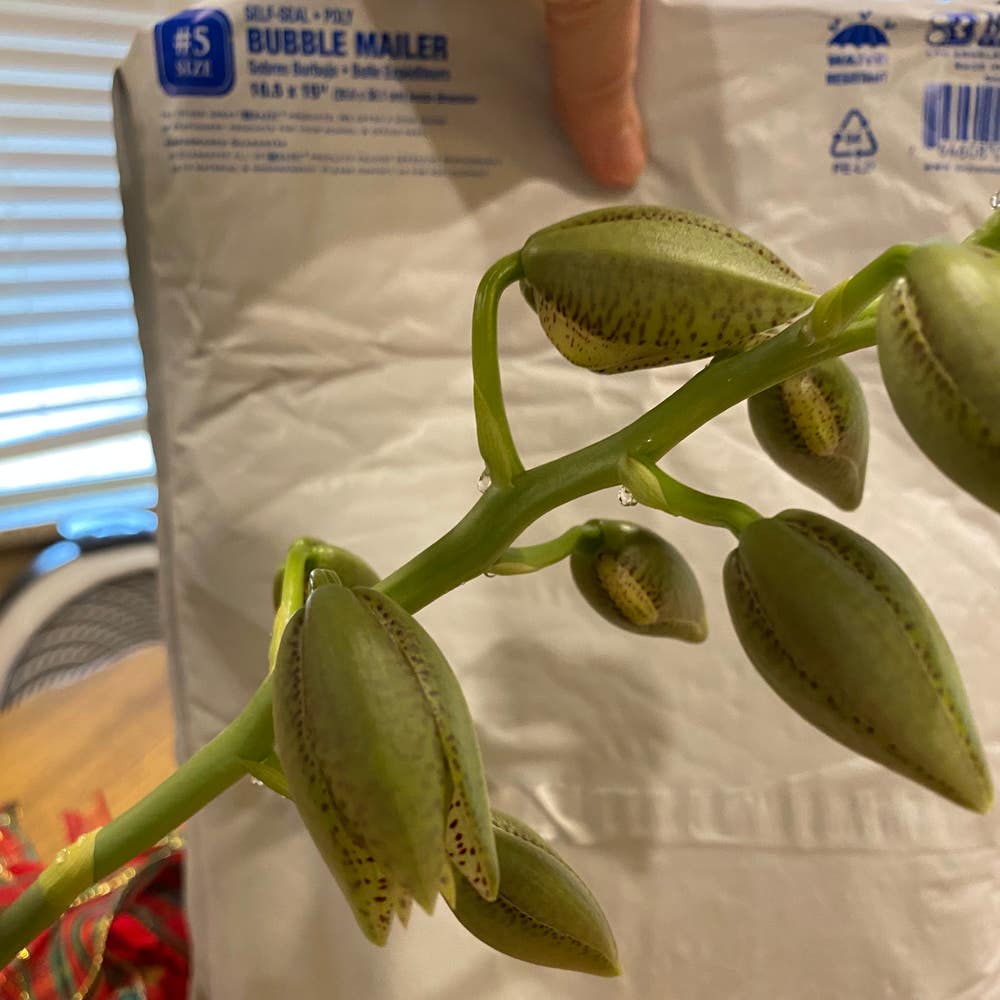
3 Tips for Healing Leaves Falling Over on Your Catasetum 🌸
Catasetum 'Susan Fuchs'
By the Greg Editorial Team
Jan 06, 2025•5 min read
This article was created with the help of AI so we can cover more plants for you. May contain errors. See one? Report it here.
Restore your drooping Catasetum leaves 🌿 with these essential care tips for vibrant growth and health!
- 💧 Drooping leaves indicate overwatering or underwatering; adjust your watering routine.
- 🌞 Bright, indirect light is essential; insufficient light leads to stunted growth and drooping.
- 🌿 Regularly check humidity and nutrients to prevent yellowing and leaf drop.
Causes of Leaf Drooping
Common Causes 🌧️
Understanding why your Catasetum leaves are drooping is crucial for effective care. Here are the most common culprits:
- Overwatering: Excess moisture can lead to root rot, a serious condition that can quickly damage your plant.
- Underwatering: On the flip side, not providing enough water can cause dehydration, resulting in droopy leaves.
- Nutrient Deficiencies: A lack of essential nutrients can weaken leaf structure, making them more prone to drooping.
- Environmental Stress: Temperature fluctuations and inconsistent humidity levels can stress your plant, leading to unhealthy leaves.
Symptoms of Unhealthy Leaves 🚨
Recognizing the signs of unhealthy leaves is key to timely intervention. Here are some symptoms to watch for:
- Yellowing Leaves: This often indicates overwatering or a nutrient deficiency.
- Wilting or Drooping: These are clear signs of underwatering or potential root issues.
- Leaf Spots or Discoloration: These could signal pest damage or disease, requiring immediate attention.
By identifying these causes and symptoms, you can take proactive steps to restore your Catasetum's health. Next, let’s explore effective watering practices to support your plant's recovery.
Watering Practices
🌊 Importance of Proper Watering
Catasetum orchids thrive on a delicate balance between moisture and dryness. Understanding their watering needs is crucial for maintaining healthy leaves and preventing drooping.
Seasonal variations play a significant role in watering frequency. During active growth, these plants require more water, while dormancy calls for a more restrained approach.
🚰 Signs of Overwatering vs. Underwatering
Recognizing the signs of overwatering is essential for your Catasetum's health. Look for symptoms like root rot, mushy roots, and yellowing leaves.
On the flip side, underwatering can lead to dry, crispy leaves and wilting. Both extremes can stress your plant, so stay vigilant.
📅 Recommended Watering Schedule
To keep your Catasetum flourishing, follow this watering schedule:
- Active Growth: Water every 5-7 days.
- Dormancy: Water every 2-3 weeks.
- Best Time to Water: Early morning is ideal to minimize evaporation.
By adhering to this schedule, you can help your Catasetum thrive and reduce the risk of leaf drooping. Next, let’s explore the light and humidity requirements that further support your plant's health.
Light and Humidity Requirements
Ideal Light Conditions 🌞
Catasetum orchids thrive in bright, indirect light. If your plant's leaves start stretching or growth appears stunted, it may not be getting enough light.
Humidity Levels and Their Impact 💧
Maintaining humidity levels between 50-70% is crucial for healthy Catasetum growth. Low humidity can lead to curling leaves and browning tips, signaling that your plant is struggling.
Tips for Maintaining Humidity 🌿
To boost humidity, consider using humidity trays. Simply place your pots on trays filled with water and pebbles to create a more humid environment.
Misting your Catasetum leaves lightly during dry periods can also help. This simple practice can make a significant difference in keeping your plant happy and healthy.
As you focus on light and humidity, remember that these factors are interconnected. Proper light exposure and humidity levels will set the stage for your Catasetum's overall health and vitality. Next, let’s dive into the importance of nutrient management for your orchid.
Nutrient Management
Recommended Fertilizers 🌱
To keep your Catasetum thriving, using balanced NPK fertilizers is essential. A popular choice is the 20-20-20 formula, which provides equal parts nitrogen, phosphorus, and potassium during the active growth phase.
Fertilization frequency is crucial for optimal growth. Aim to fertilize every 4-6 weeks during the growing season to ensure your plant receives the nutrients it needs.
Signs of Nutrient Deficiency ⚠️
Recognizing nutrient deficiencies early can save your plant from serious damage. For instance, nitrogen deficiency often manifests as yellowing leaves, particularly in the older foliage.
Phosphorus deficiency can lead to poor root development and even leaf drop, while potassium deficiency typically shows up as leaf tip burn and weak stems. Keeping an eye on these signs will help you maintain a healthy Catasetum.
As you monitor your plant's nutrient needs, remember that proper fertilization is just one part of the equation. Next, we'll explore recovery and prevention strategies to keep your Catasetum in top shape.
Recovery and Prevention Strategies
Steps to Take When Leaves Are Falling 🌿
When you notice leaves falling from your Catasetum, the first step is to assess your watering practices. Look for signs of overwatering, like mushy roots, or underwatering, indicated by dry, crispy leaves.
Next, check your light conditions. Ensure your plant is receiving adequate bright, indirect light, as insufficient light can lead to drooping leaves.
Finally, inspect for pests. If you find any infestations, treat them promptly to prevent further damage to your plant.
Long-term Care Tips 🌱
To keep your Catasetum thriving, regular monitoring is essential. Keep an eye on leaf health and environmental conditions to catch issues early.
Make seasonal adjustments to your care routines based on the plant's growth cycles. This ensures that your Catasetum receives the right care throughout the year.
Lastly, ensure proper potting by using well-draining media. This helps prevent root rot, a common issue that can lead to leaf drop.
By following these strategies, you can promote a healthy environment for your Catasetum and enjoy its beautiful foliage for years to come.
⚠️ Safety First
This content is for general information and may contain errors, omissions, or outdated details. It is not medical, veterinary advice, or an endorsement of therapeutic claims.
Always consult a qualified healthcare professional before using any plant as food, medicine, or supplement.
Never eat any plant (or feed one to pets) without confirming its identity with at least two trusted sources.
If you suspect poisoning, call Poison Control (800) 222-1222, the Pet Poison Helpline (800) 213-6680, or your local emergency service immediately.
Spotted an error? Please report it here.
Revive your Catasetum's vibrancy 🌱 by mastering its care with Greg's tailored watering and nutrient reminders, ensuring it thrives beautifully all year round!