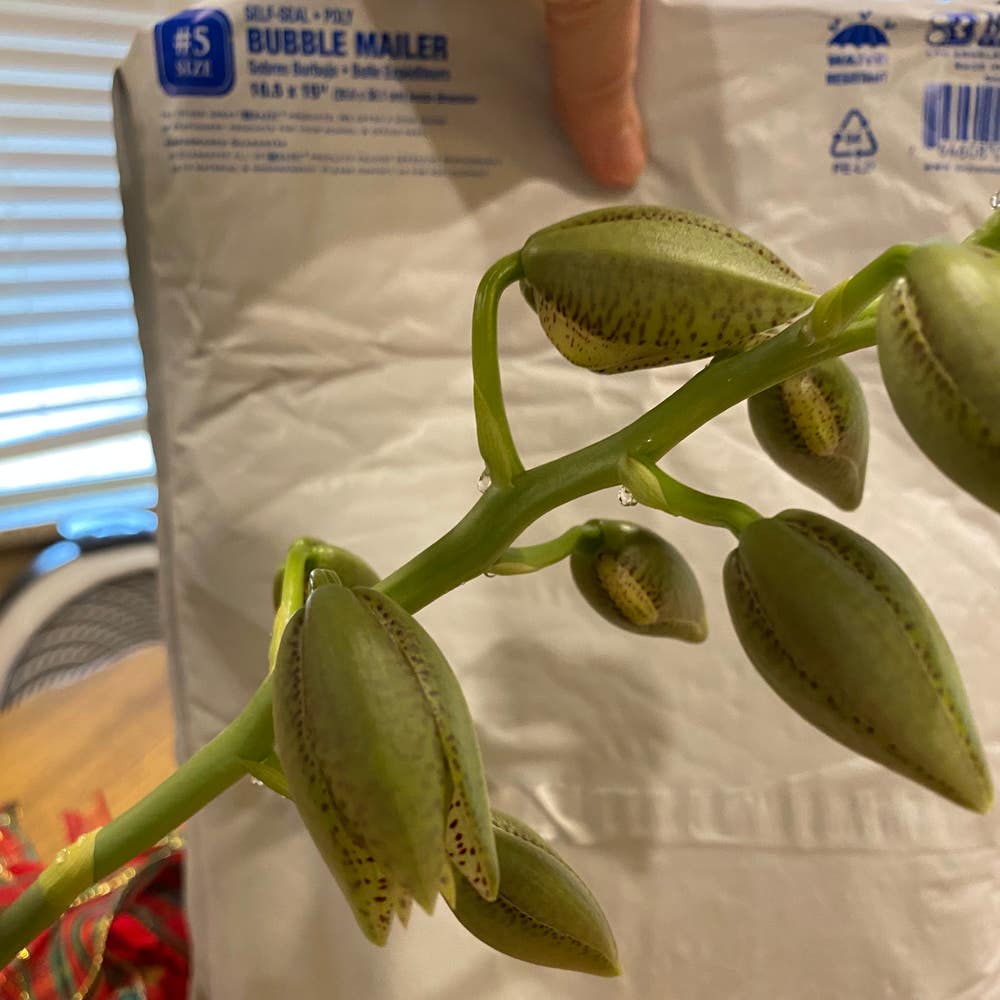
5 Tips for Healing Black Spots on Your Catasetum
Catasetum 'Susan Fuchs'
By the Greg Editorial Team
Jan 06, 2025•4 min read
This article was created with the help of AI so we can cover more plants for you. May contain errors. See one? Report it here.
Revive your Catasetum 🌱 by mastering diagnosis and treatment of black spots for vibrant, healthy growth!
- 🔍 Inspect leaves regularly to identify and assess black spots early.
- 🌡️ Maintain humidity and temperature between 50-70% and 20-30°C for optimal health.
- 🌞 Provide adequate indirect sunlight and clean leaves to enhance growth and prevent issues.
Diagnosing Black Spots
🔍 Visual Inspection Techniques
To effectively diagnose black spots on your Catasetum, start with a close examination of the leaf surfaces. Look for any texture changes or discoloration that may indicate underlying issues.
Next, check for patterns in the spots. Are they localized to specific areas, or are they widespread across the plant? This can help you determine the severity of the problem.
🐜 Common Pests Associated with Black Spots
Several pests can contribute to the appearance of black spots on your Catasetum.
- Aphids: These small, green insects can cause significant leaf damage, leading to discoloration.
- Spider Mites: Look for fine webbing and stippling on leaves, which are telltale signs of these pests.
- Scale Insects: With their hard, shell-like appearance, scale insects can stress your plant and contribute to leaf spots.
🌧️ Environmental Factors Contributing to Leaf Spots
Environmental conditions play a crucial role in the health of your Catasetum.
- Humidity Levels: Aim for a humidity range of 50-70% to keep your plant thriving.
- Temperature Fluctuations: Maintaining stable temperatures between 20°C to 30°C (68°F to 86°F) is essential for preventing stress.
- Light Exposure: Ensure your Catasetum receives adequate indirect sunlight, as this is vital for optimal leaf health.
By understanding these diagnostic techniques and factors, you can take the first steps toward addressing black spots on your Catasetum. Next, we’ll explore effective treatment options to help restore your plant’s health.
Treatment Options for Black Spots
🦠 Step-by-step guide to treating fungal infections
Dealing with black spots on your Catasetum can be daunting, but a systematic approach can make it manageable. Start by isolating affected plants to prevent the spread of any potential fungal infections.
Next, carefully remove any severely affected leaves using sterilized scissors. This helps to minimize the risk of further contamination. After that, apply a fungicide according to the package instructions for effective treatment.
Finally, monitor your plant for signs of improvement over the next 1-2 weeks. Keep an eye out for new growth and the reduction of black spots.
💊 Recommended fungicides and application methods
Choosing the right fungicide is crucial for effective treatment. Consider options like copper-based fungicides, systemic fungicides, and organic alternatives.
For best results, apply your chosen fungicide every 7-14 days until you notice improvement. Consistency is key to overcoming fungal issues.
🌱 Natural remedies for black spots
If you prefer a more natural approach, several remedies can help combat black spots. Neem oil is a popular choice; mix it with water at a ratio of 1:100 for effective application.
Another option is a baking soda solution. Combine 1 tablespoon of baking soda with 1 gallon of water and spray it on affected areas every week.
Lastly, garlic spray can be a powerful ally against fungal infections. Blend a few cloves with water, strain the mixture, and spray it on your plants to deter pests and fungi alike.
With these treatment options, you can effectively tackle black spots and promote the health of your Catasetum. Next, let’s explore how to prevent future occurrences of these pesky spots.
Preventing Future Black Spots
🌊 Best Practices for Catasetum Watering
Watering your Catasetum correctly is crucial for preventing black spots. Allow the top inch of soil to dry out between waterings to avoid over-saturation.
Consider using bottom watering techniques or distilled water for optimal results. These methods help maintain consistent moisture levels without risking root rot.
☀️ Optimal Light and Humidity Conditions
Catasetum thrives in specific light and humidity conditions. Aim for 50-70% shade to ensure healthy growth and prevent leaf stress.
Maintaining humidity is equally important. Utilize humidity trays or misting techniques to create a suitable environment for your plants.
🔍 Regular Maintenance and Monitoring Tips
Regular inspections are key to early detection of issues. Check your plants weekly for pests and overall leaf health to catch problems before they escalate.
Additionally, keep your leaves clean. Use a damp cloth to wipe away dust and debris, allowing your Catasetum to absorb light more effectively.
By following these preventive measures, you can significantly reduce the risk of black spots and promote a thriving Catasetum. Next, let’s explore the treatment options available if you do encounter these pesky spots.
⚠️ Safety First
This content is for general information and may contain errors, omissions, or outdated details. It is not medical, veterinary advice, or an endorsement of therapeutic claims.
Always consult a qualified healthcare professional before using any plant as food, medicine, or supplement.
Never eat any plant (or feed one to pets) without confirming its identity with at least two trusted sources.
If you suspect poisoning, call Poison Control (800) 222-1222, the Pet Poison Helpline (800) 213-6680, or your local emergency service immediately.
Spotted an error? Please report it here.
Heal those black spots and revitalize your Catasetum 🌱 with Greg's tailored care reminders and pest alerts, ensuring your plant thrives like never before!