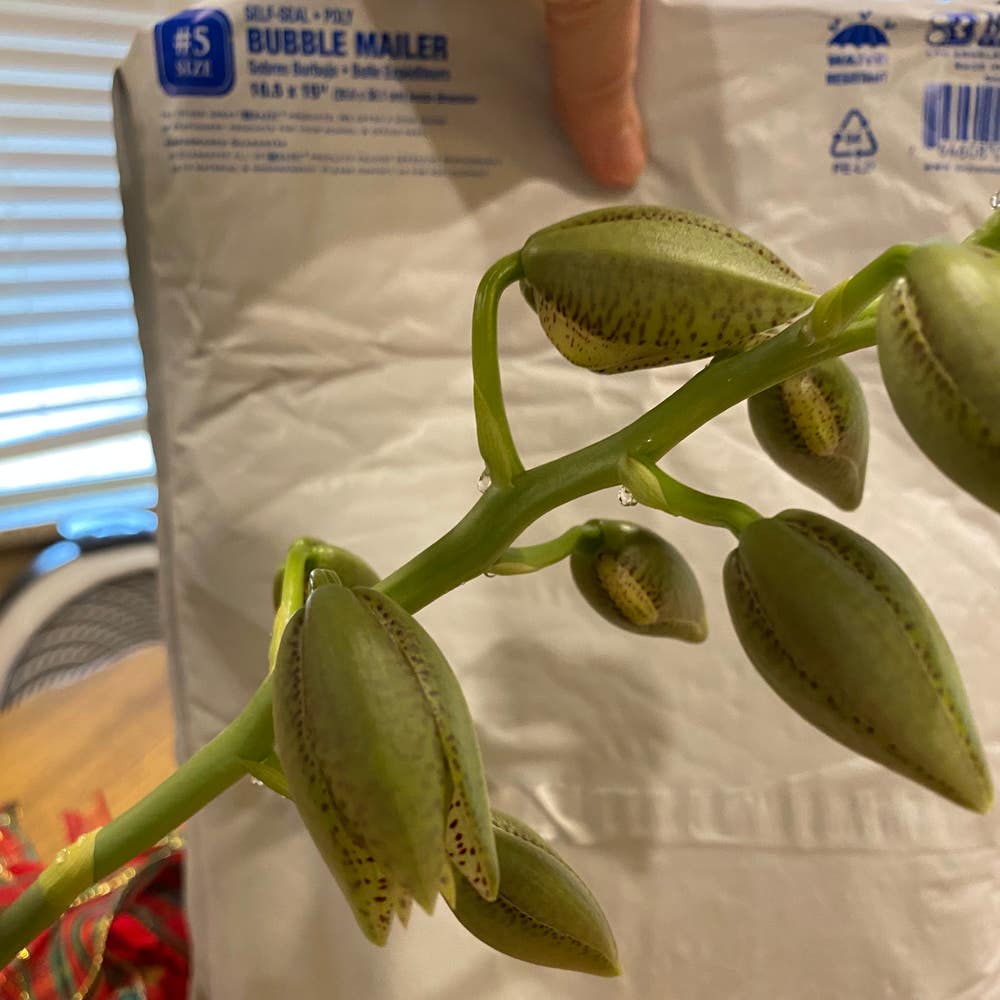
How to Cure Curling Leaves on Your Catasetum 🐞
Catasetum 'Susan Fuchs'
By the Greg Editorial Team
Jan 06, 2025•3 min read
This article was created with the help of AI so we can cover more plants for you. May contain errors. See one? Report it here.
Transform your Catasetum's health 🌱 with these essential tips to treat and prevent frustrating leaf curl!
- 💧 Proper watering is crucial; water when top inch of soil feels dry.
- 🌫️ Increase humidity to 50-70% using humidifiers or pebble trays for healthy growth.
- 🔍 Regularly inspect for pests like aphids; treat with insecticidal soap if needed.
Leaf Curl Treatment
Step-by-Step Guide to Alleviating Leaf Curl 🌿
Leaf curl can be frustrating, but with the right approach, you can restore your Catasetum's health. Follow these steps to alleviate the issue effectively.
Assess watering practices: Start by checking the soil moisture before watering. This ensures you’re not over or under-watering your plant.
Adjust humidity levels: Increase moisture around your plant using a humidity tray or by misting the leaves regularly.
Inspect for pests: Look closely for signs of aphids or spider mites on the leaves. Early detection is key to preventing further damage.
Modify light exposure: Ensure your Catasetum receives the appropriate light for its species. Too much or too little light can contribute to leaf curl.
Adjusting Watering Practices 💧
Watering frequency: Water your plant when the top inch of soil feels dry. This helps maintain optimal moisture levels without waterlogging.
Watering method: Always use room temperature water. Cold water can shock the roots, while waterlogging can lead to root rot.
Modifying Humidity Levels for Optimal Growth 🌈
Ideal humidity range: Aim to keep humidity between 50% to 70%. This range supports healthy growth and prevents leaf curling.
Methods to increase humidity: Consider using a humidifier or placing your pot on a pebble tray filled with water. Both methods can effectively boost humidity levels.
Pest Control Methods 🐛
Identifying pests: Be on the lookout for sticky residue or webbing on leaves. These are common signs of pest infestations.
Treatment options: If you find pests, treat your plant with insecticidal soap or neem oil. These options are effective and safe for your Catasetum.
By following these steps, you can effectively treat leaf curl and promote a healthier environment for your Catasetum. Next, let’s explore how to prevent leaf curl from occurring in the first place.
Preventing Leaf Curl
Best Practices for Care 🌱
Regular monitoring is crucial for your Catasetum's health. Check the leaves weekly for any signs of curling or stress to catch issues early.
Establishing a proper watering schedule is equally important. Consistency in watering helps maintain soil moisture and prevents stress on the plant.
Importance of Proper Light Exposure 💡
Your Catasetum thrives in bright, indirect light. Avoid placing it in direct sunlight, which can scorch the leaves and lead to curling.
If your plant isn't getting enough light, consider adjusting its placement. Moving it closer to a light source can significantly improve its health.
Seasonal Care Adjustments 🍂
During the dormancy period, it's essential to reduce both watering and fertilization. This allows the plant to rest and prepare for the next growth phase.
As new growth appears, increase humidity and watering. This adjustment supports your Catasetum's active growth and helps prevent leaf curl.
By following these best practices, you can create an environment that minimizes the risk of leaf curl and promotes vibrant growth. Next, let’s explore how to adjust watering practices for optimal health.
⚠️ Safety First
This content is for general information and may contain errors, omissions, or outdated details. It is not medical, veterinary advice, or an endorsement of therapeutic claims.
Always consult a qualified healthcare professional before using any plant as food, medicine, or supplement.
Never eat any plant (or feed one to pets) without confirming its identity with at least two trusted sources.
If you suspect poisoning, call Poison Control (800) 222-1222, the Pet Poison Helpline (800) 213-6680, or your local emergency service immediately.
Spotted an error? Please report it here.
Keep your Catasetum vibrant and thriving 🌿 by using Greg's tailored reminders for watering and humidity, ensuring those curling leaves are a thing of the past!