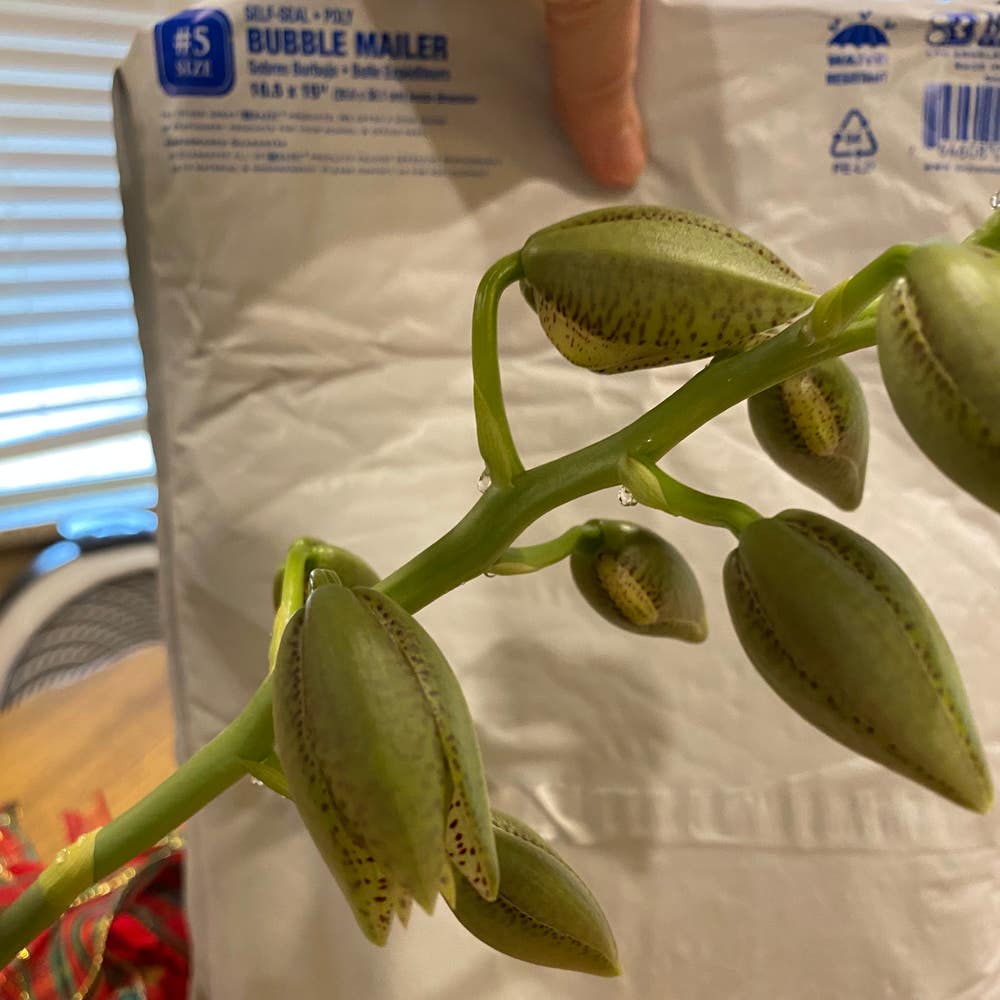
Black Spots on My Catasetum 'Susan Fuchs' Leaves
Catasetum 'Susan Fuchs'
By the Greg Editorial Team
Apr 21, 2024•2 min read
This article was created with the help of AI so we can cover more plants for you. May contain errors. See one? Report it here.
Eradicate mysterious black spots 🕵️♂️ on your Catasetum 'Susan Fuchs' and restore your orchid's perfection!
- Black spots signal stress from environment, pests, or disease.
- Spot patterns offer clues; concentric rings mean distress.
- Prevent with care: regular checks, precise watering, and proper pruning.
Section
The Detective Work: Diagnosing Black Spots
🔍 Spot Patterns and What They Tell You
When it comes to black spots on your Catasetum 'Susan Fuchs', think like a detective examining evidence. Uniform spots often signal environmental issues, while irregular shapes suggest pests or pathogens. Look for halos or concentric rings—these are distress signals from your orchid, like red flags waving for attention.
The Inspection Routine
To start your inspection, get up close and personal with your orchid. Flip every leaf; these spots are sneaky and love to lurk on the undersides. Check if spots are raised, sunken, or flat—this detail is your first clue. Keep a care log; it's not just a record, it's a tool for spotting trends and changes. If you find spots, isolate your orchid—it's like the ICU for plants, preventing the spread of potential pathogens.
Keeping the Spots at Bay: Prevention Strategies
🕵️ Routine Checks and Balances
Regular inspections are crucial. Think of them as your orchid's personal health check-ups, essential for catching black spots early. Sanitize your tools and keep the plant's area clear of debris to prevent fungal and bacterial parties.
🦸 Proactive Plant Care
Watering should be a calculated affair, like crafting the perfect espresso shot—precise and satisfying. Ensure good air circulation; it's like giving your plants their own personal bubble to prevent disease. Keep a care log; it's the narrative of your orchid's life, and you're the author. Notice a change? Adjust your care like a sound engineer fine-tuning a mix until it's just right.
Pest control? Isolate like you're dealing with a contagion. Use alcohol for mealybugs and a water blast for aphids. Remember, prevention trumps cure every time. Pruning should be done with precision; it's not just about aesthetics, it's about keeping the rest of your plant healthy.
Feeding your orchid is like being a gourmet chef—balanced and thoughtful. A high-calcium fertilizer in spring can be like a vitamin boost, helping prevent black rot in new growth.
Humidity and temperature need to be managed like you're the curator of a gallery—everything just so. Overwatering is a no-go; it's about finding that sweet spot where your plant is neither parched nor drowning.
By implementing these strategies, you're not just reacting to problems; you're building a fortress of prevention. It's the difference between being an orchid caretaker and an orchid superhero.
⚠️ Safety First
This content is for general information and may contain errors, omissions, or outdated details. It is not medical, veterinary advice, or an endorsement of therapeutic claims.
Always consult a qualified healthcare professional before using any plant as food, medicine, or supplement.
Never eat any plant (or feed one to pets) without confirming its identity with at least two trusted sources.
If you suspect poisoning, call Poison Control (800) 222-1222, the Pet Poison Helpline (800) 213-6680, or your local emergency service immediately.
Spotted an error? Please report it here.
Eradicate those black spots 🌱 with precision by tracking your orchid's environment and receiving tailored care reminders from Greg, ensuring your Catasetum 'Susan Fuchs' thrives.