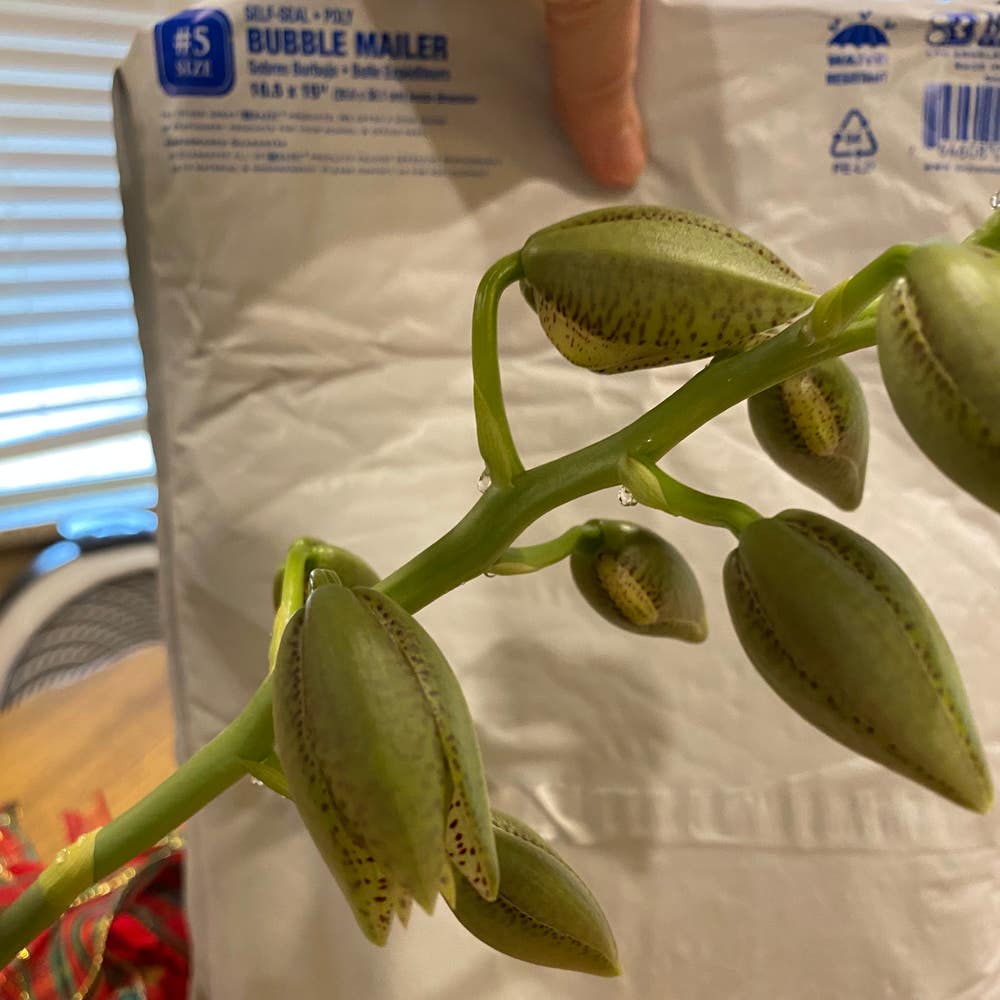
🌞 How Much Sunlight Does My Catasetum 'Susan Fuchs' Need?
Catasetum 'Susan Fuchs'
By the Greg Editorial Team
Apr 21, 2024•3 min read
This article was created with the help of AI so we can cover more plants for you. May contain errors. See one? Report it here.
Ensure your Catasetum 'Susan Fuchs' thrives with the perfect sun recipe for vibrant growth and blooms! 🌱🌞
- 🌞 Morning sun and bright indirect light are ideal for 'Susan Fuchs'.
- Rotate and adjust seasonally to prevent sunburn and encourage blooms.
- Use full-spectrum grow lights when natural sunlight isn't enough.
Basking in the Right Glow: Outdoor Light Mastery
🌞 Ideal Sunlight Conditions for 'Susan Fuchs'
Morning sun is your 'Susan Fuchs' best friend, offering a gentle wake-up call without the harshness of midday rays. Aim for a bright indirect light setting, like under a tree or a pergola, to hit the sweet spot of light intensity and duration.
As seasons change, so should your plant's position. Summer calls for more shade, while spring and fall might allow for a bit more direct sunlight. It's a dynamic dance with the sun, so stay flexible and adjust as needed.
🛡️ Protecting 'Susan Fuchs' from Too Much Sun
Sunburn isn't just for beachgoers; 'Susan Fuchs' can suffer too. Crispy leaves or a bleached look are distress signals. If you see these, it's time to intervene.
Create a dappled sunlight environment to protect your plant. Use nature's parasol—a tree canopy—or a sheer curtain to diffuse intense sunlight. This mimics the plant's natural understory habitat, shielding it from the sun's overzealous affection. Keep an eye out for signs of overexposure and shuffle your plant to safer ground when necessary.
Indoor Light Balancing Act
🌅 Window Wisdom: Best Practices for Indoor Placement
East-facing windows are prime real estate for your Catasetum 'Susan Fuchs', offering a buffet of bright, indirect light without the harsh midday sun. If you're stuck with a south-facing scorcher, sheer curtains are your new best friend, diffusing those intense rays.
Rotate your plant like it's on a lazy Susan to ensure every side gets its fair share of light. Remember, gradual moves are key—shock is for soap operas, not your 'Susan Fuchs'.
💡 Supplementing Sunlight with Grow Lights
When the sun's on vacation, grow lights step in. They're the all-you-can-eat buffet of light for your plant, no sunburn included. Go full spectrum for that sweet, sweet chlorophyll synthesis.
LED grow lights are your wallet's ally, sipping on electricity while bathing your 'Susan Fuchs' in life-giving lumens. Just keep them at the Goldilocks distance—not too close, not too far.
Light's Role in the Dance of Blooms
💡 Triggering Flower Power with Light
For Catasetum 'Susan Fuchs', light is the secret handshake that initiates the blooming process. These orchids crave a specific balance of light to unlock their flowering potential.
🌟 Understanding Light-Induced Blooming Triggers
Bright, indirect light is the golden ticket for 'Susan Fuchs' blooms. It's the energy source that powers the plant's reproductive cycle. Too much direct sunlight, and you risk leaf burn; too little, and the blooms may never appear.
🌞 Manipulating Light for Optimal Flowering Periods
Seasonal light changes are like a green light for 'Susan Fuchs' to start blooming. Indoors, you can mimic these cues with grow lights, particularly those emitting red wavelengths, to encourage flowering. Keep an eye out for a healthy blush on the leaves, a sign that your lighting is on point. Remember, consistency is key—sudden changes can throw off the blooming cycle.
Choosing the Right Grow Light
Select a full-spectrum grow light to best mimic natural sunlight. Red-spectrum lights are especially beneficial for promoting flower bud formation. Monitor your plant's response to the light and adjust as needed to avoid overexposure.
⚠️ Safety First
This content is for general information and may contain errors, omissions, or outdated details. It is not medical, veterinary advice, or an endorsement of therapeutic claims.
Always consult a qualified healthcare professional before using any plant as food, medicine, or supplement.
Never eat any plant (or feed one to pets) without confirming its identity with at least two trusted sources.
If you suspect poisoning, call Poison Control (800) 222-1222, the Pet Poison Helpline (800) 213-6680, or your local emergency service immediately.
Spotted an error? Please report it here.
Ensure your Catasetum 'Susan Fuchs' thrives in the perfect light with Greg's custom reminders 🌅, tailored to your plant's needs and your home's unique conditions.