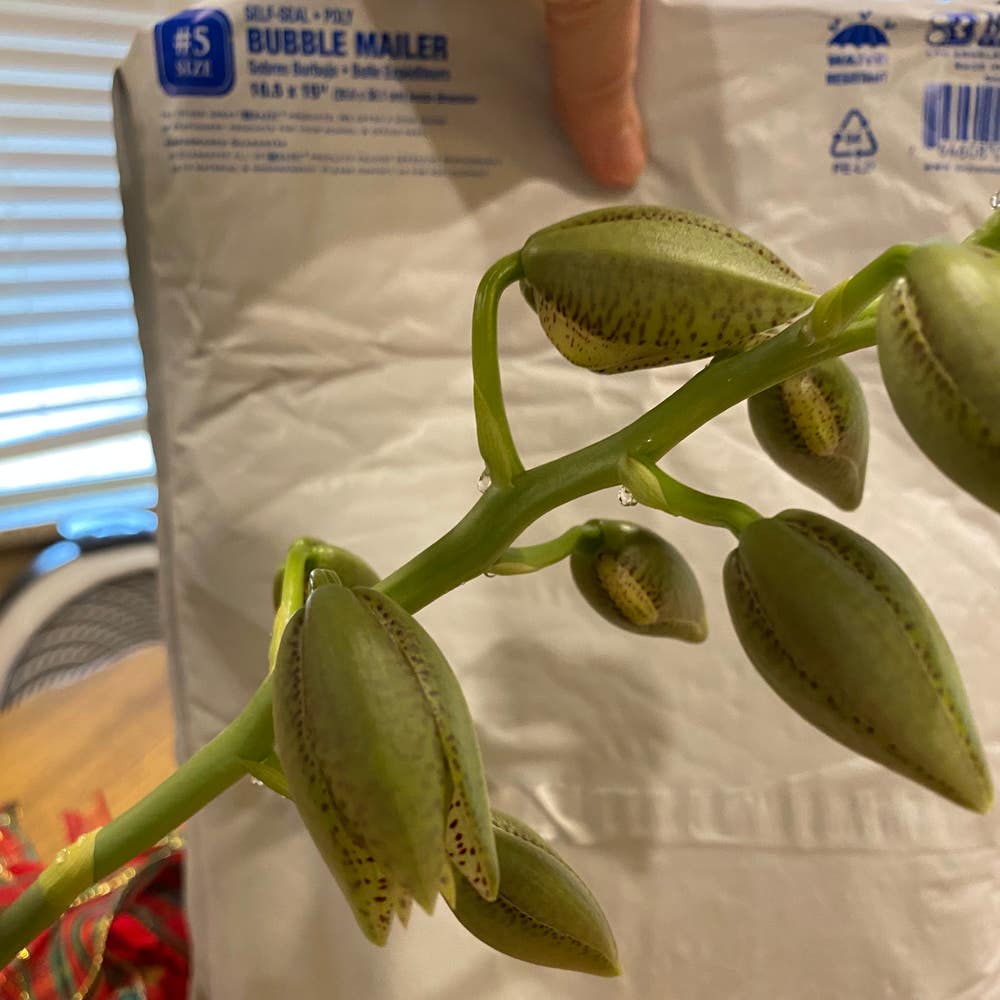
Why Are There Brown Spots on My Catasetum 'Susan Fuchs'?
Catasetum 'Susan Fuchs'
By the Greg Editorial Team
Apr 21, 2024•4 min read
This article was created with the help of AI so we can cover more plants for you. May contain errors. See one? Report it here.
Rescue your cherished orchid 🌸 from brown spot despair with this life-saving care guide!
- Fungal and bacterial infections cause brown spots; environment affects susceptibility.
- Treat with fungicides, bactericides, or natural remedies like baking soda and soap.
- Prevent spots with proper watering, lighting, humidity, and airflow.
Spotting the Culprits: Common Causes of Brown Spots
🍄 Fungal Foes
Fungal infections are like uninvited guests at your Catasetum 'Susan Fuchs' party, leaving brown spots as their calling card. High humidity and poor air circulation are their enablers, fostering the spread of these unsightly blemishes. Look out for spots with yellow halos or dark rings – a clear sign of fungal shenanigans.
🦠 Bacterial Bullies
Bacterial infections are more sneaky in their approach, often starting as water-soaked lesions that may be surrounded by a yellow halo. These spots are your orchid's cry for help, a signal that it's time to intervene. If the spots appear slimy, it's a clear indication of bacterial trouble.
🌿 Environmental Stressors
Your Catasetum 'Susan Fuchs' can suffer from too much of a good thing. Overwatering can lead to soggy, dark lesions, while underwatering leaves behind dry, brown patches. Sunburn is another culprit, manifesting as brown spots on the leaves most exposed to the sun. Remember, your orchid prefers the spotlight, not the scorching sun. Poor air circulation can also invite fungal gatecrashers, so keep the air moving to avoid unwanted party crashers.
First Aid for Your Orchid: Treating Brown Spots
🛡️ When to Reach for Fungicides or Bactericides
Fungicides and bactericides are like your orchid's personal bodyguards against brown spots. Use them wisely. Copper-based fungicides are the go-to for fungal infections, but make sure they're orchid-safe. Bactericides are for those pesky bacterial spots; again, check compatibility. Always, and I mean always, follow the label instructions to a T. Overdoing it can be more of a disaster than the spots themselves.
💧 The Gentle Touch: Natural Remedies
If you're not keen on going full chemical warfare on your Catasetum 'Susan Fuchs', there are softer methods. A concoction of baking soda and liquid soap can be a gentle nudge for mild infections. Mix half a teaspoon of soda with a teaspoon of soap in a gallon of water, and spray every leaf inch every two weeks. It's like giving your orchid a spa day, minus the fluffy robe. If you're up against something tougher, copper octanate or sulfur might just be your organic knights in shining armor. Remember, the goal is to treat, not to drench your plant in a chemical cocktail. Safety gear is not optional; gloves and a mask are your best friends here.
Prevention is Better Than Cure: Keeping Brown Spots at Bay
💧 Perfecting Your Watering Technique
Watering your Catasetum 'Susan Fuchs' is less about sticking to a schedule and more about responding to its needs. Check the soil before watering—aim for a consistency that's moist, not drenched. Overwatering invites trouble, so ensure your orchid's pot has adequate drainage.
🏡 Creating the Ideal Home
Lighting should be bright but indirect, like a shaded spot on a sunny day. For humidity, aim for that 40-60% sweet spot—too much or too little, and you're begging for brown spots. Airflow is crucial; stagnant air is a no-go. Position your plant where air can move freely, but not so windy it's like living in a tornado. Keep your tools and pots clean; think of it as basic hygiene for your orchid.
Regularly adjust care with the seasons—your orchid's thirst and light needs will change. Remember, a comfortable orchid is a healthy orchid, and a healthy orchid is less likely to suffer from brown spots.
TLC for Your Catasetum: Ongoing Maintenance and Care
🕵️♂️ Regular Health Checks
Regularly inspect your Catasetum 'Susan Fuchs' like you're on a secret mission. Check for early signs of distress, such as unusual leaf spotting or discoloration. A keen eye can catch problems before they escalate.
🧼 Cleanliness is Key
Hygiene for your orchid is non-negotiable. Wipe leaves with a damp cloth to eliminate dust and potential pest hideouts. Prune off any dead or diseased tissue with sterilized tools to prevent the spread of infection. Remember, cleanliness isn't just about aesthetics; it's a vital defense mechanism for your plant.
⚠️ Safety First
This content is for general information and may contain errors, omissions, or outdated details. It is not medical, veterinary advice, or an endorsement of therapeutic claims.
Always consult a qualified healthcare professional before using any plant as food, medicine, or supplement.
Never eat any plant (or feed one to pets) without confirming its identity with at least two trusted sources.
If you suspect poisoning, call Poison Control (800) 222-1222, the Pet Poison Helpline (800) 213-6680, or your local emergency service immediately.
Spotted an error? Please report it here.
Keep your Catasetum 'Susan Fuchs' spotless 🌿 with Greg's custom care reminders that tackle overwatering and optimize humidity, nipping those brown spots in the bud!