💧 How Frequently Should I Water My Border Carnation?
Dianthus caryophyllus
By the Greg Editorial Team
Jun 14, 2024•6 min read
This article was created with the help of AI so we can cover more plants for you. May contain errors. See one? Report it here.
- Water needs vary with growth stage, season, and environment.
- Observe plant and soil to guide watering, not a fixed schedule.
- For containers, water more often and ensure proper drainage.
Determining Watering Frequency for Border Carnations
💧 Assessing Water Needs
Growth stage and environmental conditions are pivotal in determining your border carnation's thirst. Young plants or those hitting a growth spurt are like marathon runners after a race—they'll need more hydration. Conversely, mature plants in a resting phase may need less.
🌦 Seasonal Adjustments
Summer's scorching heat will have your carnations reaching for a drink more often. In winter, they switch to survival mode, requiring less frequent watering. Adjust your watering habits with the seasons, just as you would your wardrobe.
🌞 Environmental Considerations
Sunlight and temperature aren't just small talk topics; they're critical to your watering schedule. A border carnation basking in full sun will need more frequent watering than one chilling in the shade. Keep an eye on the weather forecast—nature's mood swings can dictate your plant's hydration needs.
🚫 Real Talk: It's Not Just About Time
Ditch the rigid watering schedule. Your border carnations don't care if it's Monday or Friday; they need water when they need it. Use real-time cues like soil dryness and plant appearance to guide you, not the calendar.
🌱 Pro Tips
Room-temperature water is your plant's best friend—no shocking cold showers. And for those who tend to overdo it, set reminders to check the soil's moisture level before reaching for the watering can. Remember, overwatering is the silent killer of border carnations.

Techniques to Ensure Optimal Watering Frequency
💧 Drip Irrigation and Watering Schedules
Drip irrigation is your low-maintenance ally, delivering moisture straight to the roots with precision. For those without a drip system, a watering schedule is your next best bet. It's like setting an alarm for plant hydration – regular and reliable.
🚱 Overwatering: The Silent Killer
Overwatering is a stealthy foe, often going unnoticed until it's too late. Yellow leaves or a squishy stem are your plant's SOS signal. If the soil feels like a wet sponge several days post-watering, it's time to dial it back.
🏜️ Underwatering: The Thirst Games
Underwatered border carnations will sport droopy leaves and exhibit stunted growth. If the soil is drier than a comedian's wit, your plant is crying out for a drink. Don't let your carnations enter the thirst games; keep the soil consistently moist.
👆 The Finger Test: A Plant's Best Friend
Forget high-tech gadgets; your index finger is the ultimate tool. Plunge it an inch into the soil; if it's dry, it's time to water. This old-school method is surprisingly effective at preventing both over and underwatering.
🌞 Environmental Awareness: Plant Parenthood 101
Plants are affected by their surroundings, so keep an eye on the environment. More sun or heat means more water; less light or cooler temps mean less. It's like adjusting the thermostat – but for your plant's drinking habits.
⚖️ The Balancing Act: Not Too Little, Not Too Much
Finding the right watering frequency is a balancing act. It's not about extremes – too much or too little – but finding that sweet spot where your border carnations thrive. Think of it as the Goldilocks zone for watering.

Soil Moisture and Watering Frequency
🌡️ Checking Soil Moisture
Stick your finger into the soil up to an inch deep. If it's dry, your border carnation is sending an SOS for some H2O. For the tech-savvy or those with an aversion to dirt under their nails, a soil moisture meter is your gadget of choice. It's like having a plant's hydration status on speed dial.
🚰 Well-Draining Soil: The Unsung Hero
Well-draining soil isn't just good to have; it's a non-negotiable for border carnations. It's the difference between a thriving floral display and a botanical disaster. Ensure your soil is the right mix to let excess water escape, because no plant wants to sit in a puddle, no matter how much it loves water.
🏺 The Role of Pot Material
Terracotta is your breathable fabric in the world of pots, letting soil dry out like a dream. Plastic, on the other hand, is your raincoat, trapping moisture in. Choose your pot material as you would your wardrobe – with the comfort of your plant in mind.
🌬️ Adjusting for Humidity
When the air feels like a sauna, ease up on the watering. High humidity means your plants are lounging in moisture-rich air, so they'll need less from you. Think of it as nature's hydration station.
💧 Even Water Distribution
Get a watering can with a long spout to avoid just wetting the leaves. You want to quench the soil's thirst, not give your plants a leafy shower. Wet foliage is a party invitation for fungal diseases, and that's one shindig you want to avoid.
💡 Pro Tips
If you're the type to over-love with water, set reminders to check the soil before you water. And always use room-temperature water; cold water is a shock to the roots, like jumping into a cold pool first thing in the morning.
🚱 Correcting Watering Frequency Issues
If you've overdone it with the H2O, put the watering can down and back away slowly. Let the soil dry out before you even think about watering again. In severe cases, repot with fresh soil and trim any rotted roots. It's a rescue mission, not a funeral – your plant can bounce back with a little TLC.

Special Considerations for Container-Grown Carnations
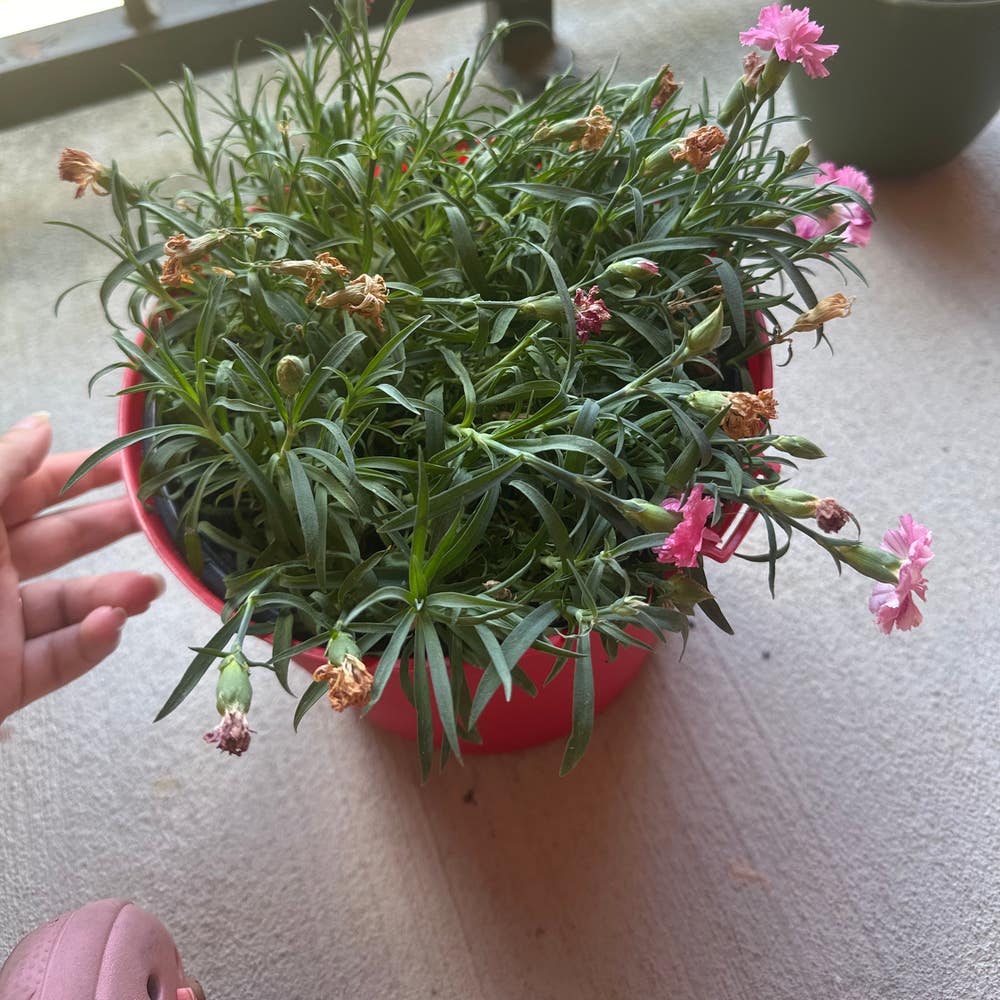
Container gardening offers a flexible approach to growing border carnations, but it comes with its own set of rules. Unlike their in-ground counterparts, potted carnations can't send roots deep into the earth to seek moisture. This means they often require more frequent watering to thrive.
💧 Watering Frequency for Potted Carnations
Containers dry out faster, especially during warm weather. To prevent your carnations from wilting, check the soil moisture more often than you would for garden-planted varieties. A simple finger test can tell you if the top inch of soil is dry, signaling it's time to water.
🚰 Preventing Root Rot in Containers
Overwatering is a common misstep that can lead to root rot. Ensure your pots have adequate drainage holes to let excess water escape. If you're unsure about when to water, it's better to err on the side of underwatering—carnations can bounce back from a bit of drought, but they won't survive soggy, suffocating soil.
🌱 Pot Size Matters
Select a container that's just right—too small, and your carnations may become root-bound; too large, and the soil will retain moisture for too long. A 5-gallon pot is a good starting point for a balance between space and moisture control.
🌦 Adjusting for Seasons
Remember, the watering needs for your container-grown carnations will change with the seasons. Keep a watchful eye on your plants as temperatures rise and fall, and adjust your watering schedule accordingly. It's not just about sticking to a routine—it's about responding to your plant's needs in real-time.
🐛 Monitoring for Pests and Diseases
While you're checking the soil, keep an eye out for unwanted guests. Pests and diseases can sneak up on container plants just as they do in the garden. Prompt action at the first sign of trouble can save your carnations from an untimely demise.
⚠️ Safety First
This content is for general information and may contain errors, omissions, or outdated details. It is not medical, veterinary advice, or an endorsement of therapeutic claims.
Always consult a qualified healthcare professional before using any plant as food, medicine, or supplement.
Never eat any plant (or feed one to pets) without confirming its identity with at least two trusted sources.
If you suspect poisoning, call Poison Control (800) 222-1222, the Pet Poison Helpline (800) 213-6680, or your local emergency service immediately.
Spotted an error? Please report it here.
Ensure your border carnations thrive by syncing their watering needs with Greg's 🌱 custom reminders, tailored to your plant's growth stage and local climate.