🤒 Why Are the Leaves on My Border Carnation Turning Yellow?
Dianthus caryophyllus
By the Greg Editorial Team
Jun 14, 2024•6 min read
This article was created with the help of AI so we can cover more plants for you. May contain errors. See one? Report it here.
- Nutrient imbalances and pests cause yellow leaves; look for visual cues.
- Adjust soil pH and fertilization to correct nutrient deficiencies effectively.
- Consistent watering and drainage are key to preventing yellowing from stress.
Diagnosing Yellow Leaves in Border Carnations
💡 Visual Cues for Nutrient Deficiencies
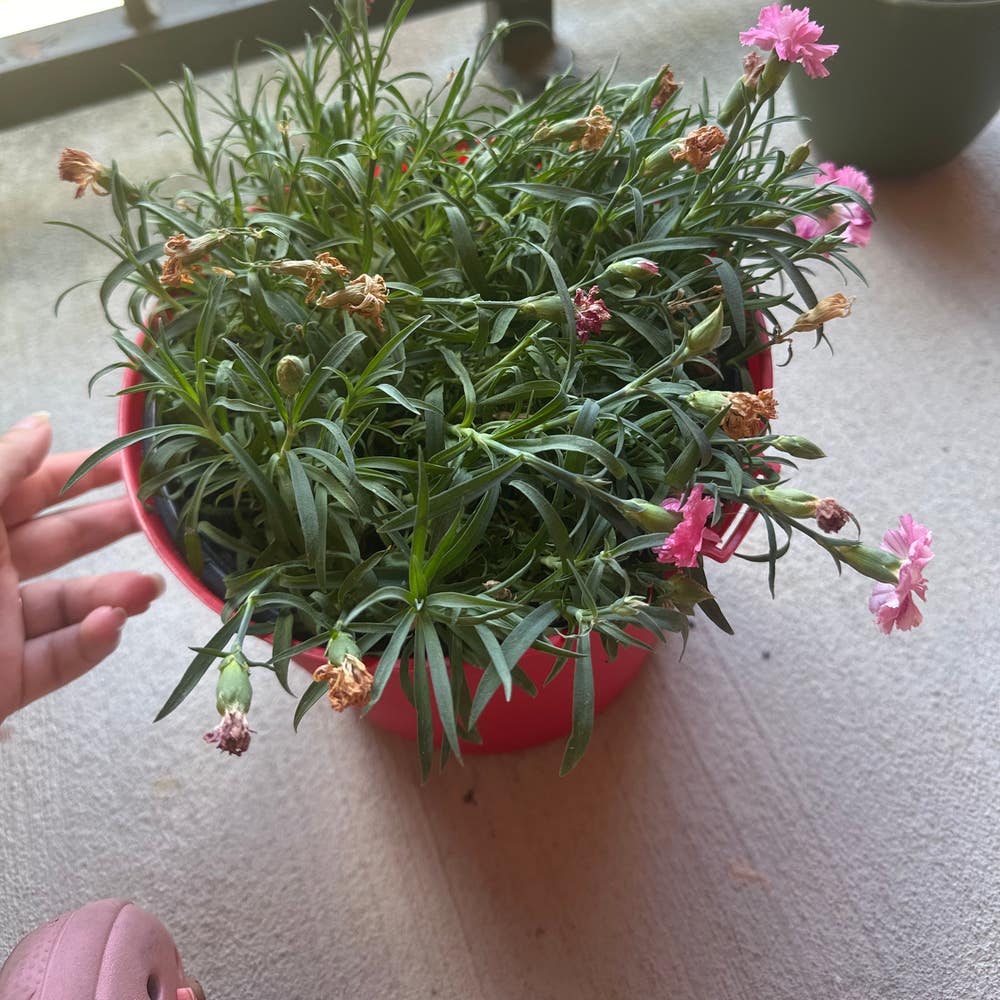
Yellowing leaves on your border carnations can be a red flag for nutrient deficiencies. If you spot striped leaves or leaves with yellow edges, it's time to consider a nutrient imbalance. Nitrogen deficiency, for example, often presents with pale leaf edges, a condition known as "halo-ing."
🐛 Pests and Diseases
Distorted leaves or a sticky residue could point to a pest problem. Keep an eye out for visible caterpillars and bite marks, which are telltale signs of these munching critters. Fungal diseases like powdery mildew or leaf spot diseases manifest as white patches or definite yellow spots on leaves, respectively.
🌿 Environmental Factors
Don't overlook environmental stressors. Browning tips can signal heat stress or excessive light, while sudden yellowing might indicate a change in the environment or care routine. Remember, even healthy plants like cyclamen naturally shed yellow leaves during certain growth phases.
🕵️ Integrated Diagnosis
Be a "plant detective" and look for accompanying signs of distress, such as stunted growth or early leaf drop. These symptoms can also be caused by issues like compacted soil or improper watering, so don't rush to fertilize without confirming the cause. Soil testing can be a valuable tool in your investigative arsenal.

Correcting Nutrient Deficiencies in Border Carnations
💡 Balanced Fertilization
Apply a balanced fertilizer to your border carnations to address nutrient deficiencies. Look for a product with an NPK ratio that suits the specific needs of your plants. For instance, if nitrogen is lacking, a fertilizer with a higher first number will help green up your carnations.
🍽️ Soil Amendments
If you've got a case of boron deficiency, tread lightly. Boron is a finicky nutrient where a little goes a long way. Consider a supplemental drench at 2 to 4 ppm, but only if your soil isn't already high in salts. Remember, more isn't always better; it's about finding that sweet spot.
🌱 pH Adjustment
Carnations dig slightly alkaline soil. If your soil pH is off, your plants might be missing out on key nutrients. Grab a soil test kit and see where you stand. To raise the pH, liming materials like dolomitic lime or wood ash can be your best friends. But don't go wild—apply as directed.
🚰 Iron Drench
Yellow leaves might scream for iron, but don't just throw an iron supplement at the problem. High media pH could be the real villain here. An iron drench can help in the short term, but for the love of carnations, address the pH issue for long-term plant happiness.
💡 Boron Tips
For boron, the line between not enough and too much is razor-thin. Calibrachoa are sensitive to boron levels, and so are carnations. Ensure your media-EC isn't sky-high before adding boron, and always monitor your plants' response.
🛑 Ammonium Caution
Beware of high ammonium levels, especially in cooler, darker conditions. It can lead to toxicity and cause your carnations to become lush but weak. Stick to a balanced approach with your fertilizers to avoid this pitfall.
Remember, the goal is to keep your border carnations robust and their foliage a vibrant green. Regular soil tests, careful amendment, and a watchful eye will keep those yellow leaves at bay.

Optimizing Watering Practices for Healthy Foliage
💧 Effects of Improper Watering
Overwatering is the silent killer of Border Carnations, leading to wilted ambitions and yellow leaves. It's a common misstep, often more dangerous than its counterpart, underwatering. The latter leaves plants gasping for moisture, stunting their growth and dimming their vibrant colors.
💦 Adjusting Watering Practices
To strike the right balance, check the soil an inch down—if it's dry, it's time to water. Think of it as the plant's thirst meter. Use filtered or rainwater to avoid mineral build-up, which can cause unsightly leaf spots.
🚰 Improving Soil Drainage
Drainage holes are non-negotiable for healthy Border Carnations. They're like escape routes for excess water. If your soil retains water like a sponge, swap it out for a mix that's more of a free spirit, allowing water to flow through easily.
📅 Establishing a Watering Schedule
Consistency is your new best friend. Establish a watering schedule that's as regular as clockwork, adjusting for seasonal changes. This helps your plants anticipate and adapt, preventing water-related stress and keeping leaves the right shade of green.

Integrated Pest and Disease Management
🕵️♂️ Identifying the Culprits
Pests and diseases are the stealthy ninjas of the plant world, often going unnoticed until the damage is done. Yellow leaves on your border carnations might be the work of spider mites or mealybugs, or perhaps a sign of root rot. These are not the kind of guests you want at your plant party. Whip out your magnifying glass and play detective – look for tiny webbing, speckles, or the actual bugs themselves.
🌿 Organic Warfare
When it comes to battling these pests, neem oil and insecticidal soap are your go-to weapons. They're like the bouncers at the club, showing the pests the door without trashing the environment. And don't forget about fungicides for those pesky fungal issues like powdery mildew or leaf spot diseases. Remember, the best offense is a good defense – keep your plants healthy to fend off invaders.
👩🌾 Cultural Practices
Cultural practices are your first line of defense. Remove infected leaves and debris to cut down on spore spread. Ensure your plants aren't sitting ducks for disease by avoiding over-fertilization – too much nitrogen can make your plants all-you-can-eat buffets for pests.
🦟 Integrated Pest Management (IPM)
IPM is like the Swiss Army knife of pest control – versatile and environmentally conscious. It's not just about spraying and praying; it's about scouting for trouble and using a mix of strategies to keep your garden in the clear. And if you do have to bring out the big guns, make sure they're labeled for the job and part of a broader IPM strategy.
🛡️ Prevention and Vigilance
Finally, remember that regular monitoring is key. Treat your border carnations like VIPs – check on them often, and cater to their needs. By staying vigilant, you can catch problems early and keep your garden looking sharp.
⚠️ Safety First
This content is for general information and may contain errors, omissions, or outdated details. It is not medical, veterinary advice, or an endorsement of therapeutic claims.
Always consult a qualified healthcare professional before using any plant as food, medicine, or supplement.
Never eat any plant (or feed one to pets) without confirming its identity with at least two trusted sources.
If you suspect poisoning, call Poison Control (800) 222-1222, the Pet Poison Helpline (800) 213-6680, or your local emergency service immediately.
Spotted an error? Please report it here.
Combat those perplexing yellow leaves on your border carnation by using Greg to monitor 🍂 and adjust your plant's care, ensuring vibrant health and stunning blooms.