Why Are My Border Carnation Leaves Droopy? 💧
Dianthus caryophyllus
By the Greg Editorial Team
Jun 14, 2024•7 min read
This article was created with the help of AI so we can cover more plants for you. May contain errors. See one? Report it here.
- Over/underwatering causes droopiness, check soil before watering.
- Nutrient deficiencies lead to yellowing/browning; use balanced fertilizer.
- Consistent care and monitoring prevent droopy leaves and maintain health.
Identifying the Causes of Droopy Leaves
Droopy leaves in Border Carnations can be a red flag signaling care issues. Let's dive into the root causes.
🚰 Overwatering vs. Underwatering
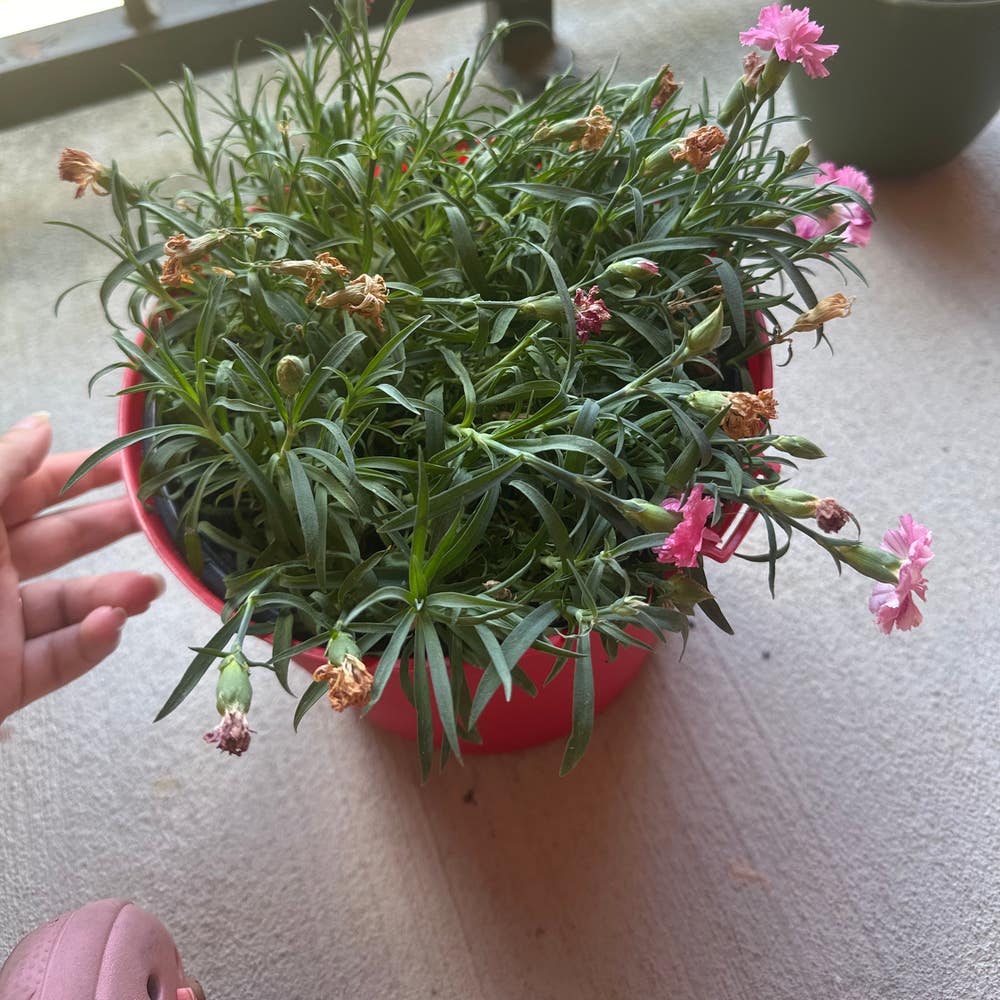
Overwatering often leads to leaves that feel soft and limp, akin to a soggy sponge. You might also spot a mushy stem, which screams root rot. On the flip side, underwatered plants sport crispy, lightweight leaves, begging for a drink. A soil check is non-negotiable here – if it's pulling away from the pot's edge, your plant's thirstier than a camel in a desert.
🍽️ Nutrient Deficiencies
Nutrient shortages can turn your plant into a lackluster shadow of its former self. Yellowing or browning leaves can indicate a cry for help. A balanced fertilizer might just be the lifeline your Border Carnations need. But remember, moderation is key – too much and you're looking at a nutrient overdose.
Recognizing the Signs
Keep a vigilant eye. Early distress signals are subtle, like a slight color fade or a growth slowdown. Catch these early, and you can prevent your Carnations from turning into a botanical sad face.

Correcting Watering Issues
Adjusting your watering habits is like fine-tuning an instrument; it's essential for the perfect performance. 💧 Overwatering turns your Border Carnation's home into a swamp, while 🏜️ underwatering leaves it gasping for a drink. Here's how to strike the right chord.
💦 Adjusting the Watering Schedule
Check the soil before you water—not too wet, not too dry. It's the Goldilocks zone for your plants. If the soil clings to your finger like a scared child, hold off on the waterworks. If it's drier than a comedian's wit, it's time to quench that thirst.
🚰 Ensuring Proper Drainage
Make sure your pot isn't holding water hostage. Drainage holes are a must, and a soil mix with perlite or sand will keep the water flowing. Think of it as setting the stage for a smooth exit, no bottlenecks or traffic jams.
Pro Tips
- Room-temperature water is like serving a fine wine; it won't shock the roots.
- If you're prone to over-love with water, set a reminder to test the soil first.
- For those in the underwatering camp, a self-watering pot can be your safety net, keeping the moisture steady and your mind at ease.
Remember, watering isn't a set-it-and-forget-it deal. It's an art form that requires constant attention and adjustment. Keep your eyes open, and your Border Carnations will stand tall and proud.

Addressing Nutrient Deficiencies
In the quest for perky leaves, Border Carnations need more than just water and sunshine; they crave a nutrient-rich diet. Let's get into how to whip up a gourmet meal for your green friends.
🌱 Selecting the Right Fertilizer
Balance is the name of the game when it comes to fertilizing Border Carnations. A balanced fertilizer, rich in nitrogen, phosphorus, and potassium, is like a multivitamin for your plants. Apply it with a light hand; overzealousness with the feed bag can lead to nutrient overload, which is just as bad as a deficiency.
🌿 Soil Amendments to Restore Nutrient Balance
If your carnations are looking more 'meh' than 'marvelous', consider adding lime or wood ash to nudge the soil pH towards slightly alkaline. This tweak can unlock nutrients in the soil, giving your plants a boost. But remember, it's not about dumping a bunch of amendments and hoping for the best. Use soil tests to play detective and pinpoint exactly what's missing from the party.
🌾 Ironing Out Issues
Yellow leaves might be screaming for iron, especially if your soil is more alkaline than a baking soda volcano at a science fair. An iron drench can green things up, but it's a band-aid solution. You'll need to address the pH to stop the problem from recurring.
🌼 The Boron Balancing Act
Boron is like that one friend who's great in small doses but overwhelming in large ones. Border Carnations need it, but too much can lead to toxicity. If you suspect a boron deficiency, a drench with the right concentration can help, but measure carefully; there's a fine line between just right and disaster.
🌱 Calcium and Magnesium Pick-Me-Ups
Sometimes, a dose of calcium or magnesium is the equivalent of a spa day for your droopy carnations. These nutrients can perk up your plants, but as with all things, moderation is key. Think of it as seasoning your food; a little goes a long way.
🌿 Wrapping Up
Remember, the goal is to create a consistent nutrient supply for your Border Carnations. Regular soil testing, careful observation, and a restrained hand with fertilizers will keep your plants thriving without the drama of nutrient-induced tantrums.

Managing Environmental Factors
🌞 Adjusting Light and Humidity
Light is like a double-edged sword; too much can scorch, too little can stunt. Border Carnations need that sweet spot of bright, indirect sunlight to avoid the droop. If your plant is looking a bit sunburned or too pale, it's time to play musical chairs with its location. Humidity is another beast. These plants don't need a tropical rainforest, but they do crave moisture in the air. Think about misting, pebble trays, or a nearby humidifier to keep them from getting thirsty.
🌡 Protecting from Extreme Temperatures and Drafts
When it comes to temperature, Border Carnations aren't fans of the extremes. They prefer a consistent, comfortable range. Keep them away from drafty windows and doors, as well as those sneaky heating and cooling vents. Sudden temperature changes can make your plants drop leaves faster than a clumsy waiter drops plates. Remember, stability is key—like a good friend, be there for your plants through thick and thin, hot and cold.
Real-World Observations
Keep an eye out for curled leaves; they're a silent SOS for help in low humidity. And if you're dealing with yellowing leaves, don't just stand there—adjust the thermostat! It's all about creating a stable environment where your Border Carnations can kick back and relax without worrying about the next climate curveball. Monitor their response to your tweaks; a happier, perkier plant means you're on the right track.
Integrating Preventive Practices
🌱 Establishing a Consistent Care Routine
Consistency is the cornerstone of preventive care for Border Carnations. Like clockwork, establish a care routine that caters to the plant's needs. Watering should be as predictable as your morning alarm, and lighting as dependable as a lighthouse beam. Seasonal changes? Adjust your care like you're tweaking a playlist for the perfect vibe.
🌱 Regular Soil Testing and Adjustments
Don't just eyeball it; test your soil regularly to stay ahead of nutrient imbalances. It's like a health check-up for your plant. If the pH levels are out of whack, think of lime or sulfur as the dietary supplements to get back on track. And remember, over-fertilizing is as harmful as neglect, so keep that nutrient mix balanced to avoid tipping the scales.
🐛 Monitoring for Pests and Diseases
Pests and diseases are the uninvited guests at your plant's party. Keep a vigilant watch; regular inspections are your bouncer at the door. Spot something? Act fast, like a superhero swooping in to save the day. Keep those leaves dry and clean to avoid giving troublemakers a place to crash.
💧 Comprehensive Watering and Soil Management Strategies
Get techy with it. Use a moisture meter or the classic finger test to gauge soil wetness. Adjust your watering rhythm based on what you find—plants, like us, have their moody days. And when it comes to soil, think of it as the plant's foundation; keep it strong and well-drained to prevent a botanical meltdown.
Remember, the goal is to keep those leaves standing tall and proud, not droopy like a Monday morning.
⚠️ Safety First
This content is for general information and may contain errors, omissions, or outdated details. It is not medical, veterinary advice, or an endorsement of therapeutic claims.
Always consult a qualified healthcare professional before using any plant as food, medicine, or supplement.
Never eat any plant (or feed one to pets) without confirming its identity with at least two trusted sources.
If you suspect poisoning, call Poison Control (800) 222-1222, the Pet Poison Helpline (800) 213-6680, or your local emergency service immediately.
Spotted an error? Please report it here.
Revive your Border Carnations and catch early distress signals with Greg's custom reminders 🌡️, helping you balance watering and nutrients for perky leaves.