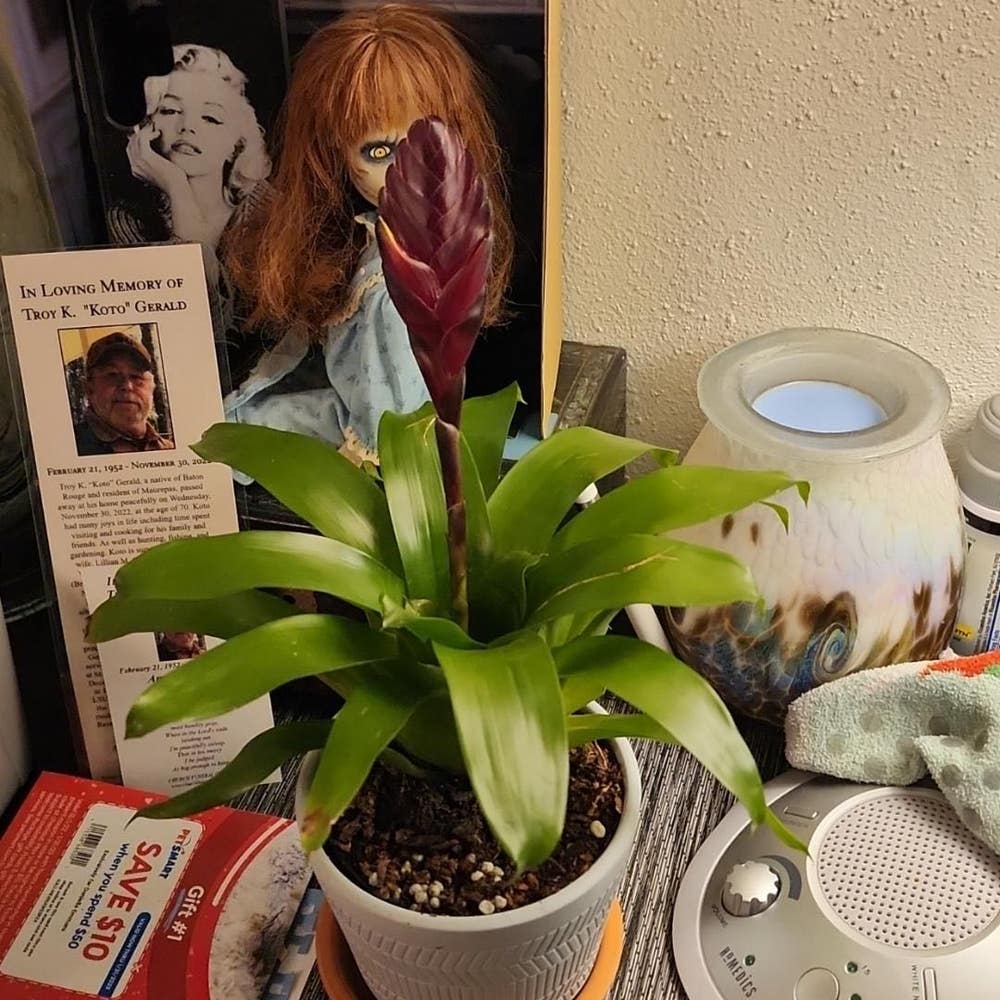
Why Are My Flaming Sword Leaves Droopy?
Vriesea carinata
By the Greg Editorial Team
Jun 18, 2024•5 min read
This article was created with the help of AI so we can cover more plants for you. May contain errors. See one? Report it here.
- 🌱 Under/overwatering causes droopiness: Check soil moisture, aim for deep soak.
- 🌞 Bright, indirect light and stable temperature are crucial for health.
- 💪 Monthly fertilization and proper drainage prevent nutrient deficiency and root rot.
Spotting the Signs of Droopiness
🚩 Visual Cues
A droopy Flaming Sword leaf can resemble a weary flag on a windless day. Its once upright stance turns into a slouch, signaling distress. Look for leaves that sag or bend at unusual angles, indicating they're not their perky selves.
Timing and Progression
The transition from perky to droopy can happen faster than a weekend binge-watch session. It's crucial to monitor your Flaming Sword regularly, as early detection of droopiness can lead to a quicker turnaround.

Getting to the Root of the Problem
🚰 Underwatering Woes
Crispy leaves and stunted growth are your Flaming Sword's way of saying, "I'm parched!" If the soil feels like a dry summer day down to the first inch, it's time to act. Water thoroughly, but think gentle rain, not monsoon. Room temperature water is your friend here—no shocks, please. And if you're the forgetful type, a self-watering system might just be your plant's new best buddy.
🚰 Overwatering Overkill
Yellow leaves and a mushy stem aren't a fashion statement; they're a cry for help. Overwatering is like throwing your plant a pool party without checking if it can swim. Root rot and mold are the party crashers. Keep the soil moist, not soggy—think damp sponge, not wet towel. And if the soil still feels like a wet sponge days after watering, take it easy, tiger.
🌞 Light and Temperature: The Balancing Act
Your Flaming Sword doesn't want a sunburn or a frostbite. Aim for bright, indirect light—like a shaded porch, not a tanning bed. Keep the temperature steady; think comfortable spring day, not desert noon or arctic night. And rotate your plant for even light exposure—it's not a rotisserie chicken.
🍽️ The Nutrient Game
If your Flaming Sword's leaves are looking as pale as a ghost, it might be starving for nutrients. A monthly dose of liquid leaf plant fertilizer can be like a gourmet meal for your green friend. But remember, moderation is key—too much, and you're force-feeding it. And if you're not misting your plant in a humid environment, you're basically asking it to live in a desert.

Turning the Tide on Droopiness
💧 Watering Wisdom
Check the soil before watering—stick your finger in; if the top inch is dry, it's time to water. Morning watering minimizes evaporation and sets your Flaming Sword up for the day. When you water, ensure it's a deep soak to reach the roots. Pots must have good drainage; standing water is a root rot invitation. Adjust watering with the seasons; less is more in winter.
🌱 Soil and Roots Rehab
Ensure proper drainage by using a pot with a hole and a layer of gravel or clay pebbles at the bottom. Opt for a Bromeliaceae soil mix or amend with river sand for better drainage. When repotting, untangle roots gently and trim if necessary. Offshoots? Separate and repot. Remember, Flaming Swords don't need large pots due to their modest root systems.
🌞 Light and Temperature Fine-Tuning
Your Flaming Sword craves the Goldilocks zone—not too hot, not too cold. Aim for temperatures above 65°F (18°C). Provide indirect light to avoid leaf burn. If your plant's leaves are as droopy as a Monday morning mood, it might need more light. Adjust your plant's position with the changing seasons to maintain the right light levels.
🌿 Nutrient Boost
Fertilize once a month with liquid leaf plant fertilizer, but don't overdo it—think of it as seasoning, not the main course. During the growing phase (spring and summer), your plant's appetite increases; in fall and winter, it's more about maintenance. Monitor your plant's response and tweak as needed. Too much fertilizer can be just as bad as too little.

Keeping Your Flaming Sword Perky
Maintaining the vigor of your Flaming Sword plant is all about routine and responsiveness.
🔍 Consistency is Key
Stick to a care routine like it's the secret to eternal youth. Water when the soil feels almost dry, and remember, less is more. Use room temperature water to avoid shocking your green buddy.
🕵️ Monitoring and Adapting
Be the Sherlock Holmes of plant care. Observe your Flaming Sword for signs of distress and adapt your care accordingly. If it's warm, let water collect in the rosette, but only if it's above 65°F (18°C).
💦 Air Moisture Matters
Humidity is like a spa day for your plant. Set the pot on a saucer with wet pebbles or gravel. Mist often to keep the air moisture just right.
🍽️ Monthly Feeding
Once a month, it's dinner time. Serve up some liquid leaf plant fertilizer to keep your Flaming Sword from going hungry.
👁️ The Watchful Eye
Keep an eye out like a hawk with a telescope. Catching early signs of trouble can save you from the heartache of a droopy Flaming Sword.
🚫 The No-Drama Plant Care
Remember, your plant isn't a drama queen. It doesn't need plot twists; it craves a stable, consistent care routine.
🌞 The Right Environment
Don't let your plant throw a fit. Keep it in bright, indirect light and maintain that Goldilocks zone—not too hot, not too cold.
✂️ Pruning with Purpose
Trim away the old to make way for the new. But don't get scissor-happy—prune with purpose.
⚖️ The Balancing Act
Watering is like making a good cup of tea—aim for moist, not soggy. And when it comes to light, avoid the extremes.
🏆 The Final Word
Remember, your Flaming Sword doesn't have a snooze button. Stay vigilant, and you'll be rewarded with a plant that stands tall and proud.
⚠️ Safety First
This content is for general information and may contain errors, omissions, or outdated details. It is not medical, veterinary advice, or an endorsement of therapeutic claims.
Always consult a qualified healthcare professional before using any plant as food, medicine, or supplement.
Never eat any plant (or feed one to pets) without confirming its identity with at least two trusted sources.
If you suspect poisoning, call Poison Control (800) 222-1222, the Pet Poison Helpline (800) 213-6680, or your local emergency service immediately.
Spotted an error? Please report it here.
Ensure your Flaming Sword stands tall and proud 🌿 with Greg's custom care plan, providing precise watering, lighting, and feeding reminders tailored to your plant's needs.