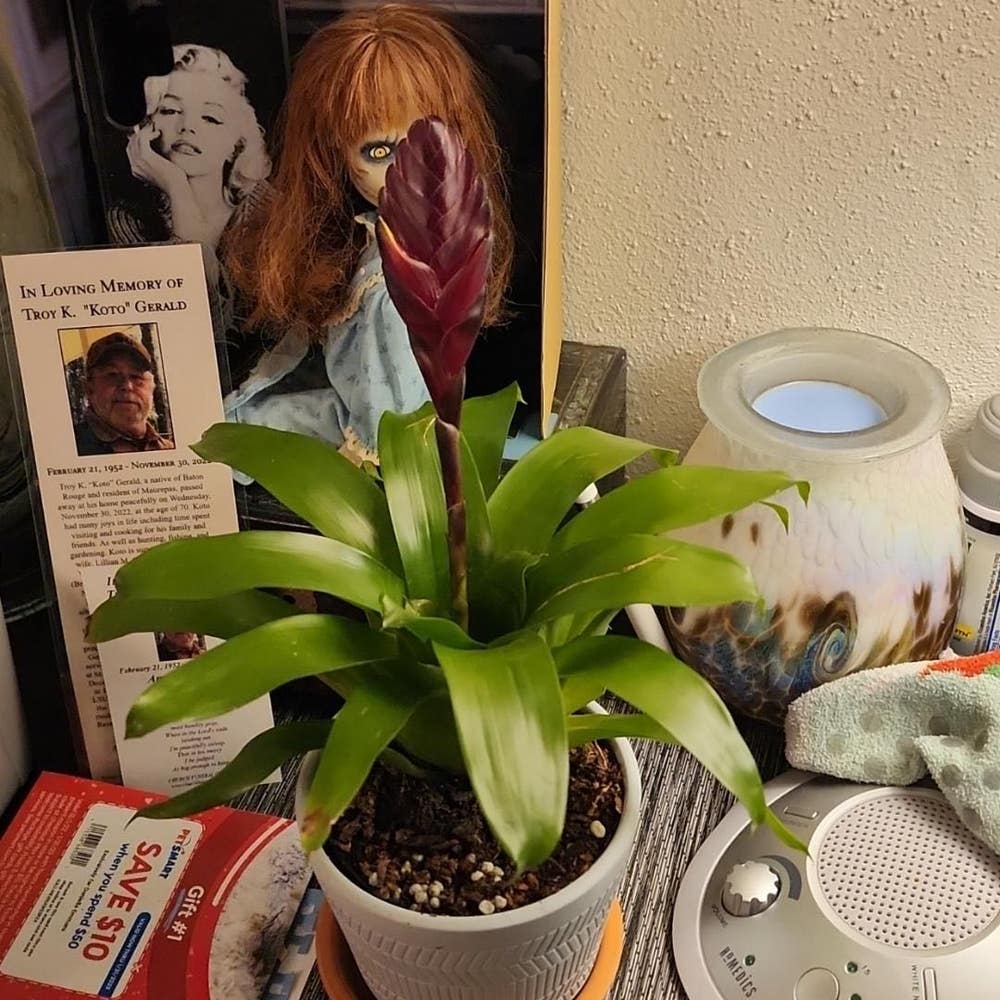
🔥 How to Get a Flaming Sword to Bloom
Vriesea carinata
By the Greg Editorial Team
Jun 18, 2024•5 min read
This article was created with the help of AI so we can cover more plants for you. May contain errors. See one? Report it here.
- Bright, indirect light is key for Flaming Sword blooms.
- Temperature swings and humidity help trigger flowering.
- Consistent care—water, soil, feeding—ensures blooming success.
Creating the Perfect Bloom-Boosting Environment
💡 Light: The Spark for Flowering
Bright, indirect light is the match that lights the Flaming Sword's blooming fuse. Too much direct sunlight can lead to a crispy disaster, while too little leaves the plant in a dull, bloom-less state. Reflective surfaces can be your secret weapon, bouncing light to hit all the right spots without extra cost.
🌡️ Temperature and Humidity: The Blooming Climate
Temperature swings are not just a topic of small talk; they're vital for triggering blooms. Aim for a 10- to 15-degree difference between day and night, mimicking the plant's natural environment. Keep humidity at a comfortable 40-50%, steering clear of the arid air that can stifle a Flaming Sword's fiery show.
🌱 Soil and Nutrition: The Flower Fuel
The soil is the stage, and it needs to be well-draining yet nutrient-rich. Think of it as a comfy bed for roots, not too hard and not too soft. Fertilization is like a well-timed drumbeat, essential but not overbearing. Stick to a feeding schedule that's more metronome and less sporadic drum solo to keep your Flaming Sword in rhythm for a blooming bonanza.

Watering Wisdom for Wondrous Blooms
💧 Balancing Moisture for Bloom Readiness
Watering your Flaming Sword isn't just about sticking to a schedule; it's about reading the room. These plants prefer their soil on the dry side, so before you reach for the watering can, do the finger test. If the top layer feels like a forgotten desert, it's time to hydrate. But here's the kicker: small sips are better than a deluge. Think of it as a watering tapas rather than a full-course meal.
🌵 Signs Your Flaming Sword is Thirsty for a Bloom
Keep an eye out for the tell-tale signs of thirst: leaves that look more tired than you feel on a Monday morning. If they're drooping like they've just heard sad violin music, it's a clear SOS. But don't overdo it; overwatering is like offering a fish a glass of water – unnecessary and potentially harmful. Remember, the goal is to keep the soil's moisture as balanced as a zen master on one foot.

The Art of Timing: When to Expect Fireworks
🌋 Understanding the Flaming Sword's Natural Bloom Cycle
The Flaming Sword, a theatrical name for a plant that lives up to the hype with its vivid blooms, has a diva-like bloom cycle. It's a one-hit wonder, producing a single flower in its lifetime. So, when the show starts, you want front-row seats. The bloom typically steals the spotlight during the summer months, but don't be surprised by an encore at other times.
🕰 Patience and Timing: When to Anticipate Blooms
Mark your calendars and practice patience; your Flaming Sword's blooming debut aligns with its growth spurt in spring and summer. It's a waiting game, akin to anticipating the drop of a long-awaited album. While you wait, ensure your plant's environment is warm, with bright, indirect light, and keep the humidity high. If you've adopted a pup from the mother plant, remember: the longer it stays attached, the quicker it'll be ready for its own solo performance.

Troubleshooting Lackluster Blooms
🌸 Identifying Flowering Faux Pas
If your Flaming Sword isn't setting the world on fire with its blooms, don't panic. The usual suspects include care mistakes and environmental stress. Overfeeding can lead to nutrient burn, while a boron deficiency can send potential flowers into the witness protection program. Lighting missteps are also common; too much and your plant's leaves might as well be in a fryer, too little and they're stumbling around in the dark. Watering is a tightrope walk – too much or too little, and your blooms are doomed.
🛠 Quick Fixes to Get Back on the Blooming Track
To correct course, dial back the fertilizer if you've been overzealous. Check for a boron deficiency and address it if needed. Assess your plant's lighting situation; it might need a sunnier spot or a break from intense rays. For watering woes, aim for consistency – think of it as your plant's comfort food. And remember, while a bit of stress can spur blooming, too much is a one-way ticket to wilt city.
🌿 Environmental Stress and Flowering
Environmental stress is like that annoying colleague who keeps stealing your lunch from the office fridge – it can sabotage your plant's performance. Pests and diseases can hijack your plant's resources, so keep an eye out for freeloaders and show them the door with insecticidal soap or fungicide. Sudden changes in temperature or light can cause bud blast, where buds form but then give up before the party starts.
🌺 Adjusting Care to Overcome Blooming Hurdles
Patience is key. If you're playing musical chairs with your plant, stop. Once buds appear, maintain a steady environment. If your Flaming Sword is shivering, find it a cozy spot away from drafts. Overwatering? Let the soil dry out a bit between drinks. Sometimes, love means giving your plant space to breathe – and bloom.
⚠️ Safety First
This content is for general information and may contain errors, omissions, or outdated details. It is not medical, veterinary advice, or an endorsement of therapeutic claims.
Always consult a qualified healthcare professional before using any plant as food, medicine, or supplement.
Never eat any plant (or feed one to pets) without confirming its identity with at least two trusted sources.
If you suspect poisoning, call Poison Control (800) 222-1222, the Pet Poison Helpline (800) 213-6680, or your local emergency service immediately.
Spotted an error? Please report it here.
Nurture your Flaming Sword to a spectacular bloom 🌺 with Greg's gentle reminders for the perfect light and water dance your plant craves.