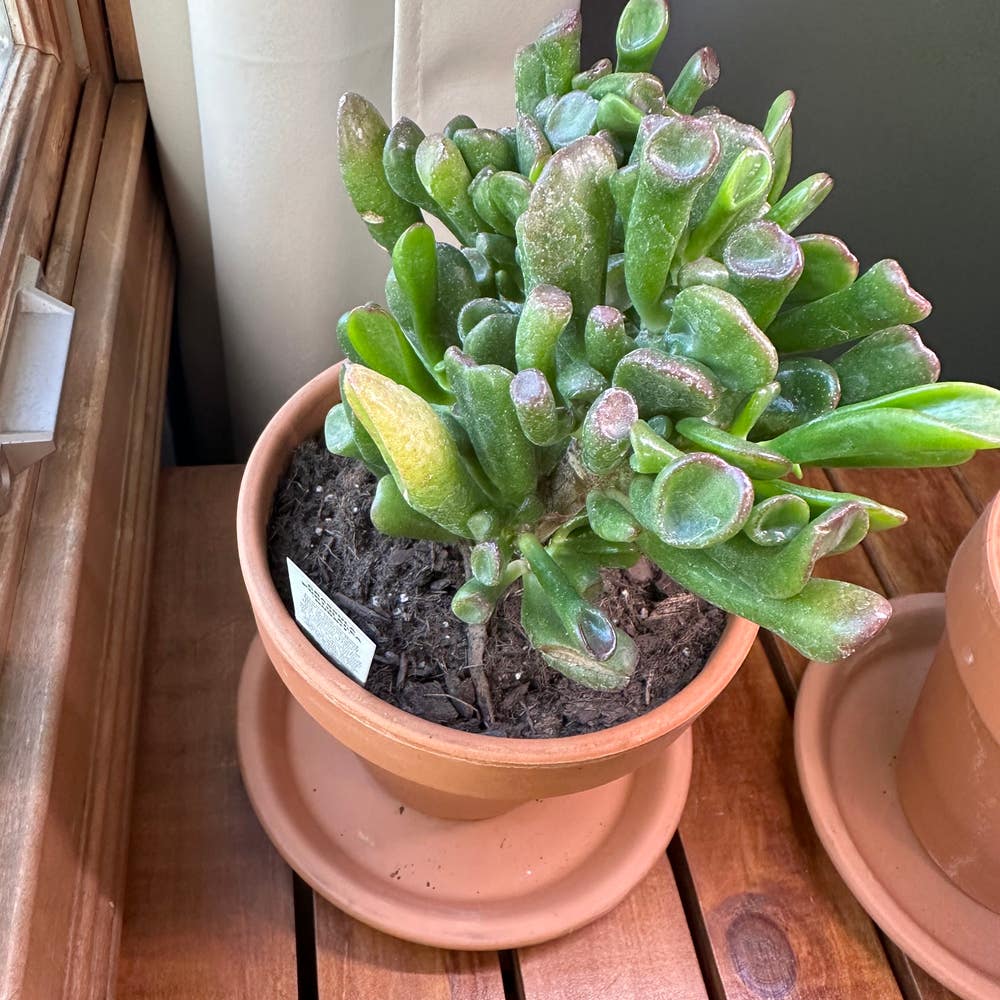
🏡 Ultimate Guide to Winter Care for Crassula 'Hobbit'
Crassula ovata 'Hobbit'
By the Greg Editorial Team
Nov 24, 2024•5 min read
This article was created with the help of AI so we can cover more plants for you. May contain errors. See one? Report it here.
Ensure your Crassula 'Hobbit' 🌱 thrives this winter with essential care tips for a vibrant spring revival!
- ❄️ Crassula 'Hobbit' goes dormant in winter, needing less water and nutrients.
- 🌞 Provide bright, indirect sunlight for 6-8 hours to prevent etiolation.
- 🧊 Protect from frost with cloths; monitor for signs of damage and adjust care.
Winter Behavior of Crassula 'Hobbit'
Dormancy and Evergreen Characteristics 🌱
Dormancy is a fascinating phase for Crassula 'Hobbit.' It’s a period of reduced metabolic activity and growth, allowing the plant to conserve energy during the colder months.
This dormancy typically lasts from late fall to early spring. During this time, the plant's water and nutrient needs drop significantly compared to its active growing season.
Despite the slowdown in growth, Crassula 'Hobbit' retains its leaves throughout winter, showcasing its evergreen nature. This resilience is a testament to its adaptations, enabling it to withstand colder temperatures while minimizing water loss.
Understanding these characteristics is crucial for providing the right care during winter. By recognizing the plant's dormancy and evergreen traits, you can ensure it thrives until spring arrives.
As we delve deeper into winter care requirements, let's explore how to adjust watering schedules effectively.
Winter Care Requirements
Adjusting Watering Schedules 🌧️
During winter, Crassula 'Hobbit' requires a significant adjustment in watering. Reduce your watering frequency to once every 2-4 weeks, depending on the humidity and temperature of your environment.
Be vigilant for signs of overwatering, such as yellowing leaves, mushy stems, and root rot. When you do water, ensure you do so thoroughly, allowing excess water to drain completely to keep the roots healthy.
Fertilizing Practices 🥗
Fertilization is another area where you need to exercise caution during winter. Avoid fertilizing your Crassula 'Hobbit' while it is dormant; instead, resume feeding in early spring when growth begins again.
When you do fertilize, opt for a diluted, balanced succulent fertilizer. This practice helps prevent nutrient buildup that can harm your plant during its dormant phase.
Importance of Light Exposure 💡
Light exposure is crucial for maintaining the health of your Crassula 'Hobbit' throughout the winter months. Aim to provide bright, indirect sunlight to prevent etiolation, which can occur if the plant stretches towards insufficient light.
Ensure your plant receives 6-8 hours of light daily. If natural light is limited, consider moving your plant closer to windows or supplementing with grow lights to keep it thriving.
As you prepare for the next section, remember that proper winter care is essential for a healthy transition into spring. Your attention to watering, fertilizing, and light exposure will set the stage for vibrant growth as the seasons change.
Frost Protection Strategies
Protecting from Frost ❄️
When winter hits, your Crassula 'Hobbit' needs extra care to survive the cold. For outdoor plants, using frost cloths or blankets during cold snaps can provide essential protection against harsh temperatures.
Indoors, make sure the temperature stays above 20°F (-6°C). This will help your plant thrive without the stress of frost damage. If your Crassula is in a container, consider moving it to sheltered areas or bringing it inside when frost is forecasted.
Signs of Frost Damage 🥶
Frost can be sneaky, so keep an eye out for signs of damage. Look for blackened or mushy leaves, wilting, and leaf drop, which indicate your plant may have suffered from the cold.
If you notice these symptoms, act quickly. Remove any damaged leaves and reassess your watering needs to prevent further stress. For long-term recovery, monitor your plant for signs of rot and adjust your care routine accordingly to help it bounce back.
As you protect your Crassula 'Hobbit' from frost, remember that the right care can make all the difference in its survival and health. Next, we’ll explore how to transition your plant indoors for the winter months.
Indoor Winter Care
Transitioning Indoors 🌬️
Moving your Crassula 'Hobbit' indoors before the first frost is crucial for its survival. Aim to bring it inside when temperatures start to dip, ensuring it avoids the harsh winter chill.
Acclimatization is key. Gradually introduce your plant to indoor conditions over a week to help it adjust without shock. This gentle transition will make a world of difference in its health.
Ideal Indoor Conditions 🌡️
For optimal growth, maintain indoor temperatures between 60°F to 75°F (15°C to 24°C). This range keeps your plant comfortable and thriving during the winter months.
Humidity levels should be kept low to prevent rot. If your home tends to be humid, consider using a dehumidifier to create a drier environment.
Good air circulation is essential. Ensure your plant has adequate airflow to prevent fungal issues, which can be a common problem in indoor settings.
As you care for your Crassula 'Hobbit' indoors, remember that these small adjustments can lead to a healthier plant. With the right conditions, your succulent will be ready to flourish when spring arrives.
Spring Preparation and Recovery
🌱 Signs of Recovery
As winter fades, look for signs that your Crassula 'Hobbit' is bouncing back. New growth, firm leaves, and vibrant color are all indicators of a healthy plant ready for the growing season.
🐛 Monitoring for Pests
With warmer temperatures, pests like mealybugs or aphids may emerge. Regularly check your plant for any signs of infestation to ensure it stays healthy.
🌼 Preparing for Spring Growth
To help your Crassula transition smoothly, start by gradually reintroducing it to outdoor conditions. Begin with partial shade and slowly increase its exposure to sunlight.
💧 Resuming Watering
As temperatures rise, it's time to increase your watering frequency. Monitor the soil moisture and adjust accordingly to support the plant's renewed growth.
🌿 Fertilization
Once you notice new growth, begin fertilizing with a balanced succulent fertilizer. This will provide the necessary nutrients to support your plant's recovery and growth.
🌞 Best Practices for Transitioning Outdoors
Timing is crucial when moving your Crassula outside. Wait until all frost danger has passed to avoid any setbacks.
🕒 Acclimatization Process
Gradually expose your plant to outdoor conditions over 1-2 weeks. This slow transition helps prevent shock and allows the plant to adapt to its new environment.
⚠️ Monitoring for Stress
Keep an eye out for signs of stress, such as drooping leaves or discoloration. If you notice these symptoms, adjust your care routine to help your plant recover.
As you prepare your Crassula 'Hobbit' for the vibrant spring season, remember that patience and careful observation are key. With the right care, your plant will thrive and bring joy to your space.
⚠️ Safety First
This content is for general information and may contain errors, omissions, or outdated details. It is not medical, veterinary advice, or an endorsement of therapeutic claims.
Always consult a qualified healthcare professional before using any plant as food, medicine, or supplement.
Never eat any plant (or feed one to pets) without confirming its identity with at least two trusted sources.
If you suspect poisoning, call Poison Control (800) 222-1222, the Pet Poison Helpline (800) 213-6680, or your local emergency service immediately.
Spotted an error? Please report it here.
Keep your Crassula 'Hobbit' thriving this winter ❄️ by reducing watering and letting Greg provide tailored reminders to ensure a vibrant spring recovery!