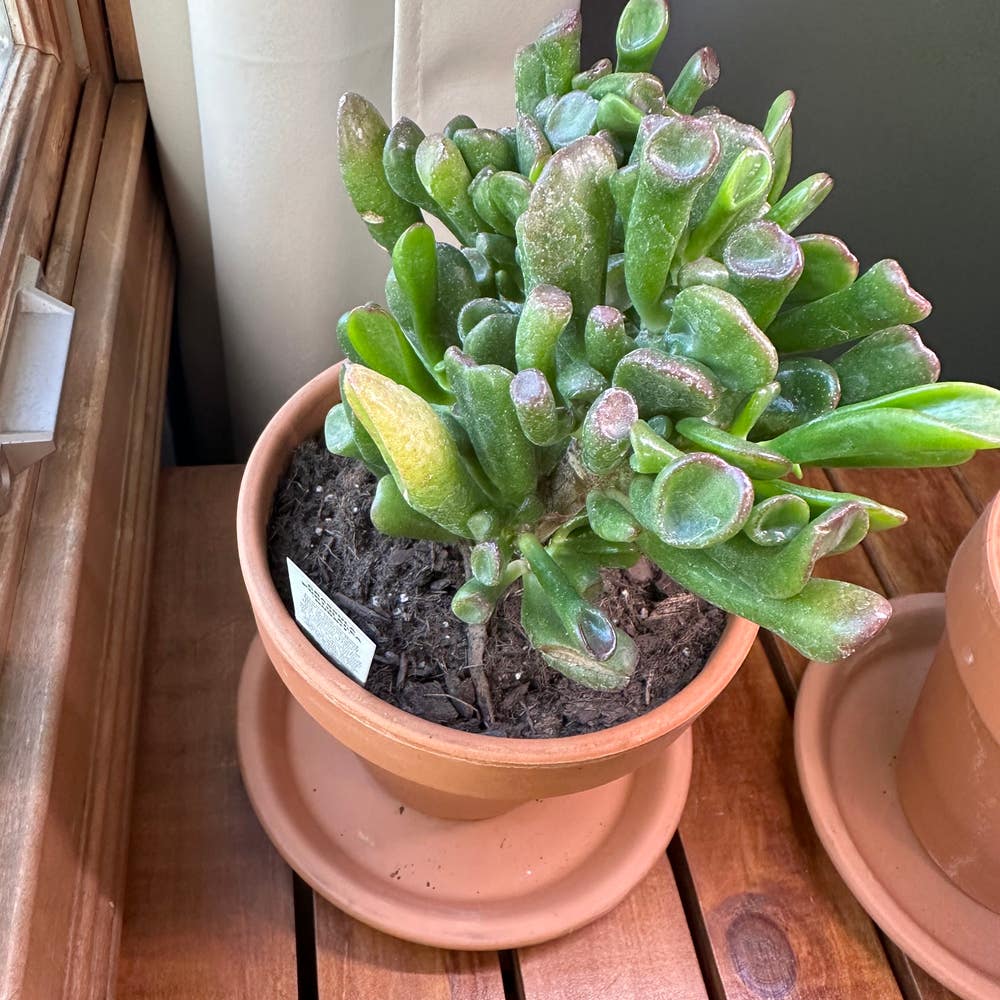
3 Tips for Healing Curling Leaves on Your Crassula 'Hobbit'
Crassula ovata 'Hobbit'
By the Greg Editorial Team
Nov 24, 2024•7 min read
This article was created with the help of AI so we can cover more plants for you. May contain errors. See one? Report it here.
Unlock the secrets to reviving your Crassula 'Hobbit' from curling leaves and ensure its thriving beauty! 🌱
- 🌱 Curling leaves indicate overwatering, underwatering, pests, or environmental stress.
- 💧 Adjust watering by letting the top 1-2 inches of soil dry out.
- 🐛 Regular inspections for pests can prevent further damage to your Crassula 'Hobbit'.
Causes of Curling Leaves
💧 Overwatering and Its Effects
Overwatering is a common issue that can lead to curling leaves on your Crassula 'Hobbit'. Symptoms include yellowing leaves, which may turn yellow before curling, and a soft, mushy texture that indicates the plant is struggling.
The consequences of overwatering are serious. Excess moisture can cause root rot, leading to decay that affects nutrient uptake. As a result, leaves may curl inward as a stress response to root damage.
🚰 Underwatering and Dehydration Symptoms
On the flip side, underwatering can also cause curling leaves. Signs of underwatering include wrinkled leaves that appear shriveled and less plump, along with dry leaf tips that turn brown and crispy.
The consequences here are equally concerning. Leaves may curl downwards as a sign of dehydration, and the plant may experience stunted growth due to a lack of water affecting its overall vigor.
🐛 Pest Infestations
Pest infestations are another culprit behind curling leaves. Common pests affecting Crassula 'Hobbit' include mealybugs, which are white and cotton-like, and aphids, small green or black insects that can distort leaves.
Signs of pest damage include sticky residue, known as honeydew, left by these pests, which can attract sooty mold. Additionally, leaves may curl or become misshapen due to the feeding activity of these pests.
🌡️ Environmental Stress Factors
Environmental stress factors can also lead to curling leaves. Temperature extremes play a significant role; high temperatures can cause leaf curl, while low temperatures from cold drafts or frost can lead to stress.
Humidity levels are equally important. Low humidity can exacerbate dehydration symptoms, while high humidity can contribute to fungal issues, both of which can negatively impact your plant's health.
Understanding these causes is crucial for effective plant care. By identifying the source of the curling leaves, you can take the necessary steps to restore your Crassula 'Hobbit' to its thriving state. Next, we’ll explore how to diagnose these issues accurately.
Diagnosing Curling Leaves
🌊 Identifying Signs of Overwatering vs. Underwatering
Understanding the signs of overwatering and underwatering is crucial for your Crassula 'Hobbit'.
Overwatering indicators include soft, yellow leaves that feel mushy to the touch. This condition often leads to root rot, which can severely affect your plant's health.
On the other hand, underwatering indicators manifest as wrinkled, dry leaves with brown tips. This dehydration can cause leaves to curl downwards, signaling that your plant is in distress.
For a quick reference, consider using a comparison chart to distinguish between these two conditions effectively.
🐛 Recognizing Pest Damage on Leaves
Pest infestations can also lead to curling leaves, so regular inspections are essential.
Start with visual inspection techniques: look for visible pests on the undersides of leaves and check for any sticky residue or webbing. These signs often indicate the presence of pests like mealybugs or aphids.
Next, conduct a damage assessment by evaluating the extent of leaf curling and distortion. This will help you determine the severity of the infestation and the necessary steps for treatment.
🌡️ Assessing Environmental Conditions Affecting the Plant
Environmental factors play a significant role in the health of your Crassula 'Hobbit'.
First, check the light conditions to ensure your plant receives bright, indirect sunlight. Insufficient light can lead to stress and curling leaves.
Next, perform temperature checks to monitor indoor temperatures, avoiding extremes that could harm your plant.
Lastly, conduct a humidity assessment using a hygrometer to measure humidity levels around the plant. Proper humidity is vital for preventing dehydration and promoting overall plant health.
By diagnosing these issues early, you can take proactive steps to restore your Crassula 'Hobbit' to its vibrant self. Now, let's explore effective treatments for curling leaves.
Treatment for Curling Leaves
🌊 Adjusting Watering Practices
To help your Crassula 'Hobbit' recover, start with a proper watering schedule. Water the plant when the top 1-2 inches of soil feel dry to the touch.
Using a moisture meter can provide accurate readings of soil moisture levels. Additionally, ensure your pots have drainage holes to prevent water accumulation, which can lead to root rot.
🐛 Treating Pests Effectively
If pests are the culprit, effective treatment is crucial. Apply diluted neem oil to the affected areas to combat infestations.
Insecticidal soap is another option; it can effectively eliminate pests without harming your plant. Regularly inspect your plants weekly for early signs of infestation to catch any issues before they escalate.
🌤️ Modifying Environmental Conditions
Environmental factors play a significant role in plant health. Adjust the light exposure by moving your Crassula 'Hobbit' to a spot with optimal light conditions.
Maintaining indoor temperatures between 65°F and 80°F (18°C to 27°C) is essential for preventing stress. If humidity levels are low, consider using a humidifier or a pebble tray to increase moisture around your plant.
By addressing these key areas, you can significantly improve the health of your Crassula 'Hobbit' and prevent further curling of leaves. Next, let's explore how to prevent future leaf curl and ensure your plant thrives.
Preventing Future Leaf Curl
🌊 Best Practices for Watering
To keep your Crassula 'Hobbit' thriving, it's crucial to master your watering routine. Always allow the soil to dry out completely between waterings to prevent overwatering, which is a common culprit of leaf curl.
During the winter months, when growth slows down, consider reducing your watering frequency. This adjustment helps to mimic the plant's natural dormancy period, ensuring it receives just the right amount of moisture.
🌱 Choosing the Right Soil Mix
Selecting the right soil mix is essential for your plant's health. A well-draining cactus or succulent mix is highly recommended, as it allows excess water to escape, preventing root rot.
Avoid heavy soils that retain excess moisture, as they can lead to serious issues like root decay and leaf curl. The right mix will keep your plant happy and healthy.
🔍 Regular Inspection for Pests and Diseases
Regular inspections can save your plant from potential pest infestations. Make it a habit to check the leaves and stems weekly for any signs of pests or diseases.
If you spot any issues, treat them immediately to prevent the spread. Early intervention is key to maintaining the health of your Crassula 'Hobbit'.
☀️ Optimal Placement for Light and Temperature
Placement is everything when it comes to plant care. Position your Crassula 'Hobbit' in a south or east-facing window to ensure it receives maximum light exposure, which is vital for its growth.
Additionally, be mindful of temperature. Avoid placing your plant near heating vents or drafty windows, as extreme temperature fluctuations can stress the plant and lead to curling leaves.
By following these preventative measures, you can help your Crassula 'Hobbit' thrive and avoid the frustration of curling leaves. Next, let’s explore how to monitor your plant's health effectively.
Monitoring Plant Health
Signs of Recovery in Leaf Health 🌱
When your Crassula 'Hobbit' begins to recover, you'll notice some clear indicators. Look for fresh leaves emerging, which is a sign that your plant is bouncing back.
Additionally, pay attention to the texture of the leaves. They should regain firmness and plumpness, indicating improved health and hydration.
When to Seek Professional Help 🩺
Sometimes, despite your best efforts, the leaf curl may persist. If you notice ongoing issues even after treatment, it might be time to consult a professional.
Severe pest infestations that are difficult to control also warrant expert intervention. Don't hesitate to seek help if your plant's health continues to decline.
Importance of Consistent Care Routines 📅
Establishing a consistent care schedule is crucial for your plant's well-being. Regular watering, feeding, and inspection routines can make a significant difference in maintaining plant health.
Consistency not only promotes resilience against stressors but also enhances overall vitality. Your Crassula 'Hobbit' will thrive with the right care, so stay committed to its needs.
As you monitor your plant's health, remember that each small improvement is a step toward a flourishing Crassula. With patience and dedication, you can ensure its long-term vitality and beauty.
⚠️ Safety First
This content is for general information and may contain errors, omissions, or outdated details. It is not medical, veterinary advice, or an endorsement of therapeutic claims.
Always consult a qualified healthcare professional before using any plant as food, medicine, or supplement.
Never eat any plant (or feed one to pets) without confirming its identity with at least two trusted sources.
If you suspect poisoning, call Poison Control (800) 222-1222, the Pet Poison Helpline (800) 213-6680, or your local emergency service immediately.
Spotted an error? Please report it here.
Transform your Crassula 'Hobbit' into a thriving beauty 🌿 with Greg's tailored care tips and reminders that ensure your plant gets just the right amount of love and attention!