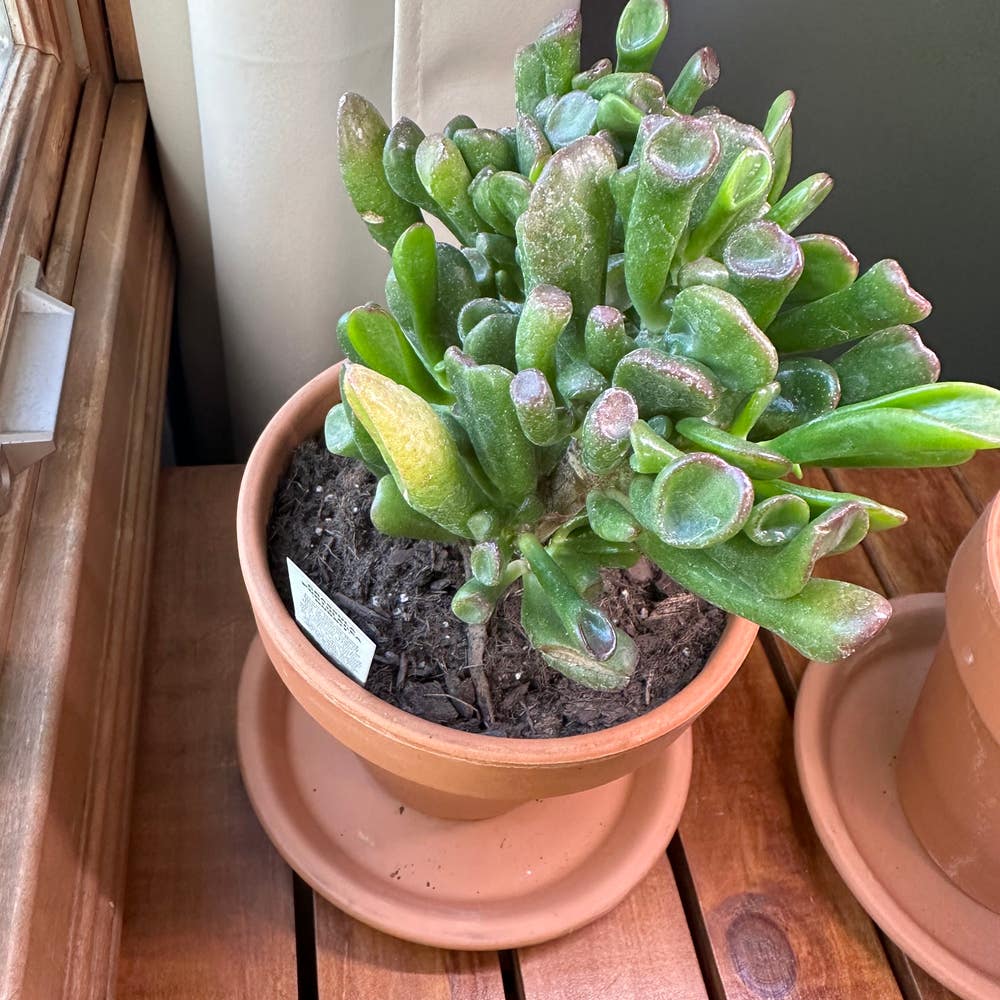
🌵 How to Fix Root Rot in Your Crassula 'Hobbit'
Crassula ovata 'Hobbit'
By the Greg Editorial Team
Nov 24, 2024•5 min read
This article was created with the help of AI so we can cover more plants for you. May contain errors. See one? Report it here.
Rescue your Crassula 'Hobbit' from root rot 🌱 and help it thrive with these essential care tips!
- 🌱 Identify root rot by yellowing leaves, wilting stems, and foul soil odor.
- 🛠️ Inspect roots for softness; trim mushy roots and allow to dry before repotting.
- 💧 Prevent root rot by using well-draining soil and adjusting your watering schedule.
Identifying Symptoms
🕵️♂️ Visual signs of root rot
Root rot can be a sneaky problem for your Crassula 'Hobbit'. The first signs often manifest visually, so keep an eye out for these indicators:
- Yellowing leaves: This is a clear signal that your plant is stressed and may be struggling with root issues.
- Wilting or mushy stems: If your stems feel soft or look droopy, it’s a sign of severe root damage.
- Foul odor: A rotten smell coming from the soil is a telltale sign that something is wrong beneath the surface.
🔍 How to check for root rot
If you suspect root rot, it’s time to investigate further. Follow these simple steps to check for root rot:
- Remove the plant from its pot carefully: Gently take your Crassula 'Hobbit' out of its pot to avoid damaging the roots.
- Inspect the roots for discoloration: Look for any brown or black roots, which indicate decay.
- Check for softness or mushiness in the roots: Healthy roots should feel firm; mushy roots are a red flag.
- Assess the soil condition: Is the soil overly wet or compacted? This can contribute to root rot.
By recognizing these symptoms and checking for root rot, you can take action before it’s too late. Next, we’ll explore how to treat root rot effectively.
Treating Root Rot
Dealing with root rot in your Crassula 'Hobbit' can feel daunting, but with the right approach, you can restore your plant to health. Follow this step-by-step guide to effectively treat root rot.
📝 Step-by-step guide
Remove the plant from the pot and inspect the roots. Gently take your Crassula out of its pot, being careful not to damage the roots further.
Trim away any rotten or mushy roots with sterilized scissors. Look for brown or black roots that feel soft; these need to go.
Allow the remaining roots to dry for a few hours. This helps prevent further rot and prepares them for repotting.
Prepare a fresh succulent potting mix with excellent drainage. A mix that includes perlite or pumice is ideal for keeping moisture levels balanced.
Repot the plant in a new pot with drainage holes. Ensure the pot is not too large, as excess soil can retain moisture and lead to more problems.
🛠️ Recommended products for treatment
Using the right products can make a significant difference in your plant's recovery. Consider these options:
Fungicides: These can help treat any fungal infections that may have developed in the roots.
Soil amendments: Adding perlite or pumice to your potting mix enhances drainage, which is crucial for preventing future root rot.
🌱 Repotting techniques
Proper repotting techniques are essential for your plant's recovery. Here are some tips:
Choosing the right pot size: Avoid pots that are too large, as they can hold excess moisture and lead to root rot.
Layering drainage materials: Use gravel or coarse sand at the bottom of the pot to promote drainage.
Proper planting depth: Ensure the crown of the plant is above soil level to prevent moisture accumulation around the stem.
By following these steps and techniques, you can effectively treat root rot and give your Crassula 'Hobbit' the best chance for recovery. Next, let’s explore how to prevent root rot from occurring in the future.
Preventing Root Rot
🌊 Best Practices for Watering
To keep your Crassula 'Hobbit' thriving, understanding watering frequency is essential. Water only when the top inch of soil feels dry; this prevents overwatering, a common cause of root rot.
When watering, consider your technique. Deep watering encourages roots to grow downward, while surface watering can lead to shallow root systems. Aim for a balance that promotes healthy growth.
🪴 Importance of Soil Drainage and Pot Selection
Choosing pots with drainage holes is crucial for succulent health. These holes allow excess water to escape, reducing the risk of soggy soil and root rot.
The right soil type matters too. A good succulent potting mix should be well-draining, often containing materials like perlite or sand to enhance airflow and moisture control.
🌦️ Seasonal Care Tips
Adjust your watering schedule with the seasons. In warmer months, your plant may need more frequent watering, while in cooler months, reduce the frequency to avoid waterlogged soil.
Keep an eye on environmental changes. Temperature and humidity shifts can affect how quickly the soil dries out, so be ready to adapt your care routine accordingly.
By following these preventive measures, you can help your Crassula 'Hobbit' stay healthy and vibrant. Next, we’ll explore how to care for your plant after treatment, ensuring it continues to thrive.
Post-Treatment Care
Monitoring Recovery 🌱
After treating root rot, it's essential to keep an eye on your Crassula 'Hobbit' as it begins to recover. Look for signs of new growth and improved leaf color, which indicate that your plant is bouncing back.
Regular checks are crucial during this phase. Assess the soil moisture and root health frequently to ensure your plant is on the right track.
Signs of Improvement 🌿
As your plant heals, you should notice the leaves becoming firmer. This firmness is a clear sign that the roots are regaining their function and strength.
Additionally, observe the growth patterns. New leaf development and overall vigor are excellent indicators that your Crassula 'Hobbit' is thriving once again.
By staying attentive during this recovery period, you can help ensure your plant not only survives but flourishes in its new environment.
⚠️ Safety First
This content is for general information and may contain errors, omissions, or outdated details. It is not medical, veterinary advice, or an endorsement of therapeutic claims.
Always consult a qualified healthcare professional before using any plant as food, medicine, or supplement.
Never eat any plant (or feed one to pets) without confirming its identity with at least two trusted sources.
If you suspect poisoning, call Poison Control (800) 222-1222, the Pet Poison Helpline (800) 213-6680, or your local emergency service immediately.
Spotted an error? Please report it here.
Revive your Crassula 'Hobbit' from root rot and watch it thrive 🌱 with Greg's tailored watering reminders and expert care tips to keep your plant healthy and happy!