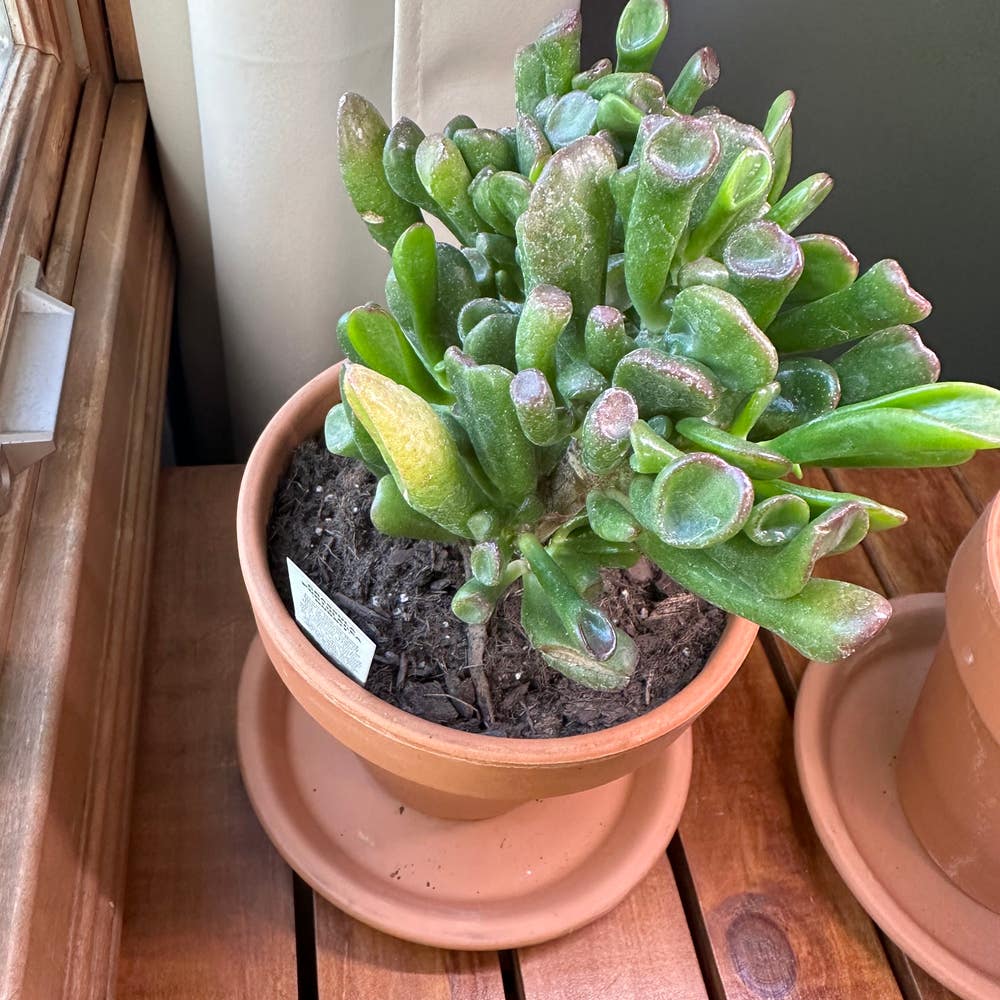
How to Fix Dropping Leaves on Your Crassula 'Hobbit' 🧙♂️
Crassula ovata 'Hobbit'
By the Greg Editorial Team
Nov 24, 2024•5 min read
This article was created with the help of AI so we can cover more plants for you. May contain errors. See one? Report it here.
Master the art of keeping your Crassula 'Hobbit' thriving 🌱 by diagnosing and preventing leaf drop issues effectively! 🌿
- 💧 Overwatering and underwatering cause leaf drop; monitor soil moisture regularly.
- 🌞 Bright, indirect sunlight is essential for Crassula 'Hobbit' health and growth.
- 🐛 Pest infestations like mealybugs can damage leaves; treat promptly with insecticidal soap.
Causes of Leaf Drop
💧 Overwatering and Its Effects
Overwatering is a common issue for Crassula 'Hobbit' owners. Symptoms include yellowing leaves that become mushy and a noticeable leaf drop when touched.
Excess moisture can lead to root rot, which severely affects the plant's ability to absorb nutrients. Additionally, the damp conditions may promote fungal infections, further jeopardizing the plant's health.
🚰 Underwatering and Its Effects
On the flip side, underwatering can also cause significant problems. Look for wrinkled, shriveled leaves as signs that your plant is struggling for moisture.
When a Crassula 'Hobbit' is underwatered, it may experience stunted growth and shed leaves as a stress response. This is the plant's way of conserving resources to survive.
🐛 Pest Infestations and Their Impact
Pests can wreak havoc on your Crassula 'Hobbit.' Common culprits include mealybugs, which are white and cotton-like, and aphids, small green or black insects that can cause leaf curling and drop.
Signs of pest infestations include sticky residue, known as honeydew, which can attract sooty mold. Always check the undersides of leaves for visible pests to catch infestations early.
🌡️ Environmental Stress Factors
Environmental conditions play a crucial role in the health of your plant. The ideal temperature range for Crassula 'Hobbit' is between 20°C to 25°C (68°F to 77°F). Anything below 10°C (50°F) can stress the plant.
Humidity levels also matter; low humidity is preferred, as high humidity can lead to fungal issues. Lastly, ensure your plant receives bright, indirect sunlight, as too much direct sun can scorch its leaves.
Understanding these causes of leaf drop is essential for maintaining a healthy Crassula 'Hobbit.' With this knowledge, you can better diagnose and address any issues your plant may face. Next, we’ll explore how to diagnose leaf drop issues effectively.
Diagnosing Leaf Drop Issues
🌊 Identifying Symptoms of Overwatering
Overwatering can be a sneaky culprit behind leaf drop. Look for yellowing leaves that feel mushy to the touch, signaling that your Crassula 'Hobbit' is drowning.
To confirm, inspect the soil moisture level. A moisture meter or a simple finger test can help you gauge if the soil is too wet.
💧 Recognizing Signs of Underwatering
On the flip side, underwatering presents its own set of issues. If you notice wrinkled, shriveled leaves, your plant might be gasping for hydration.
Check the soil condition as well. Dry, crumbly soil is a clear indicator that it’s time to give your plant a drink.
🐛 Checking for Pests and Diseases
Pests can wreak havoc on your Crassula 'Hobbit', so a thorough inspection is crucial. Start by examining the undersides of leaves and stems for any unwanted visitors.
Look out for sticky residue or webbing, which can signal a pest infestation. Addressing these issues early can save your plant from further stress.
🌡️ Assessing Environmental Conditions
Environmental factors play a significant role in your plant's health. Measure the temperature and humidity levels to ensure they fall within the ideal range of 20-25°C (68-77°F) and low humidity.
Don’t forget to evaluate light exposure. Your Crassula 'Hobbit' thrives in bright, indirect sunlight, so make sure it’s getting the right amount of light without being scorched.
By carefully diagnosing these issues, you can take the necessary steps to restore your plant's health and vitality. Next, let’s explore effective solutions to tackle these leaf drop problems head-on.
Solutions for Leaf Drop
🌊 Adjusting Watering Practices
Establishing a consistent watering schedule is crucial for your Crassula 'Hobbit'. Water the plant when the top 1-2 inches of soil feel dry to the touch.
To ensure accuracy, use the finger test or a moisture meter. This helps prevent overwatering, which can lead to root rot.
Avoid letting the plant sit in water, as this can cause serious damage to the roots.
🕳️ Improving Soil Drainage
Soil drainage is vital for the health of your succulent. When repotting, choose a well-draining soil mix specifically designed for succulents.
Make sure the pot has drainage holes to prevent water accumulation. This simple step can save your plant from drowning.
🐞 Treating Pest Infestations
Pest control is essential for maintaining a healthy Crassula 'Hobbit'. Use insecticidal soap or neem oil to effectively treat mealybugs and aphids.
Regularly inspect and clean the plant to prevent infestations. A little maintenance goes a long way in keeping pests at bay.
🌤️ Modifying Environmental Conditions
Adjusting environmental conditions can significantly improve your plant's health. Move your Crassula 'Hobbit' to a location with bright, indirect sunlight for optimal growth.
Additionally, keep the plant away from drafts and extreme temperature changes. This will help reduce stress and promote a thriving environment.
By implementing these solutions, you can effectively address leaf drop issues and foster a healthy, vibrant Crassula 'Hobbit'. Next, let’s explore some preventative measures to keep your plant in top shape.
Preventative Measures
Best Practices for Care 🌱
To keep your Crassula 'Hobbit' thriving, establish a consistent watering schedule that adapts to seasonal changes. This means watering more frequently during the growing season and less during dormancy.
Soil maintenance is equally important. Refresh the soil every 1-2 years to ensure it retains proper drainage and nutrient levels, which are crucial for your plant's health.
Seasonal Care Tips 🌸
During spring and summer, increase your watering frequency as the plant resumes growth. This is the time when your Crassula 'Hobbit' is most active and needs more moisture to flourish.
In contrast, fall and winter call for a reduction in watering. As the plant enters dormancy, it conserves energy and requires less water to survive.
Regular Maintenance Routines 🔍
Make it a habit to inspect your plant weekly for any signs of stress or pest infestations. Early detection is key to preventing bigger problems down the line.
Additionally, gently clean the leaves to remove dust. This simple act improves photosynthesis and keeps your plant looking its best.
By following these preventative measures, you can ensure your Crassula 'Hobbit' remains healthy and vibrant. Next, let’s explore effective solutions for addressing any leaf drop issues you may encounter.
⚠️ Safety First
This content is for general information and may contain errors, omissions, or outdated details. It is not medical, veterinary advice, or an endorsement of therapeutic claims.
Always consult a qualified healthcare professional before using any plant as food, medicine, or supplement.
Never eat any plant (or feed one to pets) without confirming its identity with at least two trusted sources.
If you suspect poisoning, call Poison Control (800) 222-1222, the Pet Poison Helpline (800) 213-6680, or your local emergency service immediately.
Spotted an error? Please report it here.
Keep your Crassula 'Hobbit' thriving 🌿 by using Greg's tailored care reminders to master watering, pest control, and environmental conditions for a vibrant plant!