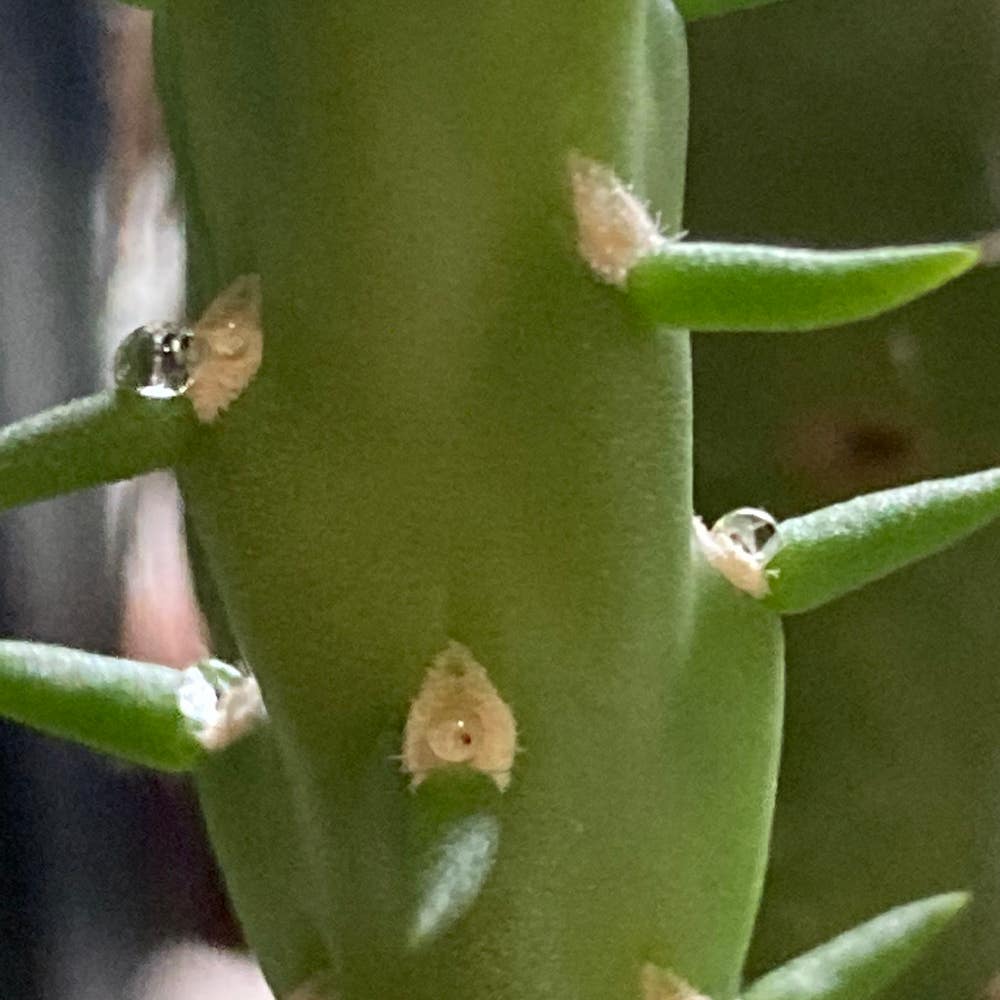
🌵 Black Spots on My Sonoran Jumping Cholla Leaves
Cylindropuntia fulgida
By the Greg Editorial Team
Mar 13, 2024•3 min read
This article was created with the help of AI so we can cover more plants for you. May contain errors. See one? Report it here.
- Fungal infections and pests cause black spots on Cholla leaves.
- Use fungicides and pest control wisely, considering organic options.
- Prevent with proper care: watering, airflow, and regular inspections.
Spotting the Culprits: Identifying Causes of Black Spots
🍄 Fungal Foes
Fungal infections are the main culprits behind those unsightly black spots on your Sonoran Jumping Cholla. Powdery mildew and leaf spot diseases are the usual suspects, thriving in the warm, moist conditions that your cholla might resent. These fungi can make the leaves look as if they've been in a flour fight or tagged with soot.
🐜 Pesky Pests
But let's not overlook the tiny troublemakers. Spider mites and scale insects are notorious for leaving behind black spots as they feast on your plant's sap. These pests are sneaky, often setting up camp on the undersides of leaves where they're not immediately noticeable. If you spot fine webs or a sticky residue, it's time to show these critters the door.
Battling the Blight: Effective Treatment Strategies
🍄 Going Fungal-Fighting
When fungi attack, it's time to fight back with the right fungicides. Timing is crucial; apply during cooler hours for maximum plant receptivity. Suit up with protective gear and adhere to the label like it's law. Use sparingly—think precision over quantity.
🐜 Kicking Out the Critters
For pests, you've got a choice: go organic with insecticidal soaps and horticultural oils or bring out the chemical artillery. Natural predators can also turn the tide in your favor. Whichever route you choose, apply with care and only as needed to avoid collateral damage to your Cholla.
Keeping the Cholla Cheerful: Prevention Tactics
🌵 Cultivating Cholla Comfort
Watering wisdom is key. Overwatering invites pests and diseases, so give your Cholla just enough to quench its thirst—no more. Ensure drainage is on point; soggy soil is a no-go for these desert dwellers.
Airflow isn't just a breeze; it's a necessity. Keep your Cholla in a spot where air can circulate freely, steering clear of stagnant, stale environments. Think of it as giving your plant room to breathe.
🔍 Regular Recon and Maintenance
Inspect regularly. Catching issues early can mean the difference between a quick fix and a full-blown plant crisis. Look for unusual changes in color, texture, or form.
Cleanliness is non-negotiable. Clear away debris and dead plant material to deter pests from settling in. It's like housekeeping for plant health.
Prune proactively. Not just for aesthetics, pruning encourages healthy growth and balance, reducing the risk of disease. Always use sterilized tools to avoid spreading any pathogens.
Environmental stability is crucial. Avoid placing your Cholla in locations where temperature and humidity fluctuate wildly. Consistency is comforting for your spiky friend.
Remember, prevention is not just a set of actions; it's a mindset. By maintaining a stable, clean, and well-monitored environment, you're not just growing a Cholla; you're cultivating resilience.
⚠️ Safety First
This content is for general information and may contain errors, omissions, or outdated details. It is not medical, veterinary advice, or an endorsement of therapeutic claims.
Always consult a qualified healthcare professional before using any plant as food, medicine, or supplement.
Never eat any plant (or feed one to pets) without confirming its identity with at least two trusted sources.
If you suspect poisoning, call Poison Control (800) 222-1222, the Pet Poison Helpline (800) 213-6680, or your local emergency service immediately.
Spotted an error? Please report it here.
Keep your Sonoran Jumping Cholla spotless 🌵 with Greg's health monitoring alerts and tailored care advice to prevent those black spots from taking hold.