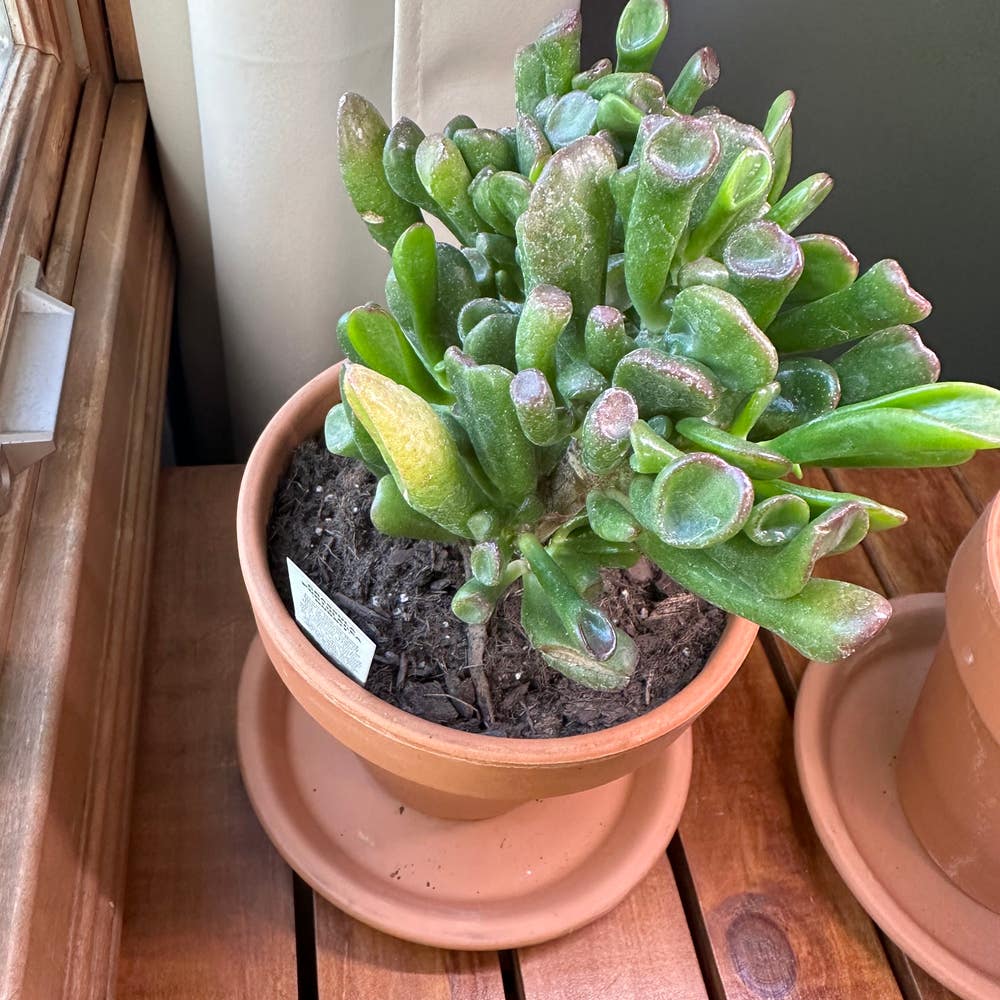
Why Are There Black Spots on My Hobbit Jade Leaves?
Crassula ovata 'Hobbit'
By the Greg Editorial Team
Feb 11, 2024•4 min read
This article was created with the help of AI so we can cover more plants for you. May contain errors. See one? Report it here.
Stop black spots from ruining your Hobbit Jade 🌱—learn the secrets to a spotless, healthy plant! 🕵️♂️
- Overwatering and fungi cause black spots on Hobbit Jade leaves.
- Prevent spots with dry soil, good air circulation, and controlled humidity.
- Treat with neem oil, baking soda, or commercial fungicides if necessary.
Spotting the Trouble: Recognizing Black Spots
🕵️ What Do Black Spots Look Like?
Black spots on Hobbit Jade leaves are the equivalent of a red flag waving frantically for your attention. They might start as tiny specks, barely noticeable, but can grow into larger, more conspicuous blotches that mar the plant's appearance. These spots can be dry and brittle or have a different texture from the rest of the leaf. A spot with a foul odor or a slimy feel is your cue to take action.
🌿 Where to Find Them: Common Locations on Leaves
The undersides of leaves are the black spots' preferred starting point, hidden from your casual glance. But they're not shy; they'll soon spread to the topside, demanding your attention. Check both new and mature leaves, as black spots do not discriminate based on age. If you spot these blemishes, it's time to switch to detective mode and investigate further.
The Usual Suspects: Pinpointing the Causes
🌊 Overwatering Woes
How Excess Water Leads to Black Spots
Overwatering is like overindulgence; it's too much of a good thing. Hobbit Jade's roots need to breathe, and too much water suffocates them, leading to root rot. This stress on the plant often manifests as black spots on the leaves.
Telltale Signs of Overwatering
Look for leaves that are yellow, swollen, or have a translucent appearance. If they easily detach from the plant or show signs of bursting, it's a clear signal you've been heavy-handed with the H2O. Always check the soil's moisture before deciding to water again.
🍄 Fungal Foes
Identifying the Culprits
Fungi like Cercospora and Anthracnose love a moist environment. These uninvited guests throw a party at your plant's expense, leaving black spots as evidence of their presence.
Environmental Enablers
A plant's environment can be a VIP pass for fungi. High humidity, poor airflow, and stagnant conditions are the equivalent of rolling out the red carpet for these pathogens. Adjusting these factors can help you crash their party and protect your Hobbit Jade.
Keeping Spots at Bay: Prevention Tactics
💧 Water Wisdom
Overwatering is the fast track to black spot boulevard for your Hobbit Jade. To avoid this, water only when the soil feels dry to the touch. This might mean checking in with your plant's soil more often than you check your social media notifications.
A well-draining soil mix acts like a bouncer at the club, letting in the good stuff and kicking out the excess. Regular garden soil just won't cut it – think cactus mix or add in some perlite to get that drainage on point.
🌬️ Airflow and Humidity Hacks
Good air circulation is like a secret weapon against fungal foes. Place your Hobbit Jade where air can move freely, but not where it's so windy it could start telling tales of the high seas.
Humidity can be a fungal funhouse. Keep it in check with a dehumidifier or by spacing out your plants like they're introverts at a party. And remember, saucers under pots should be used wisely – they're not swimming pools for your plant's roots.
Spot Treatment: Remedies and Solutions
🌿 Natural and Homemade Fixes
Neem oil and baking soda solutions are the unsung heroes in the fight against black spots on Hobbit Jade leaves. They're like the home-cooked meal in a world of fast food—simple, effective, and without the nasty additives.
- Neem Oil Mixture: Combine 1 teaspoon of neem oil with 1 liter of water and a squirt of liquid soap. This concoction is a triple threat—antifungal, antibacterial, and pest-repellent.
- Baking Soda Spray: Dissolve 1 tablespoon of baking soda and a dash of liquid soap in 1 gallon of water. It's a pH-adjusting spray that fungi find repulsive.
🛡️ Choosing and Using Commercial Fungicides
When the gentle approach doesn't cut it, it's time to bring out the big guns—commercial fungicides. They're like the bouncers at the club, showing no mercy to those fungal party crashers.
- Copper-based Fungicides: These are the snipers, targeting fungi with precision. Apply by coating both the top and bottom of the leaves, following the label to the letter.
- Sulfur-based Options: They're the old-school rockstars of fungicides, known for their reliability. Just make sure to stick to the script—no ad-libbing with application rates or frequencies.
Remember, always improve air circulation and keep foliage dry—fungi hate a well-ventilated and arid environment as much as teenagers despise a phone with no Wi-Fi.
⚠️ Safety First
This content is for general information and may contain errors, omissions, or outdated details. It is not medical, veterinary advice, or an endorsement of therapeutic claims.
Always consult a qualified healthcare professional before using any plant as food, medicine, or supplement.
Never eat any plant (or feed one to pets) without confirming its identity with at least two trusted sources.
If you suspect poisoning, call Poison Control (800) 222-1222, the Pet Poison Helpline (800) 213-6680, or your local emergency service immediately.
Spotted an error? Please report it here.
Keep your Hobbit Jade spot-free and thriving 🍃 by leveraging Greg's custom care reminders to dodge overwatering and fungal foes.