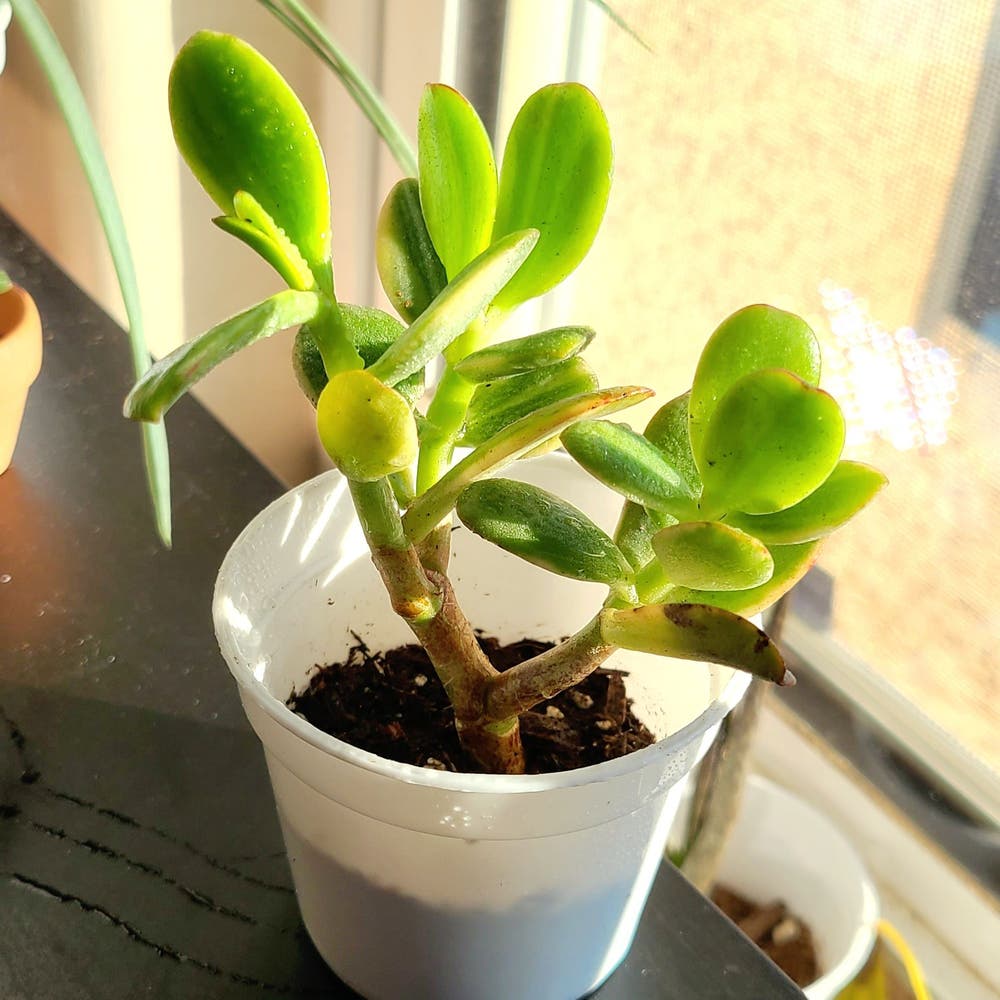
🍂 Why Are My Variegated Jade Plant Leaves Turning Yellow?
Crassula ovata 'Variegata'
By the Greg Editorial Team
Jun 18, 2024•4 min read
This article was created with the help of AI so we can cover more plants for you. May contain errors. See one? Report it here.
Uncover the secrets to reviving your yellowing jade plant and keep it thriving 🌿—no green thumb required!
- Over/underwatering and light issues cause yellow leaves. Adjust care routines.
- Nutrient balance and pest control are key to preventing yellowing.
- 🌱 Consistent care prevents distress, ensuring vibrant variegated leaves.
Spotting the Signs: When Yellow Isn't Mellow
🚨 Identifying Yellow Leaves
Yellowing leaves on your Variegated Jade Plant can be early warnings of distress. Uniform yellowing suggests systemic issues, such as nutrient deficiencies or watering problems. Spotted or edged yellowing could mean sunburn or temperature stress. Black or brown spots with a yellow halo scream fungal problems or pests. It's like your plant is sending out a flare—time to pay attention.
Assessing the Severity
The extent of yellowing can range from mild concern to a full-blown plant health crisis. If it's just a few lower leaves, it might be natural aging. But if yellowing is widespread or affecting new growth, it's a red flag. Your plant isn't just being dramatic; it's likely in trouble. Assessing severity is key to determining whether you're dealing with a simple fix or a more serious intervention.

The Usual Suspects: Pinpointing the Culprits
💦 Too Much Water
Yellow leaves on your variegated jade plant might be a red flag for overwatering. Soggy soil and limp, discolored leaves are the tell-tale signs. It's like your plant's roots are drowning in excess moisture, and they're not fans of swimming.
🏜️ Not Enough H2O
Conversely, underwatering leaves your plant as thirsty as a tourist in the desert. Look for dry, brittle leaves and soil that's pulling away from the pot's edge. Your plant's SOS for water can't get any clearer than this.
🌞 Sunburned or Shade-Starved
Too much sun and your plant's leaves might start bleaching out like a bad dye job. Not enough light, and they'll yellow as if they've been left in the dark—literally. Finding that Goldilocks zone of just-right sunlight is key.
🍽️ Hungry for Nutrients
Nutrient deficiencies sneak up like a diet gone wrong, leaving your plant looking pale and interesting. Yellow leaves can signal it's time to check the soil's buffet and serve up a balanced meal of fertilizer.
🐜 Uninvited Guests: Pests and Diseases
Pests and diseases are the party crashers nobody wants. Spider mites, mealybugs, and the dreaded root rot can turn leaves yellow quicker than a lemonade stand sells out on a hot day. Keep an eye out for any unwelcome visitors and show them the door with proper pest control.

Turning Over a New Leaf: Effective Remedies
💧 Fine-Tuning Watering Practices
Watering is more art than science. Adjust your routine to your plant's feedback, not the calendar. Overwatering leads to root rot, underwatering to drought stress. The goal? Moist soil that's not soggy. Before watering, do the finger test—dry soil means go ahead, wet soil means wait.
🌞 Balancing Sunlight Exposure
Sunlight is your plant's best friend, but too much can turn it into its worst enemy. Position your variegated jade to bask in bright, indirect light. Direct sun can scorch, while too little light starves your plant of its vibrant colors. Rotate regularly for even exposure.
🍽️ Feeding Your Plant Right
Nutrients are your plant's lifeline. A balanced, water-soluble fertilizer can be like a multivitamin, but don't overdo it. Moderation is key to avoid nutrient burn. For a slow-release option, consider organic compost or manure to maintain steady growth without the shock.
🐞 Pest and Disease Control
Pests and diseases are party crashers. Keep an eye out for unwelcome guests and act fast. Introduce beneficial insects or apply organic sprays to nip problems in the bud. Ensure good air circulation and avoid wet leaves to prevent fungal fiestas.

Keeping the Green: Prevention is Key
💧 Consistent Care Schedule
Regular care is the backbone of a healthy Variegated Jade Plant. Consistency in watering, light exposure, and fertilization can prevent yellowing leaves before they start.
- Watering: Only when the soil is dry an inch below the surface. This encourages deep root growth and prevents overwatering.
- Light: Bright, indirect light is ideal. Rotate the plant for even exposure.
- Fertilization: During the growing season, a balanced fertilizer is your plant's best friend. Less is more in winter.
🐜 Proactive Pest Management
Early detection and prevention of pests are crucial. Keep a clean environment and inspect your plant regularly for any signs of uninvited guests.
- Inspection: Make it a habit, like checking your email. Look under leaves and near stems.
- Cleanliness: Wipe down leaves and clear debris. A clean plant is less inviting to pests.
- Quarantine: New plants should be isolated before joining the rest. It's like a background check for your greenery.
- Air Circulation: Good airflow helps deter pests and diseases. Think of it as your plant's personal space.
Maintain these practices, and your Variegated Jade Plant will thank you with vibrant, healthy leaves.
⚠️ Safety First
This content is for general information and may contain errors, omissions, or outdated details. It is not medical, veterinary advice, or an endorsement of therapeutic claims.
Always consult a qualified healthcare professional before using any plant as food, medicine, or supplement.
Never eat any plant (or feed one to pets) without confirming its identity with at least two trusted sources.
If you suspect poisoning, call Poison Control (800) 222-1222, the Pet Poison Helpline (800) 213-6680, or your local emergency service immediately.
Spotted an error? Please report it here.
Ensure your Variegated Jade Plant stays vibrantly green and thriving 🌿 with Greg's personalized care reminders, preventing yellow leaves before they start!