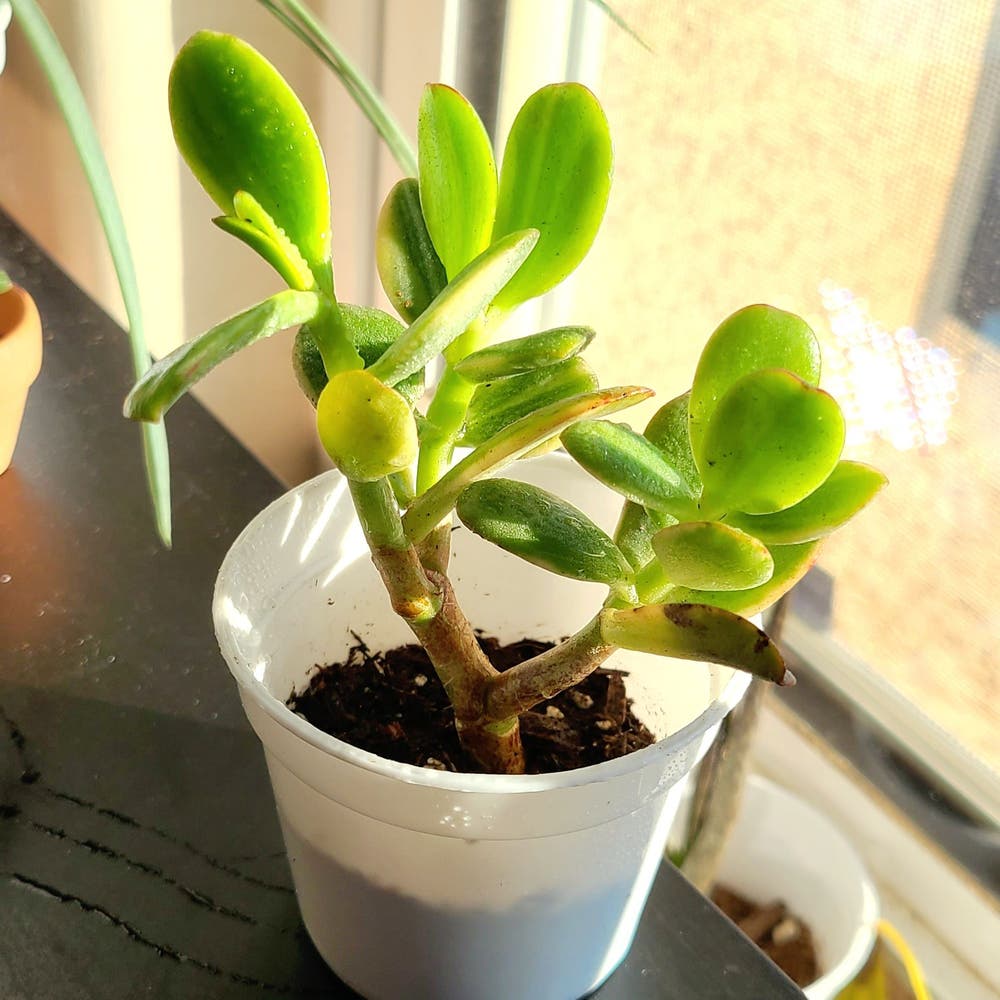
Variegated Jade Plant Root Rot Solutions
Crassula ovata 'Variegata'
By the Greg Editorial Team
Jun 18, 2024•4 min read
This article was created with the help of AI so we can cover more plants for you. May contain errors. See one? Report it here.
Rescue your variegated jade from root rot 🍂 with these life-saving tips and tricks! 🛠️
- Yellow leaves and limp stems signal root rot in variegated jade plants.
- Prune rotten roots and repot in well-draining soil to save the plant.
- Prevent root rot with proper watering, soil mix, and pot drainage.
Spotting Trouble Early: Recognizing Root Rot in Variegated Jade Plant
🚩 Visual Red Flags: Yellowing Leaves and Limp Stems
When your variegated jade plant starts sporting yellow leaves or limp stems, it's not trying to change its look—it's signaling distress. These visual cues are the equivalent of a plant's SOS; they're a clear indication that something's amiss below the soil.
👐 The Touch Test: Mushy Roots and Stems
Get hands-on and perform the touch test. If the roots or stems feel as mushy as overripe fruit, you've got a case of root rot. Healthy jade roots are more like firm, crunchy carrots, not soft, squishy zucchinis.
🕰 When to Investigate: Timing and Frequency of Root Checks
Timing is everything. Regularly scheduled root inspections can catch rot before it's a full-blown disaster. Aim to check when the soil is dry—overly damp conditions can be a root rot rave. If you're not poking around the roots every couple of months, you're not keeping tabs on your plant's underground scene.

First Response: Treating Root Rot in Variegated Jade Plant
🚱 Stop Watering: Letting the Soil Dry
Cease watering immediately. Your variegated jade plant's roots are suffocating, and additional moisture is the enemy. Allow the soil to completely dry out, creating an environment that's inhospitable for root rot to progress.
🏥 Surgical Precision: Pruning the Rotten Roots
Once the soil is dry, unpot the plant with care. Inspect the roots closely; healthy ones are firm and white. Use sterilized shears to cut away any soft, brown, or blackened roots—think of it as a necessary operation to save the plant's life. After pruning, let the roots air out, which is crucial for preventing further decay.
🌱 Aftercare: Monitoring and Caring for the Plant Post-Pruning
After the root surgery, repot your jade plant in fresh, well-draining soil. Choose a pot with adequate drainage holes to prevent future waterlogging. Hold off on fertilizing; your plant needs to recover, not feast. Water sparingly, only when the top inch of soil is dry—overwatering is what likely led you here. Keep a vigilant eye on your plant's recovery, adjusting care as needed to ensure a healthy comeback.

Keeping Your Jade High and Dry: Preventing Future Root Rot
💧 Watering Wisdom: How Much and How Often
Overwatering is the arch-nemesis of the variegated jade plant. To prevent root rot, water only when the top one to two inches of soil are bone-dry. This might mean watering as infrequently as every two to three weeks, but who's counting? Your plant's thirst, not the calendar, should dictate the watering schedule.
🌱 The Right Mix: Choosing the Perfect Soil for Drainage
The ideal soil for your jade plant is like the perfect pair of jeans: well-fitting and comfortable. Aim for a mix that's one part peat, one part organic matter, and three parts inorganic material like perlite or coarse sand. This concoction ensures quick drainage and prevents moisture from overstaying its welcome.
🌿 Pot Perfection: Ensuring Proper Drainage in Planters
The pot you choose for your jade plant should have more holes than a block of Swiss cheese. This isn't just for show; it's a lifeline for your plant's roots. Select a container that's snug but not strangling, allowing the root system to breathe while ensuring excess water can make a quick getaway.

When to Call It: Deciding If Your Variegated Jade Plant Can Be Saved
🌱 Assessing the Damage: How Far Gone Is Too Far?
In the life of every plant parent, there comes a grim moment when you must assess the viability of your beloved variegated jade plant. Root rot is a silent killer, often going unnoticed until it's too late. To determine if your plant can bounce back, inspect the roots thoroughly. Healthy roots are firm and white, while rotten ones are brown and mushy. If the majority of the root system is compromised, the prognosis isn't good.
🌿 The Tough Call: When to Start Over with a New Plant
Sometimes, despite our best efforts, the damage is beyond repair. If you've pruned away the rot and are left with little to no healthy tissue, it's time to face the music. Propagation may be your last resort; look for viable cuttings to start anew. Remember, it's not a failure but a rite of passage in the plant-owning journey. When all is said and done, let go, compost if possible, and use this as a learning experience for your next variegated jade endeavor.
⚠️ Safety First
This content is for general information and may contain errors, omissions, or outdated details. It is not medical, veterinary advice, or an endorsement of therapeutic claims.
Always consult a qualified healthcare professional before using any plant as food, medicine, or supplement.
Never eat any plant (or feed one to pets) without confirming its identity with at least two trusted sources.
If you suspect poisoning, call Poison Control (800) 222-1222, the Pet Poison Helpline (800) 213-6680, or your local emergency service immediately.
Spotted an error? Please report it here.
Prevent root rot and ensure your variegated jade thrives with Greg's tailored watering reminders 🌱, catching early signs of distress for a happier plant life.