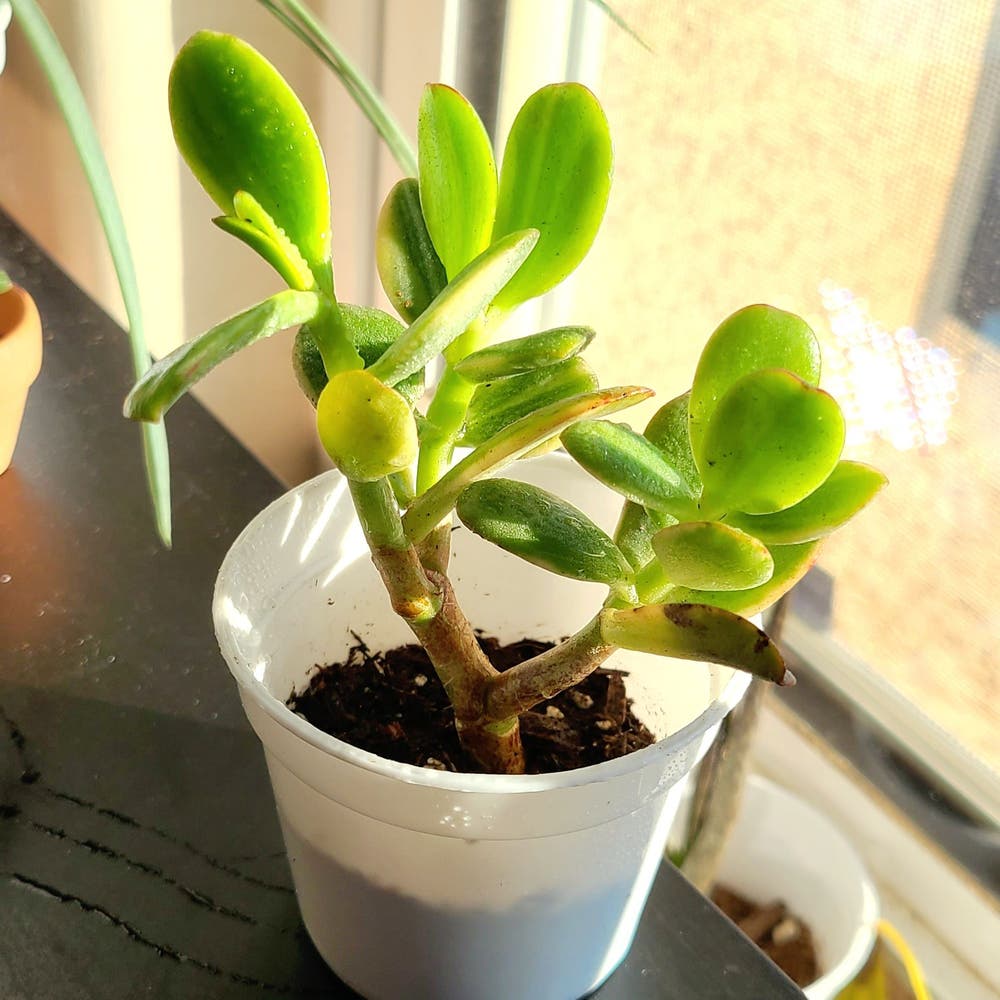
💧 Why Are My Variegated Jade Plant Leaves Mushy?
Crassula ovata 'Variegata'
By the Greg Editorial Team
Jun 18, 2024•5 min read
This article was created with the help of AI so we can cover more plants for you. May contain errors. See one? Report it here.
Stop the squish in your jade plant 🌿—learn the must-know signs and fixes for overwatering woes.
- Overwatering leads to mushiness, causing yellow, wilted, and soft leaves.
- Root rot and humidity exacerbate mushy leaf problems; immediate action required.
- Prevent with dry soil and pruning; repot using well-draining mix and pot.
Spotting the Trouble: Signs Your Variegated Jade's Leaves Are Too Mushy
💛 Yellowing and Wilting: Early Warnings
Yellow leaves are your Variegated Jade's way of saying, "I've had too much to drink." It's the first red flag. If the leaves are wilting, it's not just a bad leaf day; it's a cry for less water and better drainage.
🍑 Softening of Leaves: Recognizing the Texture of Trouble
When leaves feel like overripe peaches, it's a textbook sign of overindulgence in water. Soft leaves should sound the alarm for immediate intervention.
🌊 Waterlogged Soil: The Root of the Problem
Soil should not cling to your fingers like a needy sea sponge. If it does, it's a clear indication that your plant is sitting in too much moisture. This is bad news for your Variegated Jade, as waterlogged soil can quickly turn a thriving plant into a mushy mess.

The Usual Suspects: Pinpointing the Causes of Mushiness
💦 Overwatering: The Primary Perpetrator
Overwatering is the equivalent of a plant's all-you-can-drink buffet gone wrong. It's the main perp behind those mushy leaves on your variegated jade. Roots need air to breathe, and too much water drowns out their oxygen supply, leading to a soggy demise.
🕳️ Root Rot: When Bad Gets Worse
Root rot is the silent issue that often goes unnoticed until the damage surfaces above ground. It's like a thief in the night, turning robust roots into a mushy mess. This condition stifles the plant's ability to absorb nutrients, manifesting as mushy leaves above ground.
🌡️ Environmental Factors: Temperature and Humidity's Role
Humidity and temperature are the unsung heroes of plant health. Too much humidity, and your plant's leaves turn into a mushy mess, unable to cope with the moisture overload. Conversely, low humidity can cause leaves to dry out and curl, a silent cry for a more tropical vibe.
🦠 Fungal Foes and Pest Problems
Fungi are the ninjas of the plant world, stealthy and destructive. They love a damp environment and will turn your plant's leaves into a mushy, discolored disaster. Pests can be sneaky critters, contributing to the mushiness in a more indirect way by stressing your plant, making it more susceptible to other issues. Keep an eye out for unusual spots or insects.
💧 Excessive Moisture and Its Consequences
Persistent sogginess of the soil invites a fungal fiesta you don't want an invite to. Overwatering is the arch-nemesis of the variegated jade, transforming perky leaves into a mushy mess. It's a fine line between quenched and drowned. When the soil remains soggy, the roots are basically throwing a pool party without the fun.

Emergency Response: Saving Your Plant from the Mush
💧 Drying Out: The First Step to Recovery
Stop watering immediately. Your plant isn't thirsty; it's drowning. Move it to a shaded area to prevent further stress.
🌱 Soil and Roots Inspection: Unearth the Damage
Gently remove your plant from its pot. Inspect the roots—healthy ones are firm and white. If they're brown and mushy, it's time for surgery. Trim away the rot.
🌿 Repotting for Relief: A Fresh Start
Choose a pot with drainage holes—non-negotiable. Mix in perlite or coarse sand with your soil to create a well-draining haven for your plant's roots.
The Right Soil Mix
Your soil should be like a good partner—supportive but not clingy. Aim for a mix that's one part perlite to two parts potting soil.
The Repotting Process
Be gentle as you repot. Place your plant in its new home and fill around it with your well-draining mix. Don't compact the soil too much—roots need air.
💦 Post-Repotting Care: The Watchful Eye
Water sparingly after repotting. Let the topsoil dry out before even thinking about watering. This isn't just care; it's a rehab program for your overwatered plant.

Prevention is Key: Keeping Your Jade's Leaves Firm and Healthy
💧 Watering Wisdom: Perfecting the Pour for Your Variegated Friend
Overwatering is the archenemy of the Variegated Jade Plant. To avoid waterlogged woes, let the top couple of inches of soil dry out before watering again. Remember, these plants are more camel than fish; they store water in their leaves and can handle a bit of drought. In winter, they're practically hibernating, so cut back on the H2O.
🌱 The Right Pot and Soil Mix: Ensuring a Happy Home for Roots
Choosing the right pot and soil mix is like setting up a trust fund for your plant's future. Go for a well-draining succulent mix with sand, coconut coir, and perlite to keep the roots snug but not suffocated. A pot a couple of inches larger than the last one will do, and repot every few years to prevent your Jade from getting claustrophobic.
✂️ Pruning with Purpose: Removing Affected Leaves to Save the Rest
When it comes to pruning, think of yourself as a plant surgeon. Remove any mushy leaves with a sharp, disinfected knife to stop the spread of decay. Don't be shy; if a leaf looks suspect, it's better off in the compost than compromising your plant's health. And hey, while you're at it, you might as well take some cuttings for propagation—share the love.
⚠️ Safety First
This content is for general information and may contain errors, omissions, or outdated details. It is not medical, veterinary advice, or an endorsement of therapeutic claims.
Always consult a qualified healthcare professional before using any plant as food, medicine, or supplement.
Never eat any plant (or feed one to pets) without confirming its identity with at least two trusted sources.
If you suspect poisoning, call Poison Control (800) 222-1222, the Pet Poison Helpline (800) 213-6680, or your local emergency service immediately.
Spotted an error? Please report it here.
Revive your mushy-leaved Variegated Jade with Greg's custom watering plan, ensuring your plant gets just the right amount of hydration without the guesswork 🌿.