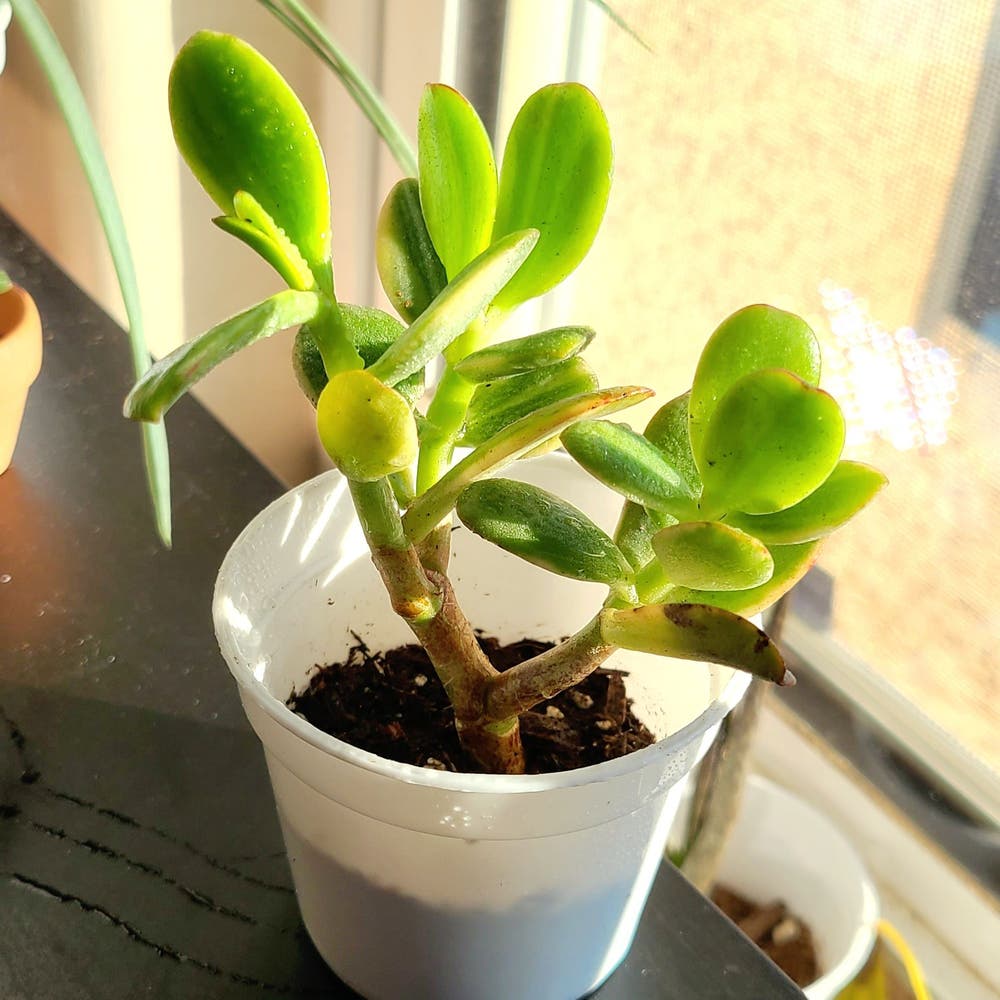
Common Variegated Jade Plant Problems
Crassula ovata 'Variegata'
By the Greg Editorial Team
Jun 18, 2024•4 min read
This article was created with the help of AI so we can cover more plants for you. May contain errors. See one? Report it here.
Avoid the heartache of a sickly jade plant 🌱 by learning the secrets to perfect plant care! 🌟
- Over-watering? Stop, trim rotten parts, and let soil dry.
- Too much sun? Move to bright, indirect light or shade.
- Pests or root rot? Use neem oil or repot with well-draining soil.
When Water Works Against You
💧 Over-watering Woes
Yellow leaves and mushy stems are the Variegated Jade's cry for help; it's drowning in your kindness. To rescue your over-watered plant, first stop watering immediately. Then, remove it from its pot and trim away any rotten roots or leaves. Allow the plant and soil to dry out thoroughly before repotting in fresh, dry soil. Be sure to provide adequate drainage and resist the urge to water until the top inch of soil is bone dry.
🏜️ The Thirsty Plant
When your Variegated Jade's leaves start to shrink and wrinkle, it's begging for a drink. Under-watering can make the leaves turn a desperate red or purple. To quench its thirst, soak the soil thoroughly, allowing excess water to drain away. Wait for the soil to dry out completely between waterings. Remember, your plant is a desert native; it's built to survive more on less.

Light and Shade: Striking the Right Balance
🌞 Too Much Sun
Leaf scorching is a clear distress signal from your Variegated Jade. Brown spots or a bleached appearance are telltale signs that your plant is staging a protest against too much direct sunlight.
Shifting to the Shade
To protect your plant from harsh rays, relocate it to a spot with bright, indirect light. If it's outdoors, consider using a shade cloth during the peak sun hours to prevent a botanical sunburn.
💡 Not Enough Light
When your Variegated Jade starts to look more like a stretchy vine than a robust succulent, it's begging for more light. Leggy growth and fading variegation are your cues to act.
Let There Be Light
Ensure your plant gets its fill by moving it to a brighter location, but not directly in the sun's path. The goal is to maintain those crisp, variegated patterns without triggering a leafy meltdown.

Temperature Tantrums
Recognizing temperature stress in Variegated Jades is crucial. Look for wilting, leaf discoloration, and a slowed growth rate. These are clear distress signals that the environment is too hot or too cold for your plant's liking.
🌡️ Keeping it Cozy
Consistent temperatures are the sweet spot for Variegated Jades. They prefer a stable climate, away from the drama of temperature swings. Avoid placing your plant near heaters, air conditioners, or drafty windows, as these can create an uncomfortable rollercoaster of temperatures for your plant.
🚫 Avoiding the Extremes
When the mercury rises or falls too much, it's time to act. Use shade cloths or frost blankets to protect your plant from temperature extremes. These simple tools can shield your Variegated Jade from conditions that could cause it to throw a fit.
🕵️ Monitoring and Adjusting
Keep a close eye on the thermometer, just as you would your favorite social media feed. If you notice signs of temperature stress, adjust the plant's environment promptly. This might mean moving it to a different location or tweaking the room's temperature to keep your plant from becoming a drama queen.
Pro Tips:
Remember, your Variegated Jade isn't asking for a tropical vacation or an arctic expedition—it craves stability. By maintaining a consistent temperature, you're more likely to see your plant thrive, rather than just survive.

Battling Pests and Pathogens
🐜 Unwanted Guests
Pests on Variegated Jades are not subtle. Mealybugs look like tiny cotton swabs, while spider mites leave behind telltale webs. Aphids, those green or black sap-suckers, can cause leaves to curl and wilt. Scale insects, resembling small bumps on stems and leaves, are another common culprit.
Act fast with insecticidal soap or neem oil. These remedies are effective and less harsh than chemical pesticides. For a more hands-off approach, introduce beneficial insects like ladybugs to your garden; they're natural predators to many common pests.
🍄 Fungal Foes and Root Rot
Mold and root rot are the party poopers of the plant world. Overwatering and poor drainage set the stage for these uninvited guests. If your plant's soil feels like a wet sponge, it's time for an intervention.
To tackle mold, improve airflow and cut back on watering. For root rot, you might need to remove the plant from its pot, trim away the rotted roots, and repot in fresh, well-draining soil. In severe cases, a fungicide could be your last line of defense. Remember, proactive care is key—keep an eye out for early signs to prevent these issues from taking root.
⚠️ Safety First
This content is for general information and may contain errors, omissions, or outdated details. It is not medical, veterinary advice, or an endorsement of therapeutic claims.
Always consult a qualified healthcare professional before using any plant as food, medicine, or supplement.
Never eat any plant (or feed one to pets) without confirming its identity with at least two trusted sources.
If you suspect poisoning, call Poison Control (800) 222-1222, the Pet Poison Helpline (800) 213-6680, or your local emergency service immediately.
Spotted an error? Please report it here.
Avoid common variegated jade woes and keep it radiantly healthy 🌟 with Greg's personalized reminders for watering, light, and temperature—your plant's perfect partner in prevention!