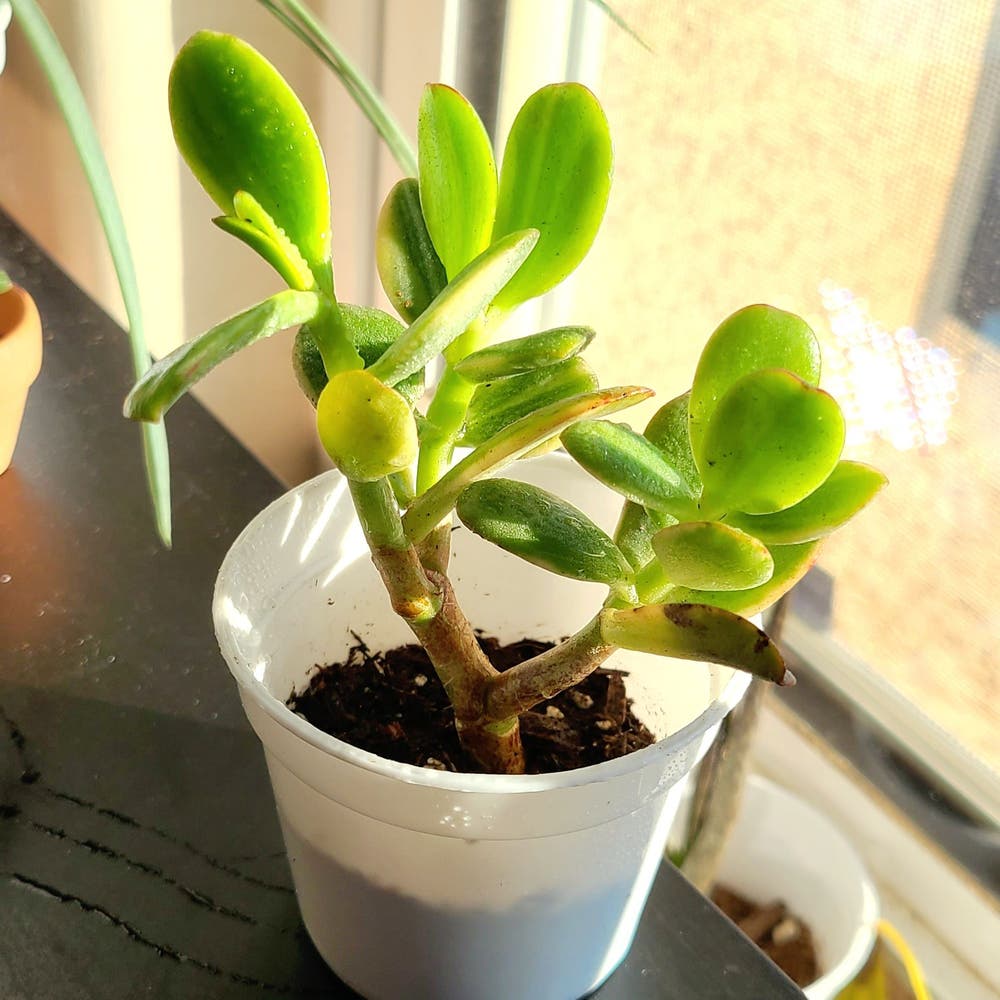
🌞 Does My Variegated Jade Plant Need Direct Sunlight?
Crassula ovata 'Variegata'
By the Greg Editorial Team
Jun 18, 2024•5 min read
This article was created with the help of AI so we can cover more plants for you. May contain errors. See one? Report it here.
Learn how to shield your Variegated Jade from sunburn and master its light needs for lush growth. 🌞🛡🌿
- 🌞 Bright, indirect light preferred; direct sunlight may be too intense.
- East-facing windows ideal for gentle morning sun exposure.
- Monitor for sunburn signs, like leaf discoloration and adjust light accordingly.
Sunlight Decoded for the Variegated Jade Plant
🌞 What Exactly is Direct Sunlight?
Direct sunlight is the unfiltered solar heavyweight, landing on your plants with full force. It's the kind of light that casts sharp, distinct shadows. Indirect sunlight, however, is the gentler cousin; it's been softened by clouds, curtains, or bouncing off surfaces, providing a milder touch to your green companions.
Variegated Jade's Relationship with the Sun
The Variegated Jade Plant has a bit of a complex when it comes to the sun. It enjoys a good dose of bright, indirect light but isn't too keen on the idea of baking in direct sunlight for too long. Think of it as preferring a spot with a sheer sunscreen rather than lying out in the midday sun. Too much direct light can lead to a loss of variegation, leaving the plant's vibrant patterns faded and its leaves at risk of sunburn.

When the Sun Hits Your Windowsill
🌞 The Direction Dilemma: North, South, East, or West?
Navigating the sunlight for your Variegated Jade Plant isn't just about finding a window—it's about choosing the right one. East-facing windows serve up a gentle morning sun, perfect for easing your plant into the day. West-facing windows, on the other hand, deliver a stronger punch of afternoon light that can be a bit too much for your Jade's delicate variegation.
South-facing windows are the all-day sun diners, great for plants craving constant light, but they can push your Jade into the danger zone of sunburn. North-facing windows are the low-key cousins, offering a more consistent but dimmer light, which might leave your Jade wanting more. It's a delicate balance, like finding the sweet spot in a hammock without tipping over.
🌍 Hemisphere Hints: Does Location Matter?
Absolutely. Your hemisphere plays a big role in how the sun kisses or scorches your plant. If you're chilling in the Northern Hemisphere, south-facing windows are your Jade's winter sun spa. But when summer hits, you might need to play musical chairs with your plant to protect it from the sun's overzealous rays.
Flip the script if you're in the Southern Hemisphere—north-facing windows become the go-to for maximum light. It's like changing seats at a concert for the best view; you need to keep moving to give your Jade the optimal light without turning it into a crispy critter. Remember, it's not just about the direction, but also the angle of the sun's rays, which change with the seasons like the latest fashion trends.

Sun-Kissed or Sunburnt? The Variegated Jade's Tolerance
🌞 Signs of Too Much Sun
Even the hardy Variegated Jade Plant can cry uncle under too much sun. Leaf discoloration is the first red flag—look for leaves that have traded their vibrant green for a dull, sun-bleached look. If the tips of your plant's leaves are blushing red, it's not out of modesty; it's a stress signal. Wrinkled leaves are the plant's way of saying it's thirsty, and not in a good way. And if you spot brown, crispy patches, it's past time for action; those leaves are toast, literally.
🌅 The Happy Medium: Balancing Light Exposure
Finding the sweet spot for your Variegated Jade involves some trial and error. Start by placing it in a spot with bright, indirect light—think of it as a cozy reading nook for your plant. If your plant's variegation starts to fade, it's begging for more light. But if you notice any signs of sun stress, dial it back. Rotate your plant regularly to ensure even exposure, and consider sheer curtains to soften the blow of intense sunlight. Remember, like a good skincare routine, it's all about protection and balance.

Seasonal Sun Shifts: Adapting to Change
🌞 Summer vs. Winter Sun Strategies
In the summer, the Variegated Jade Plant can get a bit too much of a good thing. The sun's like that friend who overstays their welcome, and your plant's leaves might start to look like they're begging for a break. Move it back from the window or find a spot with some sheer curtains to soften the blow.
Come winter, the sun's more of a recluse, and your Jade might start feeling neglected. It's time to cozy up closer to the light source, maybe even consider a sunnier windowsill to compensate for the sun's shyness.
🍃 Reading Your Plant's Leaves
Your Variegated Jade's leaves are like mood rings, changing to tell you how they're feeling about the light. If they start to pale, they're likely starved for sunshine. On the flip side, if you see a red or brown tinge, it's the plant's way of crying out from too much sun.
Rotate your plant regularly to avoid a lopsided tan; it's not just about aesthetics but also about even growth. Keep an eye out for stretching—a sign that your Jade is reaching for more light. Adjust your placement, and you'll keep your plant not just alive, but thriving.
⚠️ Safety First
This content is for general information and may contain errors, omissions, or outdated details. It is not medical, veterinary advice, or an endorsement of therapeutic claims.
Always consult a qualified healthcare professional before using any plant as food, medicine, or supplement.
Never eat any plant (or feed one to pets) without confirming its identity with at least two trusted sources.
If you suspect poisoning, call Poison Control (800) 222-1222, the Pet Poison Helpline (800) 213-6680, or your local emergency service immediately.
Spotted an error? Please report it here.
Find your Variegated Jade's happy place with bright, indirect light 🌿 by using Greg to effortlessly adjust its spot for every season's sun.