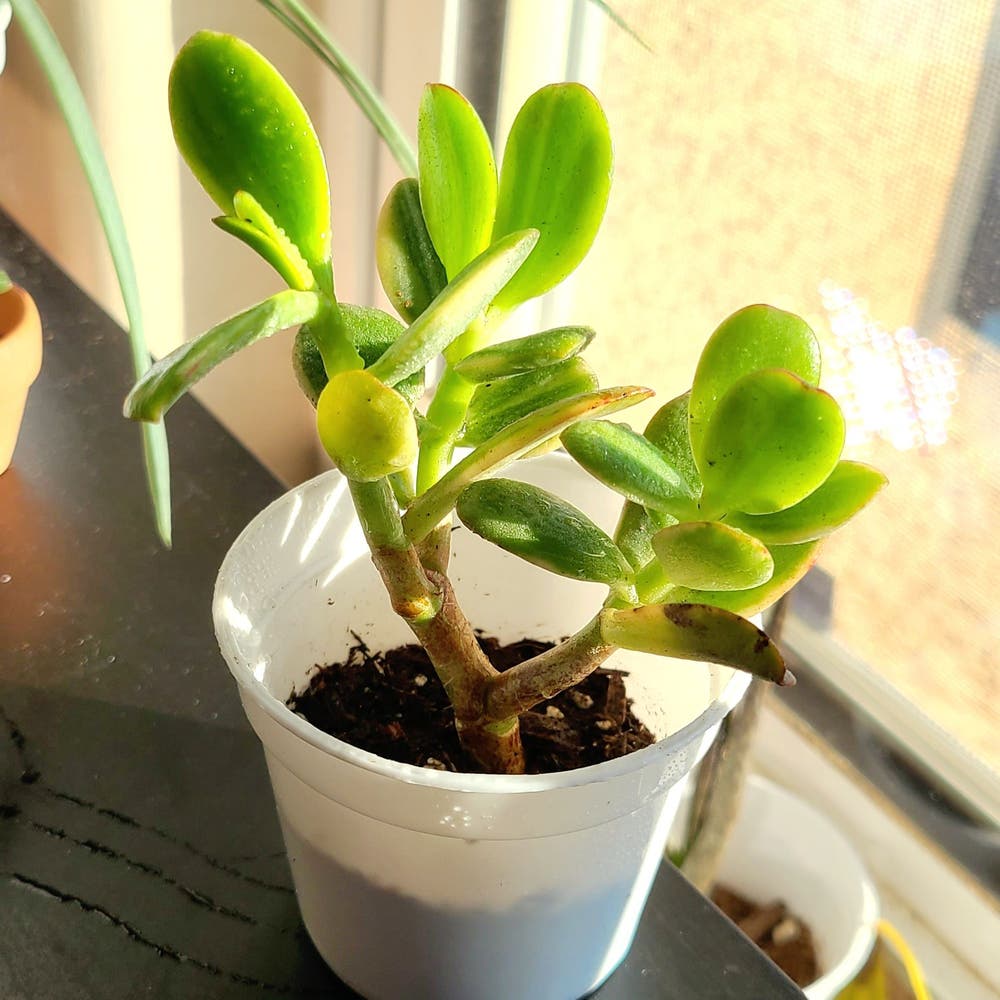
🌞 My Variegated Jade Plant's Sunlight Needs
Crassula ovata 'Variegata'
By the Greg Editorial Team
Jun 18, 2024•4 min read
This article was created with the help of AI so we can cover more plants for you. May contain errors. See one? Report it here.
Nurture a thriving Variegated Jade Plant 🌿 with the ultimate guide to its sunlight needs for lush leaves and blooms. 🌞
- 🌅 Morning sun, afternoon shade keeps Variegated Jade Plants healthy.
- 💡 Rotate and supplement light indoors for even growth and blooming.
- 🕒 Use a timer for 12-14 hours of daily light with LED or fluorescent bulbs.
Basking in the Right Light: Outdoor Care
🌞 Finding the Sweet Spot
Morning sun is your Variegated Jade Plant's best friend. Find a location that offers gentle morning rays and shelter from the intense afternoon heat. As seasons change, so does the sun's position—be ready to adjust your plant's spot to maintain that sweet balance.
🛡️ Shielding from the Scorch
Midday sun can be brutal. Shade is essential to protect your Variegated Jade from a sunburn. Consider positioning it near taller plants or structures that cast a protective shadow during peak hours. Remember, your plant's leaves are the tell-tale sign—if they look unhappy, it's time to move them out of the sun's harsh spotlight.

Cozy Indoors: Nailing the Indoor Light Setup
💡 Window Wisdom
South-facing windows are the Variegated Jade Plant's best friend for indoor growth, offering bright, indirect light without the burn of direct midday sun. However, not all homes are blessed with this ideal setup. If your plant's leaves start to look more like a sunburnt tourist than a vibrant succulent, it's time to rethink its position.
East or west-facing windows strike a Goldilocks balance, especially if you're avoiding the harsh afternoon rays. But remember, too close to the glass and you might as well be frying an egg on your plant's leaves. Keep it within a 3-foot radius to avoid the crispy fate.
🔄 Light Rotation Rituals
Rotate your plant. It's not just for a balanced look; it's to prevent your plant from doing a full-on Quasimodo, stretching awkwardly for light. A quarter turn at watering keeps growth even and dignified.
When winter hits, your plant will crave more light. Move it closer to the window, or consider a grow light to supplement those dreary days. But don't overdo it; like a good tan, it's all about moderation. Too much artificial light and you might as well be running a plant tanning salon.

The Flowering Connection: Light's Role in Blooming
⚡ To Bloom or Not to Bloom
Adequate lighting is crucial for the flowering of Variegated Jade Plants. These succulents need a specific light recipe to kickstart their blooming process. Too little light, and they won't produce flowers; too much, and you risk damaging the plant.
Bright, indirect sunlight is the sweet spot for encouraging Variegated Jade Plants to bloom. They thrive under conditions that mimic their natural habitat, which is not direct desert sun but rather the dappled light of a rocky outcrop.
🌸 Recognizing the Signs of a Plant Ready to Flower
When your Variegated Jade Plant is on the verge of blooming, you'll notice a few telltale signs. The first is a change in the foliage; it may become more vibrant or take on a slightly different hue.
Next, look for the development of small bud structures at the ends of branches. These are the precursors to the star-shaped flowers that Variegated Jades are known for. If you see these, congratulations—your light conditions are likely spot-on.
Keep an eye out for stress indicators, though. If your plant is flowering out of season or displaying other signs of distress, it may be a cry for help rather than a natural bloom cycle. Adjust your care routine accordingly.

Supplementing Sunlight: The Grow Light Game
💡 Choosing Your Champion Light
When natural light isn't enough for your Variegated Jade Plant, grow lights step up to the plate. LED lights are the MVPs here, offering a full spectrum of light akin to the sun's embrace, but without the UV harshness. They're energy-efficient, long-lasting, and your plant's best bet for maintaining that variegated vibrancy.
For those on a tighter budget, fluorescent bulbs are a solid second-string choice. They might not hit all the wavelengths like LEDs, but they'll keep your plant in the game. Remember, the goal is to simulate the sun, not interrogate your plant—so position your lights thoughtfully, about a foot above the foliage.
⏰ Timing is Everything
Creating a lighting schedule is like setting a circadian rhythm for your plant. Aim for 12-14 hours of light per day to mimic the sun's journey. This isn't Vegas; plants need downtime too. Use a timer to automate the light show, ensuring your plant gets the rest it needs.
As the seasons change, so should your lighting strategy. Adjust the intensity and duration to keep pace with the shorter days of winter or the longer days of summer. It's about consistency and adaptation—your plant's performance depends on it. Keep the lights close, but not too close—no one enjoys a sunburn, not even plants.
⚠️ Safety First
This content is for general information and may contain errors, omissions, or outdated details. It is not medical, veterinary advice, or an endorsement of therapeutic claims.
Always consult a qualified healthcare professional before using any plant as food, medicine, or supplement.
Never eat any plant (or feed one to pets) without confirming its identity with at least two trusted sources.
If you suspect poisoning, call Poison Control (800) 222-1222, the Pet Poison Helpline (800) 213-6680, or your local emergency service immediately.
Spotted an error? Please report it here.
Ensure your variegated jade plant thrives 🌞 with Greg's custom care reminders for the perfect light balance, making every day its best day for growth and blooms.