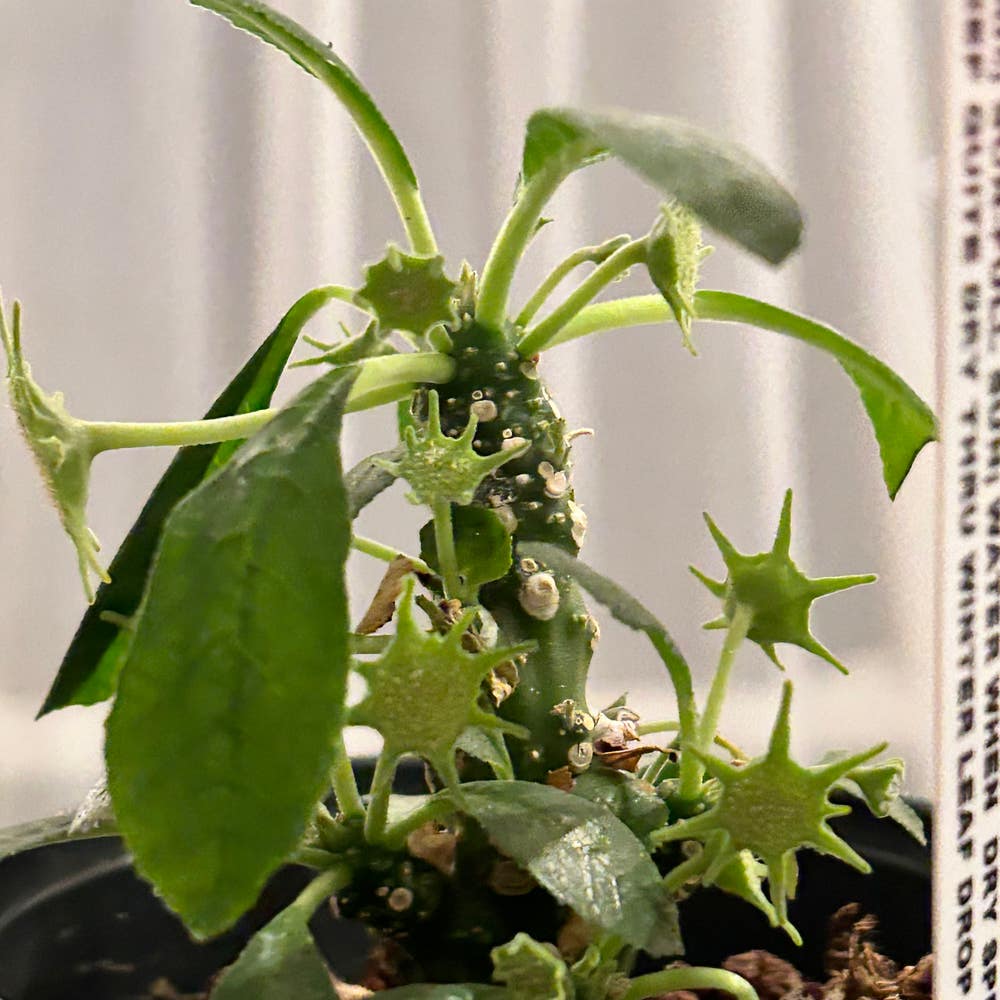
How Do I Propagate My Dorstenia foetida subsp. foetida?
Dorstenia foetida subsp. foetida
By the Greg Editorial Team
Jun 13, 2024•6 min read
This article was created with the help of AI so we can cover more plants for you. May contain errors. See one? Report it here.
- Seed propagation: Harvest mature seeds, stratify if needed, use well-draining soil.
- Leaf and offset propagation: Select healthy parts, allow callusing, pot with care.
- Division method: Divide during growth seasons, ensure each section has roots and shoots.
Sowing the Future: Seed Propagation
🌱 Collecting Your Tiny Treasures
Harvesting seeds from Dorstenia foetida subsp. foetida is all about perfect timing. Watch for the fruit to mature and then, it's go-time. Inside, you'll find a cache of tiny black seeds. Treat them like the delicate future plants they are.
🌱 From Seed to Seedling
🧖♂️ Preparing Your Seeds
Before sowing, give your seeds a spa treatment. Clean off any pulp and let them air-dry. Some seeds play hard to get and need a stratification period—a fake winter, if you will—to break dormancy.
🌱 Crafting the Perfect Soil Mix
Mix up a well-draining soil concoction. Think equal parts potting soil, coarse sand, and perlite. This trio is like the Three Musketeers for your seeds—protecting them from the dastardly villain of waterlogging.
🌱 Creating the Ideal Germination Environment
Now, for the germination magic. Sow your seeds on the soil's surface; they're not fans of the dark, so a light dusting of soil is enough. Keep the soil moist—imagine it's wearing a tropical mist coat, not a soaking wet raincoat.
Cover the seeds with a clear plastic dome to create a mini greenhouse effect. It's like a humidity party and your seeds are the guests of honor. Keep the soil warm and the waiting game begins. Patience is key; you're on nature's schedule now.
Leaf Cuttings: A Slice of Life
✂️ Snip and Plant
Leaf propagation is a game of precision and patience. Start by selecting a robust, healthy leaf, free from any signs of stress or disease. With a sterilized blade, make a clean cut at the base of the leaf. Allow the cutting to callus over for a few days before planting; this step is crucial to prevent rot and foster a healthy start.
🌱 Rooting for Success
Once callused, place your leaf cutting in a well-draining soil mix. Moisture is key, but overwatering is the enemy. Aim for soil that feels like a wrung-out sponge—damp but not soggy. Provide bright, indirect light to encourage root growth without scorching your cutting. Roots may take time to appear, so keep your excitement in check and give your leaf cutting the care it needs to thrive.
Little Clones: Propagating Offsets and Pups
🌱 Spotting Potential New Plants
Dorstenia foetida subsp. foetida offsets are ready for independence when they boast a few leaves and their own roots. Look for these plantlets around the base of the parent plant. They should be robust and a few inches in diameter, signaling they're mature enough to handle the solo life. Avoid the tiny, fragile ones; they're not yet equipped for the world.
🏡 The Right Way to Pot
Once you've separated the offsets, it's time to pot them. Choose a snug pot with a well-draining soil mix—think of it as the perfect starter home. Cover the roots just enough to let them breathe but not so much that they're swimming in soil. Water sparingly; these little guys are more drought-tolerant than a camel. Place them in a spot with bright, indirect sunlight, like a shady nook on a sunny day. Keep an eye on them; they need your watchful care to thrive. Remember, patience is key—don't expect your offsets to throw a housewarming party overnight.
Dividing to Multiply: Propagation by Division
🌱 The Division Dance
Root division is a propagation technique that can rejuvenate your Dorstenia foetida subsp. foetida by giving it more space to grow. The best time to perform this task is during the spring or early fall when the plant is actively growing.
🕰 When to Divide
Look for signs that your plant is ready to be divided: overcrowding, roots escaping the drainage holes, or simply a hunch that your green friend could use more elbow room.
🛠 How to Divide
Start by watering your plant a day or two before to make the soil and roots more pliable. Gently remove the plant from its pot, being careful not to damage the roots. Brush off excess soil to reveal the natural dividing lines. With clean hands or a sterilized knife, separate the root ball into sections, each with its own set of roots and shoots.
🏡 Planting Divided Sections
After the division, it's time to give each section a new home. Select pots with ample drainage to prevent waterlogged roots, which can lead to root rot.
🌱 Pot Preparation
Choose a pot that comfortably fits the new section's root system. Fill it with a fresh, well-draining soil mix.
🌱 Transplanting
Plant each division at the same depth it was previously growing. Tuck the roots in gently and fill the pot with soil. Water the divisions well to help them settle in, but be cautious not to overdo it—your plants aren't in a swimming contest.
🌱 Initial Care
Keep the soil moist but not soggy, and place the pots in a location with bright, indirect light. A bit of slow-release fertilizer can act as a secret growth booster. Watch for signs of new growth, but don't be a helicopter parent—give your plants some space to breathe and establish themselves.
Aftercare: Ensuring Propagation Success
💦 The First Few Weeks
After you've played your part in the propagation game, it's time to nurture your Dorstenia foetida subsp. foetida's new life. Water is your plant's best friend and worst enemy—aim for moist, but never soggy, soil. Overwatering is the express lane to root rot city, while under-watering leads to a wilted wasteland.
Keep your baby plants in a high-humidity environment initially, like a mini-greenhouse. This cozy setup is the plant equivalent of a swaddle. Gradually introduce them to the real world by removing the cover over several days, acclimating them to less humid conditions.
Signs of Success
Your propagated plants will communicate in their own silent language. New growth is like a secret handshake, signaling all is well. Keep an eye out for fresh shoots and leaves—it's the plant's way of giving you a high-five.
Conversely, droopy leaves or discoloration are your plant's SOS. They're telling you they need a change, stat. Adjust your care routine, and remember, transitioning to their new normal is a delicate process. It's like teaching a kid to ride a bike—go slow, be patient, and eventually, they'll ride off into the sunset (or, in this case, grow into a thriving plant).
⚠️ Safety First
This content is for general information and may contain errors, omissions, or outdated details. It is not medical, veterinary advice, or an endorsement of therapeutic claims.
Always consult a qualified healthcare professional before using any plant as food, medicine, or supplement.
Never eat any plant (or feed one to pets) without confirming its identity with at least two trusted sources.
If you suspect poisoning, call Poison Control (800) 222-1222, the Pet Poison Helpline (800) 213-6680, or your local emergency service immediately.
Spotted an error? Please report it here.
Propagate your Dorstenia foetida with precision 🌱 by following these expert tips and letting Greg remind you when to water and adjust humidity for unbeatable growth.