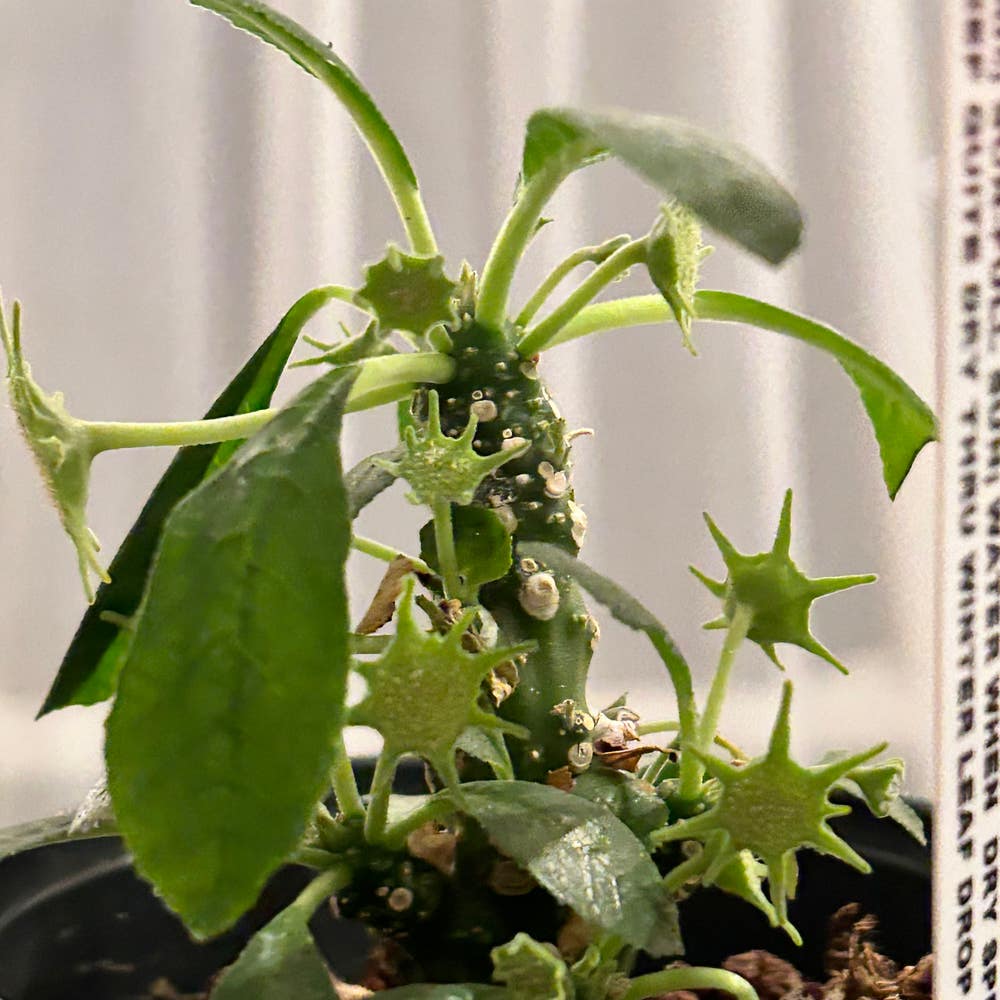
Choosing Fertilizer For My Dorstenia foetida subsp. foetida
Dorstenia foetida subsp. foetida
By the Greg Editorial Team
Jun 13, 2024•4 min read
This article was created with the help of AI so we can cover more plants for you. May contain errors. See one? Report it here.
- Fertilize during growth seasons - spring and summer, not fall and winter.
- Choose balanced NPK fertilizer for healthy growth and blooming.
- Dilute and apply correctly to avoid over-fertilization symptoms.
Timing is Everything: When to Fertilize
🌱 Active Growth vs. Dormancy
Spotting signs of active growth in your Dorstenia foetida subsp. foetida is key to fertilizing effectively. Look for new shoots or leaves as a green light to feed. Dormancy, on the other hand, is a no-feed zone. Your plant's metabolism slows, and it won't thank you for extra nutrients while it's taking a breather.
📅 Seasonal Fertilization Schedule
Spring is your signal to start the fertilization routine. This is when your Dorstenia foetida wakes up and gets ready for the year ahead. As the summer heat ramps up, so should your fertilization game, keeping pace with your plant's active lifestyle. But when fall arrives, it's time to ease off the gas. Reduce fertilization as your plant's growth slows down, prepping it for winter rest without the burden of excess nutrients.
Choosing the Right Fertilizer: What Works Best
💡 NPK Ratios and Your Dorstenia
NPK ratios are the cornerstone of plant nutrition, indicating the balance of nitrogen (N), phosphorus (P), and potassium (K). For Dorstenia foetida, a balanced mix is key to support its unique growth and blooming patterns. A ratio that's too high in nitrogen could promote leafy growth at the expense of the blooms you're aiming for.
🍽️ Organic or Synthetic: Making the Choice
Organic fertilizers are the slow food movement of plant care—nourishing the soil and your Dorstenia foetida over time. They're like a long-term investment in your plant's health, releasing nutrients gradually. Synthetic options, on the other hand, are the nutrient equivalent of a speedy snack—fast-acting, but with a higher risk of overfeeding. The choice hinges on whether you prefer a steady journey or a quick sprint to plant vitality.
Feeding Your Plant: Fertilization Techniques
💧 Getting the Dose Right
Dilution is your friend when it comes to fertilizing Dorstenia foetida. Overzealous pouring can lead to a nutrient overdose, so aim for a half-strength solution. Use a measuring cup or syringe for precision; it's like a science experiment for your plant's health.
Frequency matters. Weekly might work for some plants, but Dorstenia foetida subsp. foetida may need less. Stick to the guidelines on the fertilizer package to avoid the silent scream of over-fertilization.
🌱 Application Mastery
Soil application is the standard. Think of it as watering with perks. Pour the diluted fertilizer onto the soil, avoiding the leaves to prevent burns. It's a root party, and leaves are not invited.
For granular fertilizers, imagine you're seasoning a dish. Sprinkle evenly around the plant's base, avoiding a pile-up near the stem. With liquids, go for the soft rain approach, ensuring every root gets a sip but not a soak.
Watering post-application is crucial. It helps the nutrients travel down to the roots, turning a potential root burn into a nutrient feast. Remember, it's not just about feeding; it's about feeding right.
Oops, Too Much!: Recognizing and Fixing Over-Fertilization
🚨 Spotting Trouble: Symptoms of Over-Fertilization
Leaf burn is the plant's cry for help, the equivalent of waving a white flag. If your Dorstenia foetida's leaves look more toasted than a marshmallow at a campfire, you've likely been a bit too generous with the fertilizer. Yellowing leaves with dark-green veins are another distress signal, and a crusty white coat on the soil is not a new fashion trend; it's a buildup of fertilizer salts begging for intervention.
🛠️ The Recovery Plan
First things first: stop the fertilizer. Your plant doesn't need another nutrient cocktail. Begin the rehab process by flushing the soil with water to dilute the excess salts. Think of it as a spa day for your plant's roots. If you spot a crusty fertilizer residue on the soil's surface, it's time for a gentle clean-up. Remove it carefully, avoiding an archaeological dig around the roots. In severe cases, consider a soil swap or a pot upgrade. Patience is your new best friend; give your Dorstenia foetida time to recover before you even think about reaching for that fertilizer bottle again.
⚠️ Safety First
This content is for general information and may contain errors, omissions, or outdated details. It is not medical, veterinary advice, or an endorsement of therapeutic claims.
Always consult a qualified healthcare professional before using any plant as food, medicine, or supplement.
Never eat any plant (or feed one to pets) without confirming its identity with at least two trusted sources.
If you suspect poisoning, call Poison Control (800) 222-1222, the Pet Poison Helpline (800) 213-6680, or your local emergency service immediately.
Spotted an error? Please report it here.
Nourish your Dorstenia foetida to flourishing health 🌿 with the perfect fertilizer, and rely on Greg for custom reminders that ensure you're feeding your plant just right.