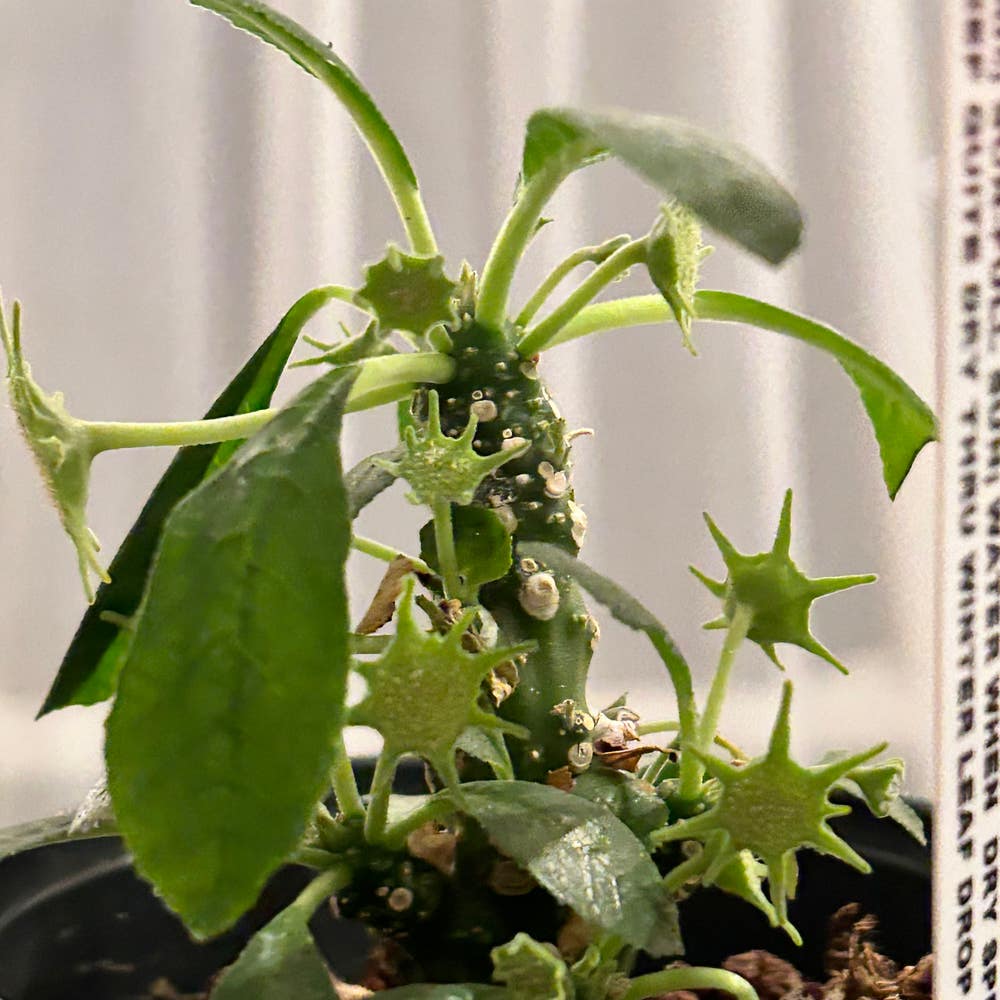
Why Is My Dorstenia foetida subsp. foetida Dropping Leaves?
Dorstenia foetida subsp. foetida
By the Greg Editorial Team
Jun 13, 2024•5 min read
This article was created with the help of AI so we can cover more plants for you. May contain errors. See one? Report it here.
- Steady temps prevent leaf drop; avoid temperature fluctuations.
- Balance water and light; moist soil and indirect brightness are key.
- Check soil and pests regularly; ensure proper drainage and pest control.
Spotting the Trouble Signs
🌡️ Temperature Tantrums
When your Dorstenia foetida subsp. foetida starts shedding leaves, think of it as a cry for help. Temperature fluctuations are the silent enemy of this quirky plant. Too hot, and it's like your plant is trying to strip down to its skivvies; too cold, and it's bundling up for an arctic expedition. Keep the thermostat steady to avoid these botanical mood swings.
💡 Light and Humidity Havoc
Light and humidity are the yin and yang of plant health. If your plant's leaves are looking paler than a vampire or dropping off like they're too tired to hang on, it's time to reassess your lighting situation. Aim for that sweet spot of indirect, bright light. And humidity? It's like that friend who never knows when to leave the party. Too little, and your plant's leaves go crispy; too much, and you're inviting mold to the bash. Consider a humidifier or a pebble tray to keep the air just right.
🚰 Thirsty or Drowning?
Watering is a delicate dance. Underwatering leaves your plant's roots gasping for a drink, while overwatering is like forcing it to wear wet socks—nobody likes that. The soil should feel like a wrung-out sponge—moist but not soggy. Get this balance right, and you'll avoid the dreaded leaf drop. Keep an eye on the soil moisture and remember, your watering can is not a fire hose.
Rooting Out the Causes
🌱 Soil Sorrows
Poor drainage is like a wet blanket for plant roots—it smothers them. If your Dorstenia foetida subsp. foetida's leaves are dropping, it's time to check if the soil is too clingy. A soil that doesn't let water flow through freely is a VIP ticket to Root Rot Central. pH imbalance is another buzzkill for plants. If the soil is too acidic or alkaline, it's like a bouncer at a club, turning away the nutrients your plant craves. Aim for a slightly acidic to neutral pH to keep the nutrient party going.
🐜 Unwelcome Guests
Pests are like those annoying relatives who show up uninvited and eat all your food. Spider mites and mealybugs love to turn your plant's leaves into an all-you-can-eat buffet. If you spot any tiny critters or webbing, it's time to show them the door. Remember, these pests are not just annoying—they're leaf-dropping catalysts. So, get your magnifying glass out and start your pest patrol with gusto.
Turning Over a New Leaf
🌡️ Stabilizing Your Plant's World
Temperature and humidity are like the thermostat of your plant's comfort zone. Keep them steady to avoid a leaf-dropping tantrum. A humidifier or a pebble tray can be a lifesaver in dry environments. And don't forget about airflow – it's like the secret service against pest invasions.
🚰 Water Wisdom
Watering should be a ritual, not a guessing game. Overwatering is a surefire way to drown your plant's spirits, while underwatering will leave it high and dry. Check the soil's mood before you pour – if it's dry a couple of inches down, it's time for a drink. And remember, watering at the base is like targeting the roots of the problem, literally.
🌱 Soil TLC
Soil should be your plant's best friend, not its worst enemy. Ensure it's well-draining and has the right pH balance. Think of it as a custom-tailored suit for your plant – it should fit just right. Mix in some organic matter to keep it loose and nutritious. It's like a spa treatment for the roots.
🐜 Kicking Pests to the Curb
Pests are the uninvited guests at your plant's party. Keep the leaves clean and the airflow moving to avoid giving them a cozy home. If they crash the scene, show them the door with the right treatment – organic or chemical, depending on how tough you want to play it. Remember, cleanliness is next to pestlessness.
Keeping the Leaves on Lockdown
🔒 Consistency is Key
Stability is the guardian of your Dorstenia foetida subsp. foetida's leafy greens. Just like your dislike for unexpected Monday meetings, your plant despises sudden changes. Keep the temperature and light as predictable as your daily cup of joe. No drastic swings, no leaf drops. It's that simple.
👀 Vigilance and Care
Routine checks are your plant's lifeline. Be the hawk-eyed guardian of your green buddy. Spot a droop or a color fade? That's your cue to act. Adjust your care with the precision of a barista crafting the perfect latte. Remember, watering needs shift with the seasons—ease up during the chill of winter, and get generous when the sun cranks up the heat.
✂️ Pruning and Maintenance
Pruning isn't just for looks; it's like hitting the refresh button on your plant's health. Snip away the old, make room for the new. And keep those leaves clean—dust is the enemy, and pests are just waiting for an invite.
📡 Regular Monitoring
Keep an eye out for uninvited guests. Pests love a good leaf feast as much as you love a free lunch. Catch them early, and show them the door with targeted treatments. Think sniper, not shotgun.
🌡️ Environmental Fine-Tuning
Your plant's comfort zone is a stable environment. Monitor light and temperature closely, making adjustments to mimic its natural habitat. It's like setting the thermostat for your own comfort, but you're doing it for your plant.
👥 Community and Expertise
Don't go it alone. Tap into the community for shared wisdom and expertise. Sometimes, it takes a village to keep a plant thriving. And remember, a stable environment is not just a good idea—it's the law in the world of Dorstenia foetida subsp. foetida.
⚠️ Safety First
This content is for general information and may contain errors, omissions, or outdated details. It is not medical, veterinary advice, or an endorsement of therapeutic claims.
Always consult a qualified healthcare professional before using any plant as food, medicine, or supplement.
Never eat any plant (or feed one to pets) without confirming its identity with at least two trusted sources.
If you suspect poisoning, call Poison Control (800) 222-1222, the Pet Poison Helpline (800) 213-6680, or your local emergency service immediately.
Spotted an error? Please report it here.
Ensure your Dorstenia foetida stays thriving 🌟 with Greg's personalized care reminders and access to expert community advice for that perfect habitat mimicry.