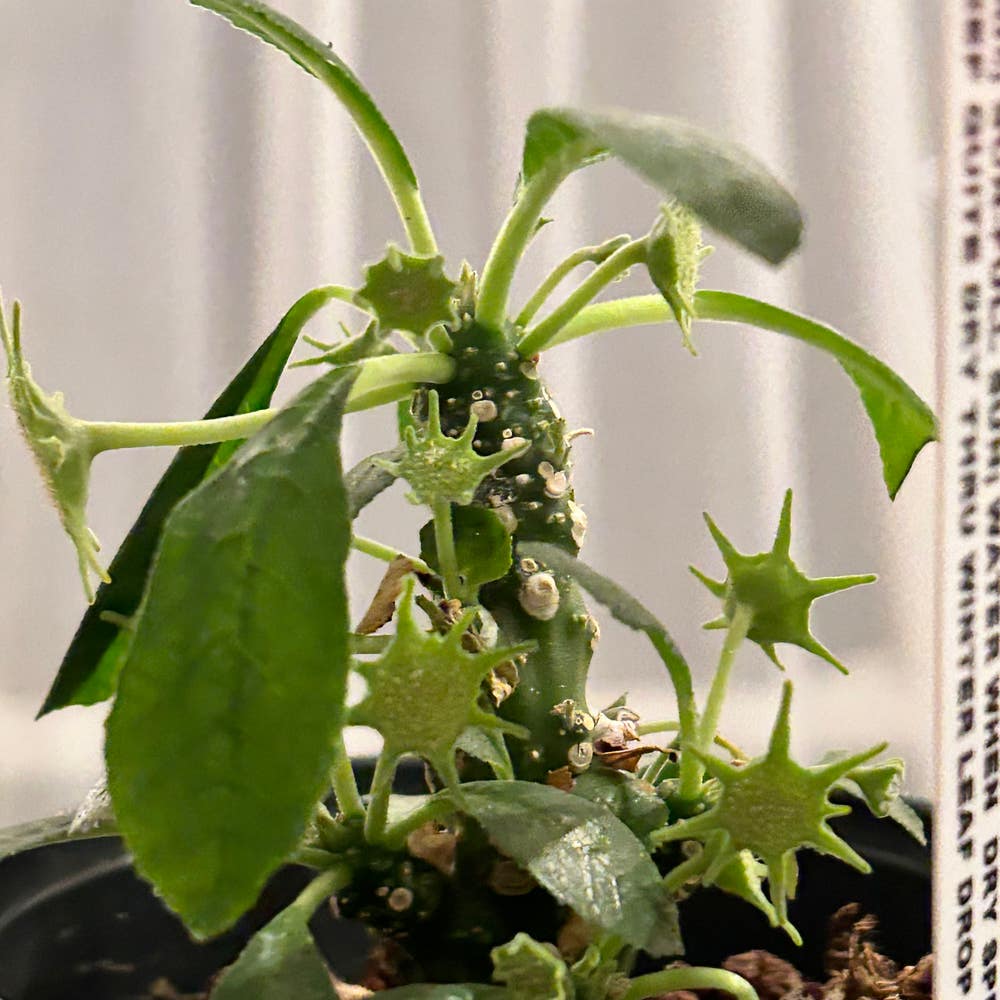
Brown Spots On Dorstenia Foetida Subsp. Foetida Leaves
Dorstenia foetida subsp. foetida
By the Greg Editorial Team
Jun 13, 2024•4 min read
This article was created with the help of AI so we can cover more plants for you. May contain errors. See one? Report it here.
- Shape, size, and color clues help diagnose brown spots.
- Fungal and bacterial infections need targeted treatments.
- Consistent watering and environment prevent future spots.
Spotting the Trouble: Identifying Brown Spots
🕵️♂️ Visual Clues
Shape, size, and color of brown spots can be a plant's distress signal. Small, irregular spots may suggest a minor issue, while large, circular ones could indicate a more serious condition. Patterns on the leaves, whether scattered or clustered, provide crucial insights into the cause of the blemishes.
Distinct edges or a yellowish halo around the spots are red flags, often pointing to specific diseases. The texture is also telling; spots can be dry and brittle or mushy and water-soaked, hinting at environmental or watering issues.
🌿 Beyond the Leaf
Inspecting the stem and soil is essential for a full diagnosis. The presence of spots on the stem could suggest a systemic problem, while the soil's condition might reveal overwatering or poor drainage issues.
Check for consistency in the spots' appearance across the plant. A widespread issue could mean a more urgent response is needed. Remember, the plant's overall health is at stake, not just its aesthetics.
The Usual Suspects: Common Causes of Brown Spots
🍄 Fungal Foes
Fungal infections are the plant equivalent of a bad cold. They're common and annoying. Look for brown spots with yellow halos or concentric rings. These are the telltale signs of fungal shenanigans. High humidity and stagnant air are their best friends. To kick fungi to the curb, improve airflow and keep those leaves dry.
🦠 Bacterial Bullies
Bacterial infections are like the stealthy spies of the plant world, leaving behind slimy lesions with a dramatic flair. Spots may boast a yellow or red halo, signaling bacteria are at play. Overwatering is their VIP pass, so cut back on the H2O and crank up the airflow to spoil their fun.
🌿 Environmental Stress Signals
Sunburn and leaf scorch are the drama queens causing brown spots when your plant gets too much spotlight or not enough hydration. It's a delicate balance, like walking a tightrope. Adjust your plant's living conditions and watch as those spots make their exit stage left.
💧 Water Woes
Watering is a game of precision, and getting it wrong can lead to a brown spot bonanza. Overwatering invites fungi and bacteria to the party, while underwatering leaves your plant thirstier than a marathon runner. Find that hydration sweet spot to keep your plant's leaves spot-free.
Fixing the Spots: Treatment Tactics
🍄 Battling Fungi
Fungi are the culprits behind many brown spots. Rotate fungicides to outsmart resistance. Potassium bicarbonate or a tebuconazole-trifloxystrobin combo can be effective. Apply with precision, ensuring every leaf is treated, but don't overdo it—stick to the label's directions like it's your plant's life manual.
💊 Bacterial Busters
For bacterial blights, copper-based bactericides are your antibiotics. Clean your tools before and after to prevent spreading the infection. It's like enforcing a quarantine on your plant's enemies. Adjust plant care to strengthen defenses—this includes pruning affected areas with sterilized tools.
🌬️ Environmental Adjustments
Airflow is your plant's best friend. Make sure your green buddy isn't suffocating in stagnant air. Adjust lighting to keep those leaves basking but not baking, and provide shade during peak heat. Keep humidity in check—too much is a fungal festival waiting to happen.
💧 Watering Wisdom
Watering is all about timing and balance. Early morning is ideal, so leaves dry out under the day's sun. Ensure the soil is well-drained; think of soggy soil as a fungal playground. Let the soil dry between waterings to avoid root rot, and remember, consistency is key.
Keeping Spots at Bay: Prevention Strategies
💦 Cleanliness is Key
Regular cleaning and disinfection aren't just for show; they're the cornerstone of plant health. Wipe down leaves gently, sanitize pots, and keep your tools as clean as a whistle. Fallen debris? That's a no-go. Clear it out to break the cycle of infection.
🌞 Perfecting the Environment
Your plant craves stability like a cat basking in a sunbeam. Aim for that sweet spot of bright, indirect light and a Goldilocks-level of humidity. Too much sun or shade, and you're asking for trouble. Keep the air moving but not too breezy; think calm seas, not hurricane winds.
💧 Watering Schedule
Watering is less ritual, more precision. When the top inch of soil feels like a dry martini, it's time to water. Early morning is prime time, allowing any rogue splashes to evaporate. Consistency is your mantra here; erratic watering is as welcome as a skunk at a lawn party.
⚠️ Safety First
This content is for general information and may contain errors, omissions, or outdated details. It is not medical, veterinary advice, or an endorsement of therapeutic claims.
Always consult a qualified healthcare professional before using any plant as food, medicine, or supplement.
Never eat any plant (or feed one to pets) without confirming its identity with at least two trusted sources.
If you suspect poisoning, call Poison Control (800) 222-1222, the Pet Poison Helpline (800) 213-6680, or your local emergency service immediately.
Spotted an error? Please report it here.
Eradicate those pesky brown spots 💧 by letting Greg app analyze and adjust your watering and care routine for a healthier Dorstenia Foetida.