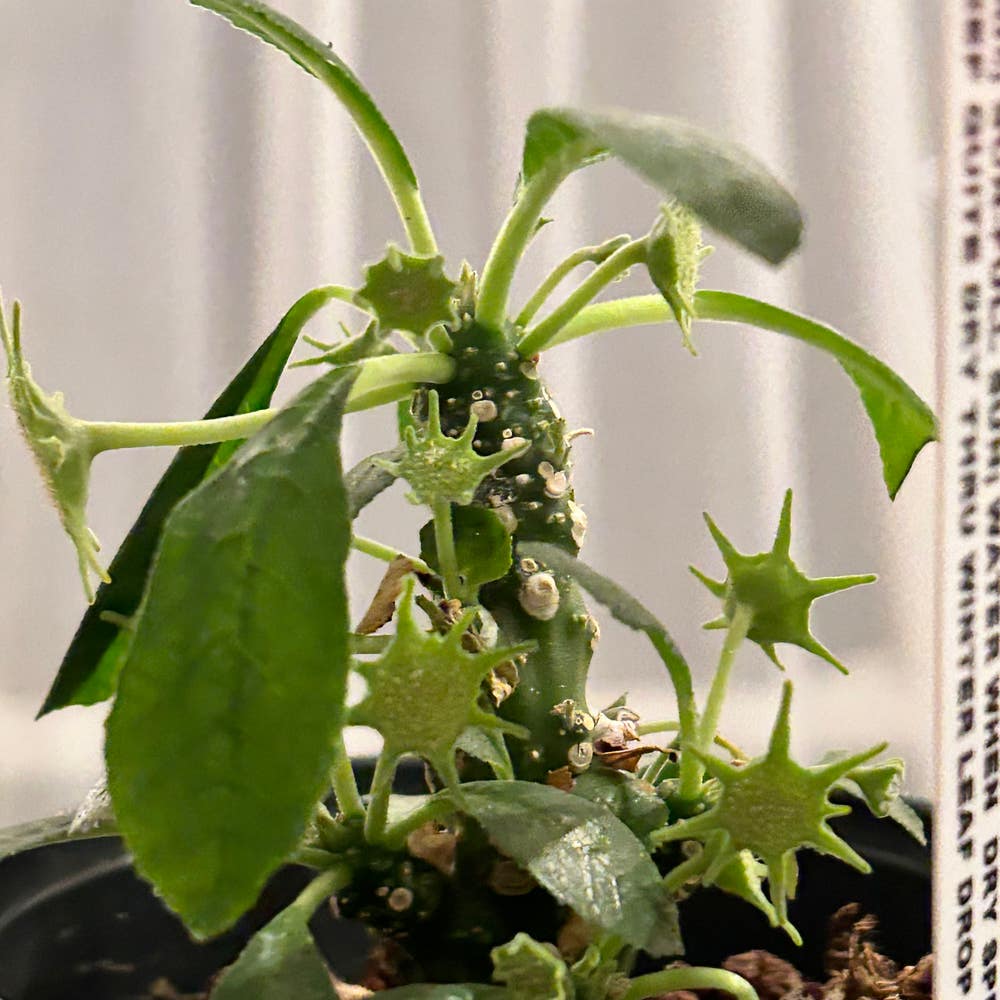
Why Are My Dorstenia foetida subsp. foetida Leaves Mushy?
Dorstenia foetida subsp. foetida
By the Greg Editorial Team
Jun 13, 2024•3 min read
This article was created with the help of AI so we can cover more plants for you. May contain errors. See one? Report it here.
- Mushy leaves mean too much water; check for overwatering and poor drainage.
- Fungi love moisture: Ensure cleanliness and consider fungicides if needed.
- Sunlight and airflow help: Use well-draining soil and pots to prevent issues.
Spotting Trouble: Signs Your Dorstenia foetida subsp. foetida Leaves Are Unhappy
👀 Visual Cues: The Look of Unhappiness
Discoloration is a glaring sign that your Dorstenia foetida subsp. foetida is in distress. Leaves that turn from a healthy green to a dull yellow or brown are sending a distress signal. Dark spots on the foliage are not a natural part of the plant's pattern—they're a symptom of trouble.
🤚 Touch and Tell: The Texture of Trouble
A healthy Dorstenia foetida leaf should be firm, not giving in to light pressure. If the leaves feel soft and squishy, akin to an overripe fruit, it's a clear indication of excess moisture. This textural change is a critical symptom and should not be overlooked.
🍃 Beyond the Leaves: Other Symptoms to Watch For
Look out for leaves that droop as if they've lost all will to stand tall. If the stems are turning a dark brown, akin to a well-done steak, it's a serious red flag. Also, keep an eye out for any unwelcome pests; webbing and speckles on your plant are as welcome as a rock in your shoe.
The Usual Suspects: Pinpointing the Culprits Behind Mushy Leaves
💦 Too Much Love: The Overwatering Problem
Overwatering is often the root cause of your Dorstenia foetida subsp. foetida's mushy leaves. It's a classic case of too much of a good thing. Your plant's roots need to breathe, not swim.
If the soil clings to your fingers like wet clay, it's a sign you've been overzealous with the watering can. A heavy pot is another giveaway that it's time to let the soil dry out.
🚰 When Water Won't Leave: The Perils of Poor Drainage
Poor drainage is like leaving your plant's roots in a bathtub with the plug in. They need a quick escape route for excess water.
To fix waterlogged soil, consider adding perlite or sand to improve aeration. Ensure your pot has adequate drainage holes to prevent your plant from sitting in moisture.
🍄 Uninvited Guests: Fungal Foes
Fungi thrive in moist environments. If you spot unusual spots or a musty smell, it's time to act.
Regularly clean your plant and its surroundings to keep fungi at bay. If an infection is present, prune affected areas and consider a fungicide. Remember, prevention is better than cure.
Saving Your Succulent: Turning the Tide on Mushiness
💧 Fine-Tuning Your Watering Ways
Watering is more ritual than routine. Ditch the calendar and let the soil's dryness be your guide. Stick a finger in; if the top inch feels like a desert, it's time to water. If not, your succulent can wait. Moisture meters aren't just for pros—they're your secret weapon for precision hydration.
🌧 Making It Rain (The Right Way): Drainage Solutions
Soil is the unsung hero in the drainage saga. A mix of peat, perlite, and pine bark will keep those roots breathing easy. As for pots, think Swiss cheese—more holes, more happiness. Terracotta is the MVP, wicking away excess moisture like a champ. Remember, a pot too big is a pool party for root rot.
🍄 Fungus Among Us: Getting the Upper Hand
Fungus thrives in the damp and dark, so let the sunshine in and keep the air moving. If your indoor garden's more humid than a sauna, a dehumidifier might just be your best friend. And when fungus dares to show its face, show it the door with a targeted fungicide—just follow the label like it's plant law. Remember, cleanliness is your plant's best defense; keep those tools sterile and your leaves dry.
⚠️ Safety First
This content is for general information and may contain errors, omissions, or outdated details. It is not medical, veterinary advice, or an endorsement of therapeutic claims.
Always consult a qualified healthcare professional before using any plant as food, medicine, or supplement.
Never eat any plant (or feed one to pets) without confirming its identity with at least two trusted sources.
If you suspect poisoning, call Poison Control (800) 222-1222, the Pet Poison Helpline (800) 213-6680, or your local emergency service immediately.
Spotted an error? Please report it here.
Prevent mushy leaves in your Dorstenia foetida with tailored care 🚫💧 from Greg, ensuring the perfect watering balance for your plant's health.