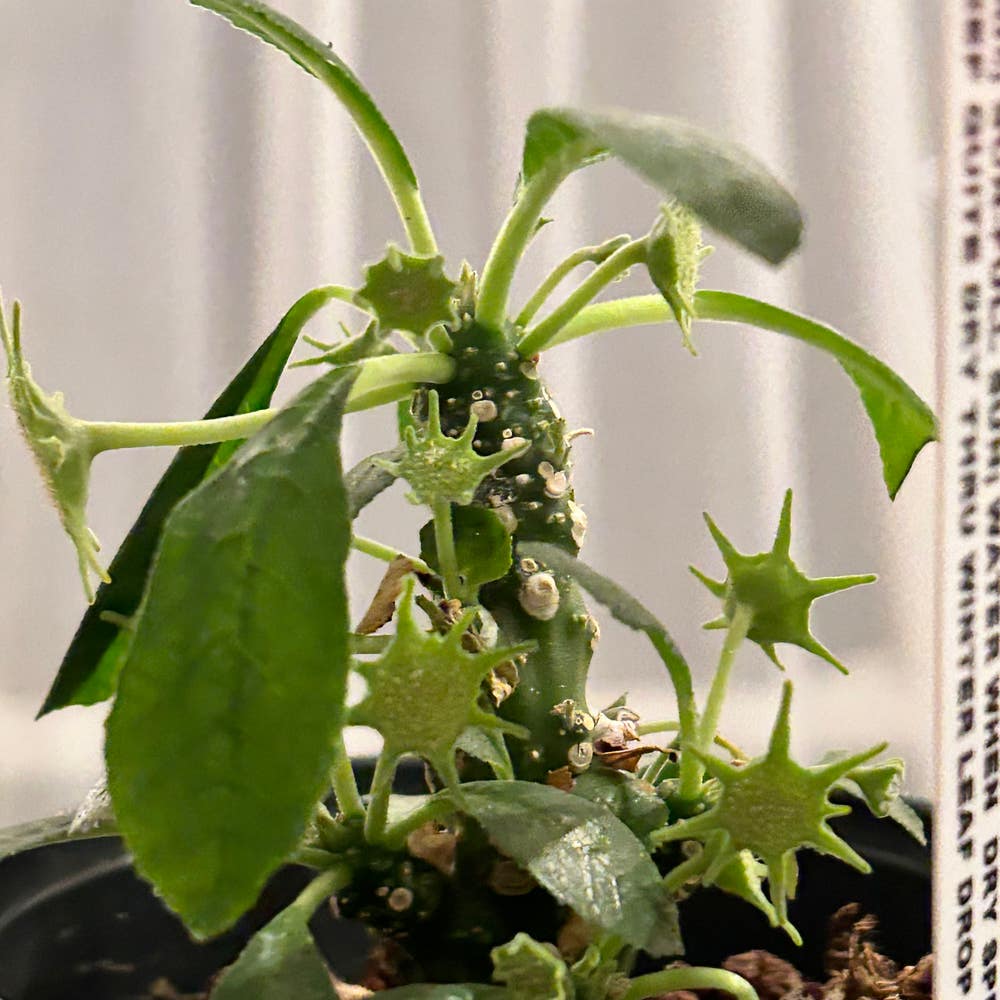
Dorstenia Foetida Subsp. Foetida Leaves Falling Over
Dorstenia foetida subsp. foetida
By the Greg Editorial Team
Jun 13, 2024•5 min read
This article was created with the help of AI so we can cover more plants for you. May contain errors. See one? Report it here.
- Droopy leaves signal distress; check for over or underwatering.
- 🌞 Bright, indirect light is key; rotate plant for even exposure.
- Support stems with stakes, and prune for stronger growth.
Spotting the Telltale Signs Your Dorstenia is Unhappy
🍂 Wilted Dreams: Identifying Droopy Leaves
Droopy leaves are your Dorstenia's way of waving a white flag. If your plant's foliage hangs lower than a teenager's jeans, it's time to take action. Consistent wilting across the plant is a red flag; it's more than just a bad leaf day.
💪 When Stems Can't Stand Up: Recognizing Weak Support Structures
When your Dorstenia's stems have all the strength of overcooked spaghetti, it's a sign of distress. Stems that can't stay erect are crying out for help. This lack of support often points to a deeper issue, whether it's watering woes or a light shortage. Keep an eye out for stems that seem to be on a permanent slouch, and prepare to intervene.
When Too Much Love Drowns Your Plant
💧 The Perils of Overwatering: Root Rot and Limp Leaves
Overwatering is the equivalent of a helicopter parent in the plant world—it means well but can smother. Your Dorstenia's roots need to breathe, and too much water drowns their little root lungs, leading to root rot. A plant with root rot is like a zombie; it might look alive, but it's dead on the inside. Leaves droop, stems become mushy, and your green buddy becomes a sad shadow of its former self.
👆 Checking Soil Moisture: The Finger Test and Beyond
Forget fancy gadgets; your finger is the ultimate moisture meter. Plunge it into the soil up to the first knuckle—if it feels like a wet bath towel, hold off on the water. If it's dry, it's time to give your plant a drink. Remember, the goal is damp, not soggy. Think of it as the soil's comfort zone.
🚰 The Right Way to Water: Techniques for Hydration without Harm
When watering, imagine you're pouring a scotch for a friend—you want to be generous but not overdo it. Water until it runs through the drainage holes, then let the soil dry out slightly before the next round. This isn't a one-size-fits-all; adjust your technique based on the plant's feedback and the seasons. A lighter pot signals it's time for a drink. Keep it moderate—your plant's roots should sip, not swim.
Thirsty Roots, Droopy Leaves: The Underwatering Dilemma
🚰 Spotting a Parched Dorstenia: Signs of Underwatering
Dorstenia foetida subsp. foetida is a resilient plant, but underwatering can leave it looking more like a wilted salad than a vibrant houseplant. If the leaves are drooping like a tired hiker's shoulders, it's a clear sign of thirst. Dry soil that crumbles on touch is another red flag, screaming for hydration.
💧 Quenching the Thirst: Finding the Sweet Spot for Watering Frequency
The key to a perky Dorstenia is mastering the watering routine. Water thoroughly when the top inch of soil feels like a forgotten desert—bone dry. Let the water run through the drainage holes, then wait for the soil to dry out slightly before the next watering session. This isn't a set-it-and-forget-it deal; adjust your schedule with the changing seasons and your plant's response. Remember, your plant's roots prefer a steady relationship with water, not a love-hate rollercoaster.
Let There Be Light (But Not Too Much)
Finding the Goldilocks zone for your Dorstenia foetida subsp. foetida is crucial for leaf health. Too much sun, and you're practically frying your plant; too little, and it's like living in perpetual twilight.
🌞 Moving to the Light
Bright, indirect light is your Dorstenia's best friend. East or west-facing windows usually hit the mark. If your plant's leaves are losing their luster, it's time to relocate.
⛅️ Filtering the Rays
Sheer curtains are the unsung heroes in the plant world, acting as a shield against the sun's harshest rays. Think of them as a plant's sunscreen—protecting without blocking all the good stuff.
If you're dealing with a lighting conundrum, remember that artificial grow lights can be a solid backup singer to the sun's lead vocals. Just keep them at a safe distance to prevent your plant from getting a light burn.
Keep an eye on your plant's response to light changes. Leaves that maintain their vibrant color are giving you a green light that you're doing it right. Rotate your plant regularly to ensure even light distribution, avoiding the dreaded one-sided growth.
Remember, the right light is like the perfect cup of coffee—strong but not bitter. Adjust your plant's position with the changing seasons to maintain this balance, and watch for signs of distress. Your plant will thank you with perky leaves and robust health.
Giving Your Plant a Helping Hand
🌱 Staking Your Claim: Using Supports for Droopy Stems
Stakes are your Dorstenia's best friends when gravity seems to be its worst enemy. Insert a stake close to the main stem, ensuring you don't disturb the roots. Tie the plant to the stake, but keep it as loose as a casual fist bump – you're supporting, not suffocating.
🎀 Gentle Ties and Soft Stakes: How to Prop Up Your Plant Without Damage
Soft materials are the name of the game when tying up your plant. Think cloth strips or special plant ties that won't cut into the stem. Adjust these ties as your Dorstenia grows to maintain the perfect balance between support and freedom.
🌿 Encouraging Resilience: Techniques to Promote Stronger Growth
Your plant's not just looking for a quick fix – it wants to grow stronger. Pruning can encourage more robust growth, so don't shy away from giving your plant a little trim. Position your Dorstenia in a way that it naturally leans towards the light, but not so much that it needs a permanent crutch.
⚠️ Safety First
This content is for general information and may contain errors, omissions, or outdated details. It is not medical, veterinary advice, or an endorsement of therapeutic claims.
Always consult a qualified healthcare professional before using any plant as food, medicine, or supplement.
Never eat any plant (or feed one to pets) without confirming its identity with at least two trusted sources.
If you suspect poisoning, call Poison Control (800) 222-1222, the Pet Poison Helpline (800) 213-6680, or your local emergency service immediately.
Spotted an error? Please report it here.
Ensure your Dorstenia Foetida stands tall and thrives 🌿 by using Greg's PlantVision for optimal watering and lighting schedules tailored to your home environment.