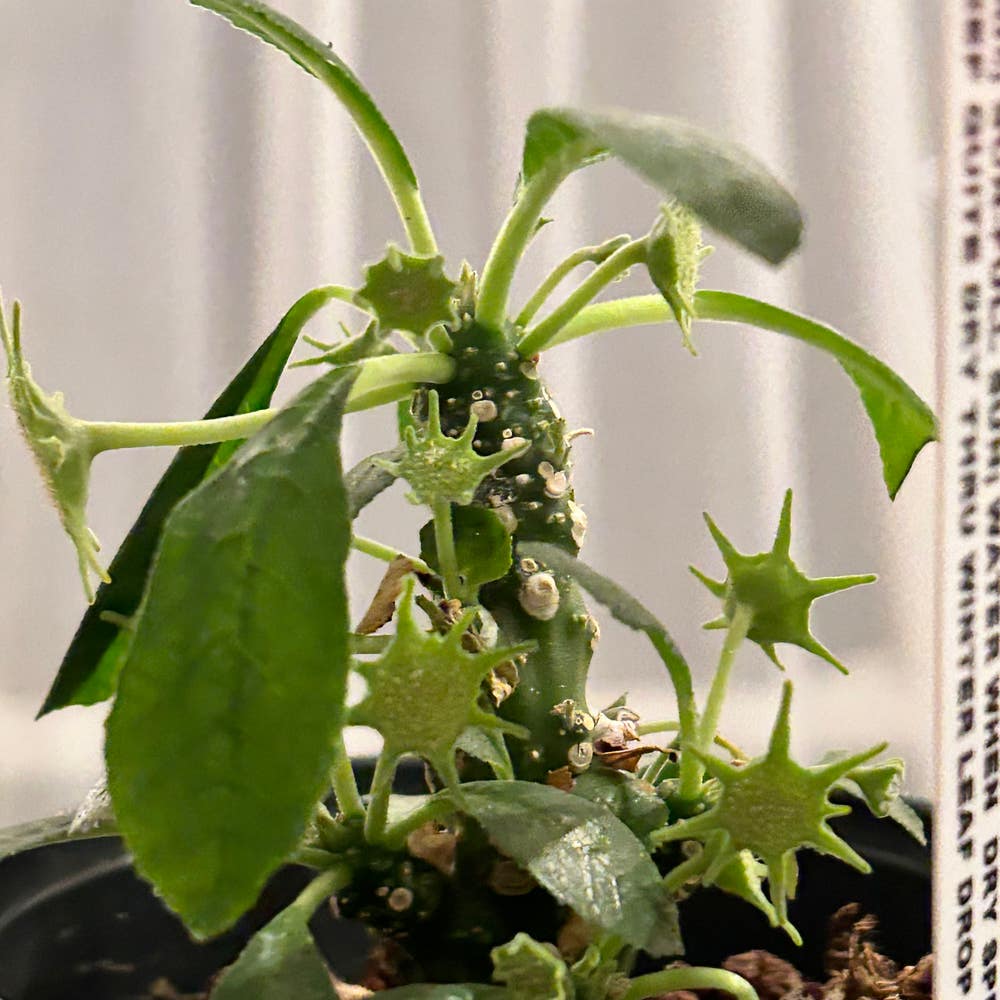
Diagnosing Dorstenia Foetida Subsp. Foetida Root Rot
Dorstenia foetida subsp. foetida
By the Greg Editorial Team
Jun 13, 2024•3 min read
This article was created with the help of AI so we can cover more plants for you. May contain errors. See one? Report it here.
- Yellow leaves, wilting, and foul odor signal root rot in Dorstenia foetida.
- Inspect and trim roots using sterile tools to diagnose and treat rot.
- Prevent rot with proper watering, drainage, and climate control.
Spotting the Trouble: Signs of Root Rot
🚩 Visual Red Flags
Yellowing leaves and wilting are the plant's distress signals. They're a visual SOS, indicating that your Dorstenia foetida subsp. foetida might be in trouble. Dark spots or a general look of dejection in the foliage are your cues to investigate further. Stunted growth is another silent but glaring red flag.
👃 Sniff Test
Trust your nose—if the soil smells like a forgotten wet sock, it's a sign of decay. A foul odor emanating from the pot is the plant's way of saying, "Help, I'm rotting down here!"
✋ The Touch Factor
Get hands-on and feel the roots. Healthy roots are firm and white, while mushy, discolored roots scream root rot. If they crumble with a gentle touch, it's time to take action. Roots should be the picture of health, not a soggy mess.
Getting Down and Dirty: Diagnosing Root Rot
🌱 Root Inspection How-To
Root rot won't take a day off, so neither can you. Gently coax your Dorstenia foetida subsp. foetida from its pot, like you're asking a hedgehog to uncurl. Brush away the soil to reveal the roots. Healthy ones boast a firm texture and a color that's more ivory than a piano key. If they're slumping like overcooked spaghetti, you've got trouble.
🪒 Making the Cut
Sterilize your scissors or shears with a 10% bleach solution or rubbing alcohol—think of it as pre-op sanitation. Now, play surgeon and snip away the rotted roots with the precision of a sushi chef. Each cut should be just below the healthy tissue. After each incision, disinfect your tools again; you're not looking to spread the root rot gospel.
The Recovery Room: Treating Root Rot
💨 Drying Out and Aerating
After identifying root rot, it's time to dry out the soil. Overwatering is often the culprit, so let's not make the same mistake twice. Loosen the soil to let those roots breathe; think of it as giving your plant's roots a new lease on life.
🏥 Surgical Precision
Next up, root surgery. With sterilized tools in hand, remove the rotten parts. Healthy roots are firm and resilient, so anything mushy or discolored has to go. It's a delicate operation, but necessary for revival.
🌱 Fresh Start with Soil
Finally, give your plant a fresh start with new soil. Choose a well-draining mix and consider adding perlite or sand for that extra drainage oomph. Repot with care, and you've just given your plant a fighting chance against root rot's return.
Keeping It Healthy: Prevention Tactics
💧 Watering Wisdom
Watering is crucial. Only water when the top inch of soil is dry. It's simple: overwatering invites root rot, while underwatering can stress the plant. Balance is key.
🏡 The Right Home
Choose a pot that lets roots breathe and has drainage holes. Terra cotta is a champ for its porous nature. Match it with a well-draining soil mix, and you're setting up a root-friendly bachelor pad.
🌡️ Climate Control
Temperature and humidity need your attention. Use room-temperature water to avoid shocking the roots. Keep the air moving; a gentle fan can work wonders. Seasonal changes? Adjust your care routine like you'd update your wardrobe.
⚠️ Safety First
This content is for general information and may contain errors, omissions, or outdated details. It is not medical, veterinary advice, or an endorsement of therapeutic claims.
Always consult a qualified healthcare professional before using any plant as food, medicine, or supplement.
Never eat any plant (or feed one to pets) without confirming its identity with at least two trusted sources.
If you suspect poisoning, call Poison Control (800) 222-1222, the Pet Poison Helpline (800) 213-6680, or your local emergency service immediately.
Spotted an error? Please report it here.
Banish root rot in your dorstenia foetida by following custom watering plans 💧 from Greg, ensuring your plant's roots are as healthy as the day you potted them.