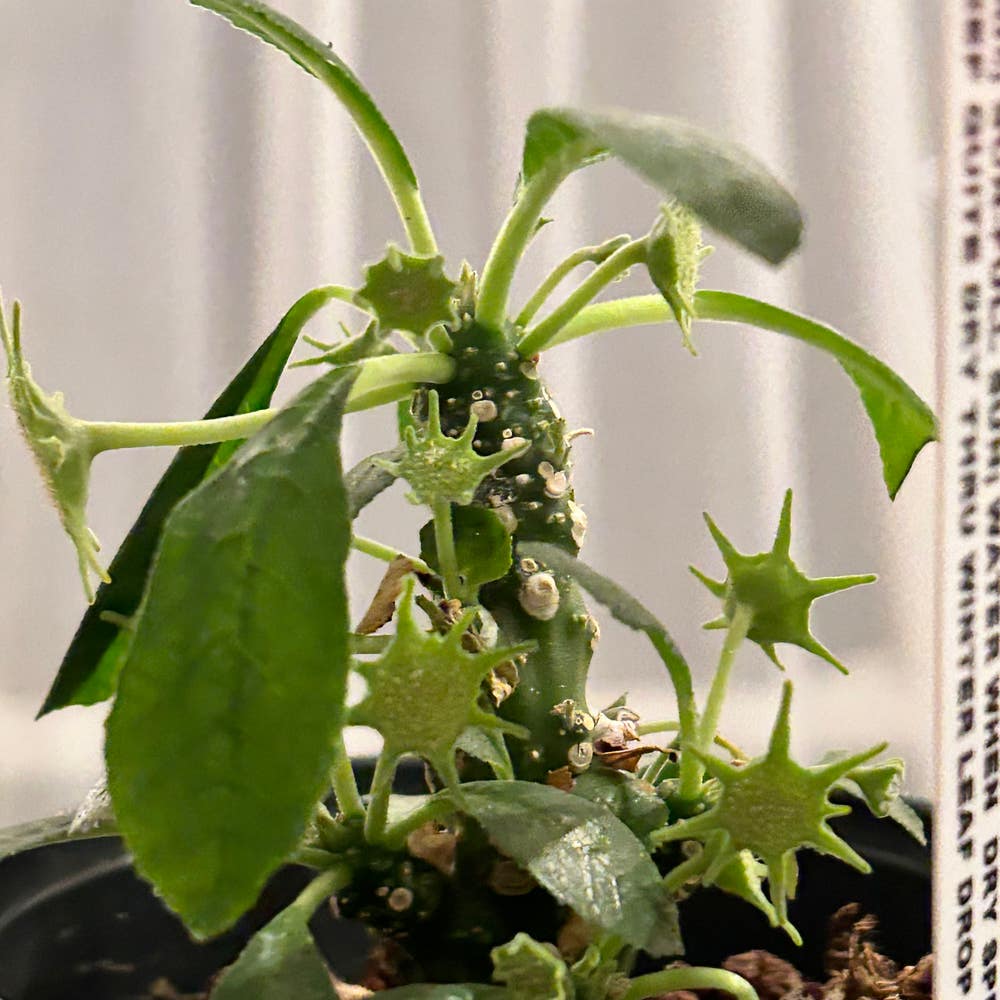
Common Dorstenia foetida subsp. foetida Problems
Dorstenia foetida subsp. foetida
By the Greg Editorial Team
Jun 13, 2024•4 min read
This article was created with the help of AI so we can cover more plants for you. May contain errors. See one? Report it here.
- Over-watering causes root rot, under-watering leads to shriveled leaves.
- Leaf scorch indicates too much sun; ideal temperature is 60-75°F.
- Consistent care prevents stress, pests, and diseases in Dorstenia foetida.
When Water Woes Strike
💧 Spotting the Signs of Over-watering
Over-watering can turn your Dorstenia foetida subsp. foetida into a soggy mess. Yellow leaves and a persistently wet soil are your first red flags. If the plant's base feels like a squishy disaster, you're in over-watering territory. Root rot is the grim reaper here, with roots turning into dark, mushy strings.
Steps to Rescue an Over-watered Plant
- Stop watering immediately and let the soil dry out.
- If root rot is present, repot with fresh, well-draining soil after trimming away any rotten roots.
- Resume watering with caution, using the finger test to ensure the soil is dry before each watering.
🏜️ The Thirsty Plant: Under-watering Symptoms
Under-watering leaves your plant looking more dehydrated than a raisin in the sun. Look for shriveled leaves and soil pulling away from the pot's edges. A quick finger test should tell you if it's time to water—bone-dry means your plant is thirsty.
How to Rehydrate Without Overcompensating
- Water your plant deeply but gently to avoid shock.
- Allow excess water to drain completely, ensuring roots aren't suffocating.
- Observe and adjust your watering routine to match the plant's changing needs.
Light and Temperature: The Balancing Act
🌞 Too Much Sun, Too Little Shade
Leaf scorch in Dorstenia foetida subsp. foetida is like a plant's version of a bad sunburn. Brown patches or crispy tips on the leaves are your cue that it's time to rethink your plant's sunbathing routine. To prevent this, find a spot that's the Goldilocks zone of lighting—bright enough to enjoy a book without artificial light, yet not so bright that it creates sharp shadows.
🌅 Finding the Sweet Spot for Sunlight Exposure
The right amount of sunlight is crucial. Direct sun is a no-go; it's the botanical equivalent of a beach day without sunscreen. If your space feels more like a cave, consider a grow light, but keep it at a respectful distance to avoid turning your plant into a crispy critter.
❄️ Keeping the Chill at Bay
Dorstenia foetida subsp. foetida doesn't appreciate the cold shoulder. Temperature stress can manifest as wilting or a change in leaf color. Think of the ideal temperature as a cozy café—comfortable and steady.
🌡️ Ideal Temperature Ranges for Optimal Growth
Aim for a consistent temperature range between 60-75°F (15-24°C). This range keeps your plant comfy without the risk of it breaking into a sweat. Remember, stability is key—fluctuations in temperature are as unwelcome as spoilers to your favorite series. Use thermometers or thermostats to keep the climate in check.
Pests and Pathogens: Uninvited Guests
🐛 Common Critters that Love Your Plant
Dorstenia foetida subsp. foetida may not throw out the welcome mat for pests, but that doesn't stop the occasional aphid or cochineal from crashing the party. These freeloaders can be spotted as tiny, unwanted specks on your plant.
To give them the boot, a spray of water or insecticidal soap should be your go-to. Apply this plant-friendly bouncer weekly until the pests get the hint and leave.
🍄 Fungal Foes: Mold and Mildew
Fungi are the stealthy gatecrashers that love to lurk in the shadows. Powdery mildew and black spot are the usual suspects, leaving a calling card of flour-like coatings or dark bullseyes on leaves.
Good air circulation and keeping the soil on the drier side are your best defense strategies. If these interlopers have already set up camp, it's time to bring out the fungicidal sprays. Remember, cleanliness is your plant's best friend—keep those fallen leaves picked up to avoid fungal fiestas.
The Ripple Effect of Care Mistakes
🚱 The Consequences of Inconsistent Care
Inconsistent care can unleash a host of problems for Dorstenia foetida subsp. foetida. Like a neglected friendship, plant health can deteriorate rapidly when routine care is ignored. Irregular watering, sporadic feeding, and haphazard temperature control can trigger a domino effect, leading to a weakened plant susceptible to pests and diseases.
To avoid this, establish a consistent care routine. Water when the topsoil feels dry, feed with a balanced fertilizer during the growing season, and maintain a stable environment. Think of it as setting a dinner schedule for your pet; your plant relies on this predictability to thrive.
🚨 The Telltale Signs of Stress
Stress in Dorstenia foetida subsp. foetida can be as subtle as a sulk or as obvious as a tantrum. Look for leaves that droop, yellow, or drop without reason. A plant that's stretching towards the light or has stopped growing altogether is signaling for help.
When you spot these SOS signals, act swiftly. Adjust lighting, reassess watering habits, and ensure the temperature is consistent. Sometimes, a quick fix is all it takes, but often, these are signs that your plant care routine needs a serious overhaul. Remember, it's not just about saving a plant; it's about nurturing a living, breathing entity that depends on you.
⚠️ Safety First
This content is for general information and may contain errors, omissions, or outdated details. It is not medical, veterinary advice, or an endorsement of therapeutic claims.
Always consult a qualified healthcare professional before using any plant as food, medicine, or supplement.
Never eat any plant (or feed one to pets) without confirming its identity with at least two trusted sources.
If you suspect poisoning, call Poison Control (800) 222-1222, the Pet Poison Helpline (800) 213-6680, or your local emergency service immediately.
Spotted an error? Please report it here.
Nurture your Dorstenia foetida 🌿 with confidence as Greg guides you through a personalized care routine, preventing yellow leaves and root rot for a flourishing green companion.