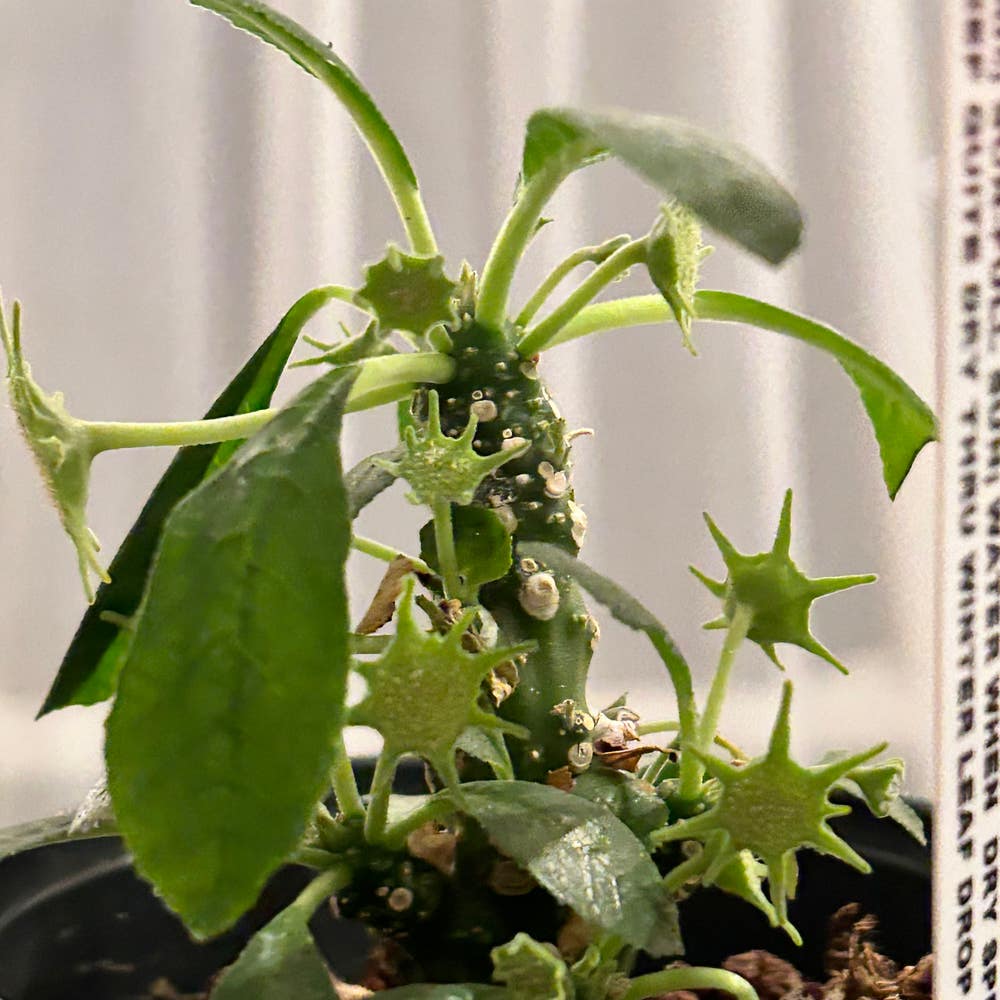
Dorstenia Foetida Subsp. Foetida Yellow Leaves
Dorstenia foetida subsp. foetida
By the Greg Editorial Team
Jun 13, 2024•3 min read
This article was created with the help of AI so we can cover more plants for you. May contain errors. See one? Report it here.
- Yellow leaves? Check water balance and nutrient levels.
- Bright, indirect light keeps Dorstenia foetida happy.
- Consistent care and proper location prevent yellowing.
Spotting the Culprit Behind Yellow Leaves
🌱 Examining Symptoms
⚖️ Overwatering vs. Underwatering
Overwatering turns your Dorstenia foetida into a swamp inhabitant, with leaves that feel like a wet sponge. Underwatering, however, leaves the soil bone-dry and the plant looking as parched as a desert. Check the soil moisture with your finger; if it sticks to your skin, it's too wet. If it's dry an inch down, it's time to water.
🍽️ Nutrient Deficiency
Yellow leaves can also scream nutrient deficiency. A soil test can be your best friend here, revealing what's missing from your plant's diet. Look for a fertilizer that's like a multivitamin for your plant, providing a balanced mix of the essentials.
🌞 Assessing Environmental Factors
☀️ Light Exposure
Too much sun can give your plant a sunburn, while not enough leaves it craving for some rays. Bright, indirect light is the sweet spot for Dorstenia foetida. Rotate your plant to prevent lopsided growth and ensure even exposure.
🏡 Location, Location, Location
The plant's location can be a game-changer. Too close to a heat source or in a drafty window, and your plant might as well be in a survival reality show. Consider the room temperature and airflow when picking a spot for your green buddy.
Turning Over a New Leaf: Remedial Actions
💧 Balancing Water Intake
🚰 Fine-Tuning Your Watering Routine
Dorstenia foetida thrives on moderation. Check the soil moisture an inch down; if it's dry, it's time to water. Overwatering is a no-go—let the topsoil dry out before the next watering to avoid root rot.
🚰 Ensuring Proper Drainage
Drainage holes are your plant's best friend. They prevent water from turning your pot into a mini swamp. Consider adding perlite or pumice to the soil mix for that extra aeration kick.
🍽️ Nutrient Boost
🎯 Identifying and Fixing Nutrient Deficiencies
Yellow leaves might scream for nutrients. Opt for a balanced, water-soluble fertilizer—think of it as a plant multivitamin. But don't overdo it; too much is just as bad as too little.
🌱 When and How to Use Foliar Sprays or Soil Amendments
Foliar sprays can give your plant a quick pick-me-up, but use them sparingly. Soil amendments are like a long-term investment in your plant's health. Refresh the soil annually to maintain nutrient levels without over-fertilizing.
Keeping the Green: Preventative Strategies
📅 Consistent Care Schedule
Crafting a watering and fertilization schedule is like setting up a calendar alert for your plant's health. Your Dorstenia foetida's leaves will stay as green as a traffic light on go with the right routine.
Adjusting your care with the seasons is critical. Less water in the chill of winter, a bit more during the growth spurts of spring and summer. It's about syncing with nature's tempo.
🌞 Creating the Perfect Environment
Lighting isn't just for ambiance; it's a lifeline for your plant. Too much and your Dorstenia foetida might as well be sunbathing in the Sahara; too little, and it's groping in the dark. Find that sweet spot.
Positioning your plant is about reading the room—literally. Move it around until it seems as happy as a cat in a sunbeam, avoiding drafty death traps or scorching hot spots.
Seasonal changes are your cue to play plant stylist. Rotate, reposition, and reassess to keep your Dorstenia foetida looking sharp, no matter what Mother Nature throws your way.
⚠️ Safety First
This content is for general information and may contain errors, omissions, or outdated details. It is not medical, veterinary advice, or an endorsement of therapeutic claims.
Always consult a qualified healthcare professional before using any plant as food, medicine, or supplement.
Never eat any plant (or feed one to pets) without confirming its identity with at least two trusted sources.
If you suspect poisoning, call Poison Control (800) 222-1222, the Pet Poison Helpline (800) 213-6680, or your local emergency service immediately.
Spotted an error? Please report it here.
Banish yellow leaves and keep your Dorstenia foetida thriving 🌿 with Greg's custom watering schedules and nutrient tracking for the perfect care routine.