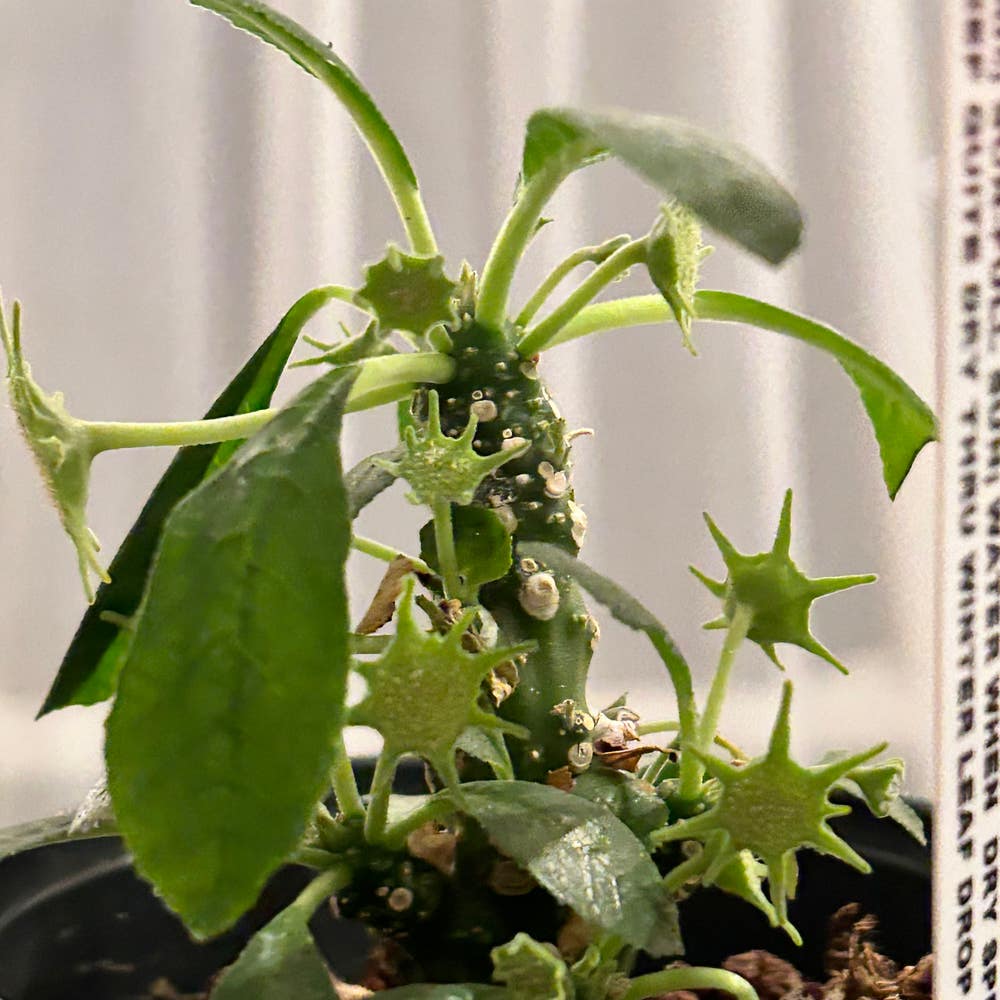
Why Are My Dorstenia foetida subsp. foetida Leaves Droopy?
Dorstenia foetida subsp. foetida
By the Greg Editorial Team
Jun 13, 2024•6 min read
This article was created with the help of AI so we can cover more plants for you. May contain errors. See one? Report it here.
- Droopy leaves signal distress, needing immediate attention for plant health.
- 🌊 Overwatering and underwatering both lead to limp leaves; balance is key.
- ☀️ Proper light and temperature are crucial for preventing droopy leaves.
Spotting the Trouble: Signs Your Plant's Leaves Are Unhappy
🚩 Visual Cues of Droopiness
Persistent droopiness in Dorstenia foetida subsp. foetida leaves is a red flag. If your plant's leaves resemble a wet rag and fail to perk up post-watering, it's a distress call. Watch for discoloration or spots, as these are not just aesthetic changes but symptoms of deeper issues.
🌀 Patterns of Droop
Leaves that consistently droop at certain times may be reacting to environmental stress or watering mishaps. It's not just a quirky trait; it's a plant's way of saying, "I'm not okay."
🩺 The Impact on Plant Health
Droopy leaves can affect the plant's overall health. They may indicate a compromised ability to photosynthesize, which is critical for the plant's growth and vitality. Yellowing or browning foliage, along with a general look of defeat, should prompt immediate action.
🍅 Soft Spots and Texture Changes
Keep an eye out for leaves that feel mushy or have soft spots. These are SOS signals from your plant. A healthy Dorstenia foetida subsp. foetida should have sturdy leaves; if they're too easy to detach, there's trouble brewing.
🕵️ Consistent Vigilance
It's not just about a single droopy leaf. If the whole plant looks like it's slouching, it's a clear sign of distress. Isolated incidents might be a damaged leaf, but a plant-wide slump means it's time to intervene.
The Thirst Quench Balance: Watering Woes
💦 Overwatering Overload
Spotting and fixing waterlogged soil is crucial. If your Dorstenia foetida subsp. foetida's leaves are more limp than a noodle in a soup bowl, you've likely overdone it with the H2O. To rescue your plant from its aquatic ordeal, cease all watering immediately. Let the soil dry out to the touch before giving it another drink. If the soil is as sticky as last night's party residue, consider repotting with a fresh, well-draining mix.
The right way to dry out without drought is a delicate dance. After halting the waterworks, place your plant in a well-ventilated area. This isn't a time for sunbathing, though; keep it out of direct sunlight to avoid additional stress. Check the soil daily, and when it feels like a day-old pastry—dry on the outside, slightly moist within—it's time for a gentle watering.
🏜️ Underwatering Underestimation
Recognizing the signs of thirst is like understanding a silent cry for help. When your Dorstenia foetida subsp. foetida starts to look more wilted than a salad forgotten in the fridge, it's begging for a drink. The top inch of soil should never feel as dry as a comedian's humor. If it does, it's time to hydrate.
Hydration without the hazard means watering slowly, letting the plant sip rather than gulp. Imagine you're at a wine tasting, not a beer chugging contest. Water until it starts to drain from the bottom, then stop. No plant enjoys a soggy bottom. If you're the forgetful type, consider a moisture meter as your personal plant nanny, ensuring you hit that sweet spot every time.
Let There Be Light: Finding the Sweet Spot
💡 The Role of Light in Leaf Perkiness
Light is like a plant's personal trainer; it keeps leaves toned and perky. For Dorstenia foetida subsp. foetida, too little light leads to a slouchy posture, while too much can scorch its leaves. Finding the Goldilocks zone of bright, indirect light is key to avoiding the droop.
💡 Adjusting Your Plant's Sunbathing Schedule
Rotate your plant to ensure even exposure, preventing a lopsided leafy affair. Seasonal shifts mean your plant's spot might be a sun trap in summer and a gloomy corner in winter. Adjust its position as the sun's angle changes, and watch for signs of discontent. If your plant's leaves could talk, they'd tell you when they've had enough sun for the day.
💡 Finding the Sweet Spot for Sunlight Exposure
Start by assessing the current light conditions. Is your plant soaking up rays like a sunbather or hiding in the shadows? Aim for a cozy reading nook vibe with bright, indirect light. If you're tech-savvy, a light meter app can take the guesswork out of finding that sweet spot.
💡 Keep an Eye on the Clock
Your plant doesn't need a tan; it needs its beauty sleep and a fair share of light hours. Aim for about 6-8 hours of quality light time per day. It's like setting the stage for a solo performance; the lighting needs to be just right for your plant to thrive.
Keeping the Chill at Bay: Temperature Tactics
Temperature swings are the nemesis of Dorstenia foetida subsp. foetida. Just like us, they prefer a consistent climate, not a roller coaster of highs and lows. Here's how to keep your plant from throwing a temperature tantrum.
🌡️ Identifying Temperature-Related Droopiness
Leaves that look more deflated than a day-old birthday balloon are signaling distress. If your plant's environment feels like a sauna or an icebox, it's time to act.
🏠 Creating a Cozy Climate for Your Dorstenia foetida subsp. foetida
Embrace Technology
Thermometers and hygrometers aren't just fancy gadgets; they're your plant's lifeline. Keep tabs on the temps like you're tracking a pizza delivery—eagerly and often.
Insulate and Isolate
Drafty windows and radiators are the culprits behind those dramatic temperature drops. Insulate like you're prepping for the apocalypse and keep your plant away from these danger zones.
The Right Gear
Consider a heating mat for that extra bit of warmth or a fan to provide a gentle breeze. It's like giving your plant a personal climate assistant.
Keep It Steady
Aim for that sweet spot between 65-75°F (18-24°C). If the temperature in your plant's space fluctuates more than your mood on a Monday morning, it's time to find a new spot.
Remember, your Dorstenia foetida subsp. foetida's comfort is paramount. Keep the temperature as consistent as your favorite coffee order, and you'll avoid the dreaded droop.
The Proactive Plant Parent: Prevention Strategies
💧 Water Wisdom
Crafting the perfect watering routine for your Dorstenia foetida subsp. foetida is like finding the rhythm in a catchy tune—it should be consistent and just right. Avoid overwatering; it's the equivalent of drowning your plant in love. Instead, water when the top inch of soil feels dry, not before. Think of it as a plant's thirst meter.
☀️ Luminous Lessons
Ensuring consistent, appropriate light levels is crucial. Your Dorstenia foetida subsp. foetida doesn't need a tan, so keep it out of direct sunlight that could cause the equivalent of a plant sunburn. Bright, indirect light is the sweet spot, like a cozy reading nook for your green buddy.
🌡️ Climate Control
Stabilizing your plant's environment is about avoiding extremes. Keep the temperature steady; sudden changes are to plants what cold showers are to people—shocking and unpleasant. Aim for a comfortable room temperature, steering clear of drafts and heat sources. It's like setting the perfect ambient mood for your leafy friend.
⚠️ Safety First
This content is for general information and may contain errors, omissions, or outdated details. It is not medical, veterinary advice, or an endorsement of therapeutic claims.
Always consult a qualified healthcare professional before using any plant as food, medicine, or supplement.
Never eat any plant (or feed one to pets) without confirming its identity with at least two trusted sources.
If you suspect poisoning, call Poison Control (800) 222-1222, the Pet Poison Helpline (800) 213-6680, or your local emergency service immediately.
Spotted an error? Please report it here.
Ensure your Dorstenia foetida subsp. foetida thrives with customized care 🌿 from Greg, pinpointing the perfect watering and lighting to banish droopy leaves for good.