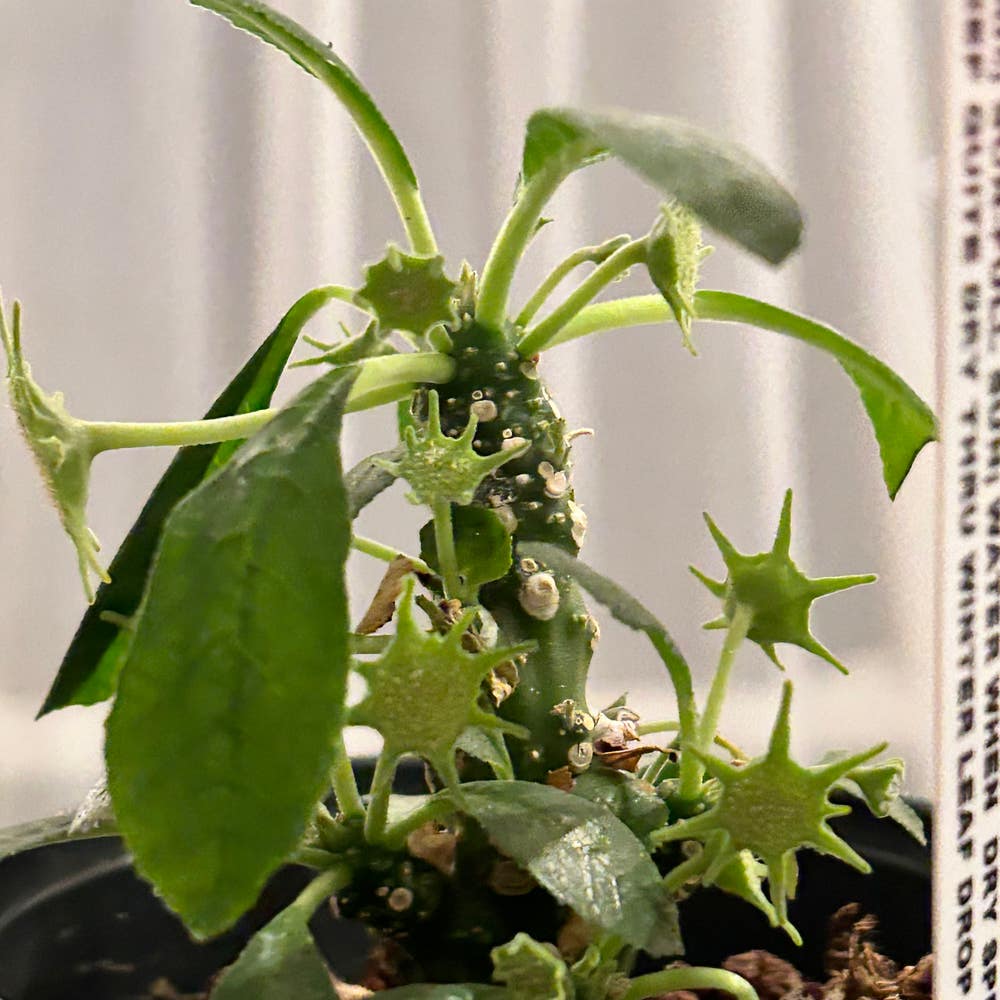
Dorstenia Foetida Subsp. Foetida Direct Sunlight
Dorstenia foetida subsp. foetida
By the Greg Editorial Team
Jun 13, 2024•3 min read
This article was created with the help of AI so we can cover more plants for you. May contain errors. See one? Report it here.
- 🌤️ Indirect sunlight preferred over direct to prevent damage.
- Window direction matters for consistent, gentle light exposure.
- Rotate and adjust seasonally to maintain optimal light for plant health.
Sunlight Decoded: What Does Dorstenia Foetida Subsp. Foetida Prefer?
🌞 Direct vs. Indirect Sunlight Simplified
Direct sunlight is the unforgiving midday guest that overstays its welcome, capable of casting sharp shadows and scorching leaves. Indirect sunlight, its milder cousin, prefers to play hide and seek, bouncing off walls or peeking through sheer curtains to offer a more gentle glow.
🌿 Dorstenia Foetida Subsp. Foetida and the Sun Dance
Shade-lover alert: Dorstenia foetida subsp. foetida isn't one to bask in the sun's full glory. Mimicking its natural habitat, where it lounges under the dappled light of taller plants, is key. Bright, indirect sunlight is its jam, keeping it from the crispy fate of too much direct exposure.
Window Whims: Where to Place Your Plant
🧭 The Direction Dilemma: North, South, East, or West?
Direction is crucial when placing your Dorstenia foetida subsp. foetida. North-facing windows offer a consistent but gentle light, ideal for plants that can't handle the full force of the sun. South-facing windows, especially in the Northern Hemisphere, are like the plant's personal tanning bed, offering the most intense light throughout the day. East-facing windows provide a soft morning glow, perfect for easing your plant into daylight. Conversely, west-facing windows can be harsh with strong afternoon rays, potentially overwhelming for your leafy friend.
🌐 Hemisphere Hints: Does Location Matter?
Absolutely, location is key. In the Northern Hemisphere, south-facing windows are your plant's best ally for maximum sunlight. Flip the script in the Southern Hemisphere, and it's north-facing windows that win the prize. Remember, as the seasons change, so does the sun's angle. You might need to shuffle your plant around to avoid the drama of too much sun or the tragedy of too little. Keep it a few feet from the window to hit that sunlight sweet spot.
When the Sun Gets Tough: Protecting Your Dorstenia Foetida Subsp. Foetida
🌿 Leaf Logic: Understanding Its Sunscreen
Dorstenia foetida subsp. foetida's leaves are natural sunscreens. In full sun, they adapt by becoming smaller and paler, reducing the surface area that's exposed to harsh rays. This is the plant's way of saying, "I've got this," as it self-regulates its sun intake.
🌍 Environmental Allies and Adversaries
Humidity is a friend to Dorstenia foetida subsp. foetida, helping it stay hydrated under the sun's glare. But, when the temperature spikes, it's a different story. Heat can cause the plant to wilt, its leaves turning leathery or showing signs of sunscald. It's a delicate balance, and your plant's comfort zone hinges on the harmonious interplay of these elements.
Sunlight Strategy: Keeping Your Plant Happy
⛅️ Shielding from the Sun's Embrace
To prevent sunburn and overexposure, place your Dorstenia foetida subsp. foetida in bright, indirect sunlight. A cozy nook away from the harsh midday glare is ideal. If the leaves start to crisp, it's a sign to move your plant to a gentler light. Use sheer curtains or UV protective film to diffuse strong sunlight while still letting enough light through. Remember, too much sun can turn your plant into a crispy critter.
🔄 The Rotation Ritual
Rotate your plant periodically to ensure all sides receive equal light, preventing lopsided growth. It's not just about aesthetics; it's about the plant's overall health. As the seasons change, so does the sun's angle, so adjust your plant's position to maintain that sweet spot of light. Think of it as a seasonal shuffle—keeping your plant's tan in check without the risk of a sunburn.
⚠️ Safety First
This content is for general information and may contain errors, omissions, or outdated details. It is not medical, veterinary advice, or an endorsement of therapeutic claims.
Always consult a qualified healthcare professional before using any plant as food, medicine, or supplement.
Never eat any plant (or feed one to pets) without confirming its identity with at least two trusted sources.
If you suspect poisoning, call Poison Control (800) 222-1222, the Pet Poison Helpline (800) 213-6680, or your local emergency service immediately.
Spotted an error? Please report it here.
Thrive in the light 🌿 with Greg's guidance to position your Dorstenia foetida subsp. foetida perfectly, ensuring it gets just the right amount of sun year-round.