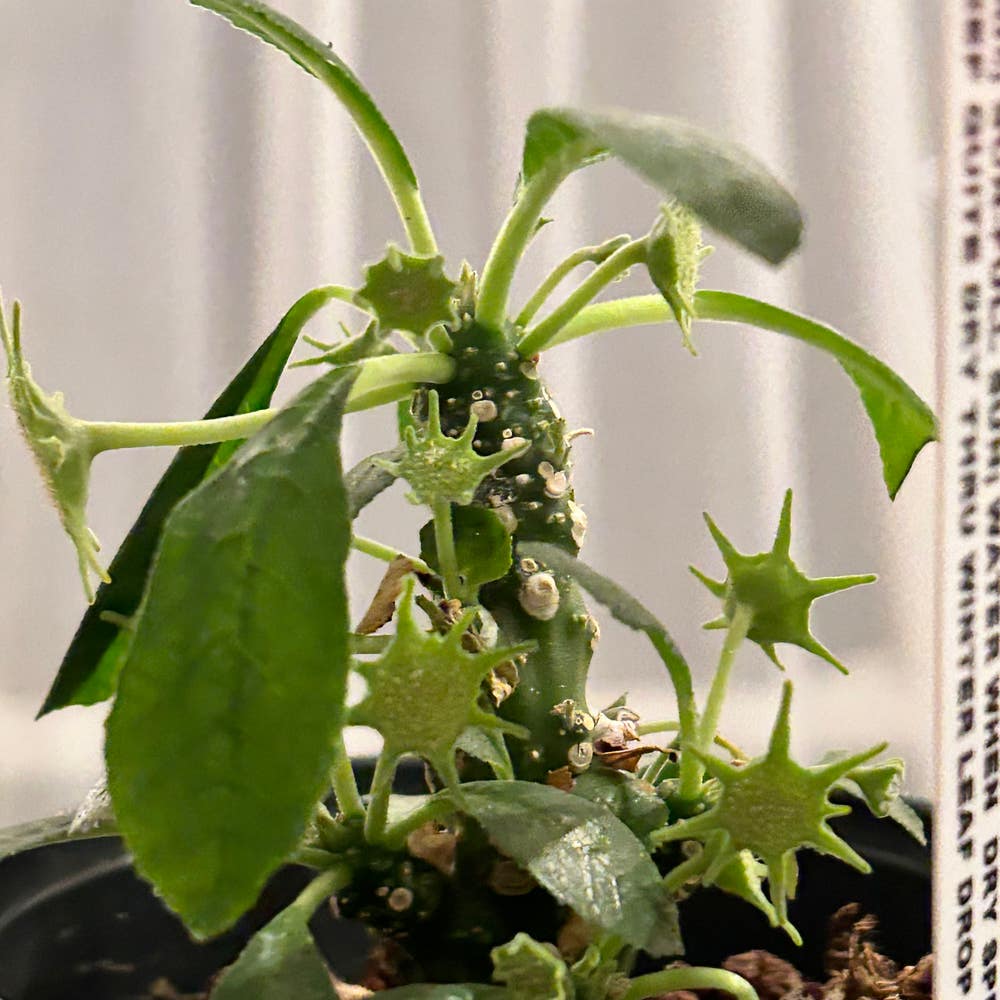
Should I Repot My Dorstenia foetida subsp. foetida?
Dorstenia foetida subsp. foetida
By the Greg Editorial Team
Jun 13, 2024•5 min read
This article was created with the help of AI so we can cover more plants for you. May contain errors. See one? Report it here.
- Roots peeking out? Time to repot your Dorstenia foetida.
- 🌱 Spring repotting aligns with the plant's growth cycle.
- Terracotta pots offer superior breathability and drainage.
Spotting the Tell-Tale Signs It's Time to Repot
🌱 Root Check: The Root-Bound Red Flag
Roots should be the hidden foundation of your Dorstenia foetida subsp. foetida, not an escape artist. If you're seeing a root rave at the bottom of the pot or roots sneaking out of the drainage holes, it's a cry for help. They're cramped and need a new dance floor.
📉 Growth Gaps: When Your Plant's Growth Slows Down
Slow growth isn't your plant being lazy; it's a sign of distress. When your green buddy's growth hits a wall, it's likely shouting for more space. If it's been a while since you've seen a new leaf or two, consider it a nudge to repot.
🚰 Drainage Dilemmas: Water Isn't Flowing Like It Used To
When water zips through the pot like it's on a water slide, it's not just efficient—it's a sign of trouble. Too much root and not enough soil means your plant is thirsty for a new home. Conversely, if water sits like a stubborn puddle, it's also a red flag. Your plant's roots need breathing room, not a swamp.
Choosing the Right Time to Repot
🌱 Seasonal Smarts: Best Seasons for Repotting
Spring is the repotting sweet spot for your Dorstenia foetida subsp. foetida. This season is like a green light for your plant's growth cycle, offering the best conditions for a smooth transition into a new pot. Aim for a day when the soil feels just right—not too hot, not too cold.
📈 Plant's Pace: Aligning Repotting with Growth Cycles
Active growth is your cue to repot. This typically happens in spring through early summer, when your plant is not just surviving, but thriving. It's like catching the perfect wave—timing is crucial. Avoid repotting in winter when the plant's growth is on pause; it's like asking someone to move houses during a deep sleep. If you've missed the ideal window, wait it out. Patience here is better than risking your plant's health.
The Repotting Rundown: A Step-by-Step Guide
🏺 Prepping the New Home: Selecting and Preparing the Pot
Size matters when choosing a new pot. Aim for one that's just a couple of inches larger in diameter than the old one. Drainage holes are non-negotiable—without them, you're setting up a soggy root graveyard. Before you start, give the new pot a wash to evict any unwelcome microbe squatters.
🌱 The Gentle Uproot: Safely Removing Your Plant
Watering the plant a day before the big move makes the roots more pliable. When it's time, be firm but gentle—if the pot's flexible, a few squeezes should loosen the soil's embrace. For stubborn pots, a knife around the edge might be your best ally. No yanking allowed; let's keep the roots intact.
🔍 Root Review: Inspecting and Pruning If Necessary
Once free, shake off the old soil and inspect the roots like a detective at a crime scene. Snip away any roots that look dead or suspicious—they're only holding your plant back. But remember, the healthy roots are the VIPs at this party, so handle them with the care they deserve.
🌿 Settling In: Planting in the New Pot
Create a cozy base of fresh potting mix in the new pot. Place your plant in the center, ensuring it's not sitting deeper than before—we're not burying treasure here. Backfill with soil, give it a gentle tap to settle in, and water to establish the new roots' territory.
Picking the Perfect Pot: Material Matters
💨 Breathability and Drainage: Why Porous Pots Win
Terracotta is the MVP of pot materials, championing breathability and preventing a waterlogged disaster. It's like giving your plant's roots a gym membership for better air flow. Just remember, these pots can dry out faster than your favorite Netflix series, so keep that watering can handy.
⚖️ Weight and Stability: Balancing Factors for Your Plant
Heavy hitters like ceramic pots stay put, making them great for top-heavy plants that could use some grounding. But if you're the type who likes to rearrange your greenery on a whim, consider the gym workout you'll get moving these around.
🚫 The Perils of Plastic: Why Some Materials Don't Make the Cut
Plastic pots might be light on the wallet and easy to shuffle, but they're also moisture mongers. Overwatering is their game, and root rot can be the name of the unfortunate outcome. If you're an overzealous waterer, steer clear or stay vigilant.
Aftercare: Helping Your Plant Thrive Post-Repotting
💧 Watering Wisdom: Adjusting Your Routine
After repotting, hold off on watering for a few days to let your Dorstenia foetida subsp. foetida recover. When you do water, go for a thorough soak, but wait until the top inch of soil is dry before the next round. Overzealous watering is a no-go; it's the fast track to root rot city.
👀 Spotting Stress: Signs Your Plant is Adjusting
Keep a sharp eye out for yellow leaves or a wilted vibe. These are your plant's way of saying, "Hey, I'm stressed!" It's normal for your plant to throw a bit of a fit after repotting, but consistent signs of distress call for a change in your care routine.
🌱 Long-Term Love: Ongoing Care for Your Repotted Plant
Your Dorstenia foetida subsp. foetida isn't high maintenance, but it does crave attention. Post-repotting, it's all about the long game. Rotate the pot occasionally for even sun exposure and hold off on the fertilizer for about six months. Let it settle in and get comfy in its new digs before you start with the growth boosters.
⚠️ Safety First
This content is for general information and may contain errors, omissions, or outdated details. It is not medical, veterinary advice, or an endorsement of therapeutic claims.
Always consult a qualified healthcare professional before using any plant as food, medicine, or supplement.
Never eat any plant (or feed one to pets) without confirming its identity with at least two trusted sources.
If you suspect poisoning, call Poison Control (800) 222-1222, the Pet Poison Helpline (800) 213-6680, or your local emergency service immediately.
Spotted an error? Please report it here.
Ensure your Dorstenia foetida thrives in its new pot by using Greg to get post-repotting care reminders 🌿, tailored to your plant's needs and your home environment.