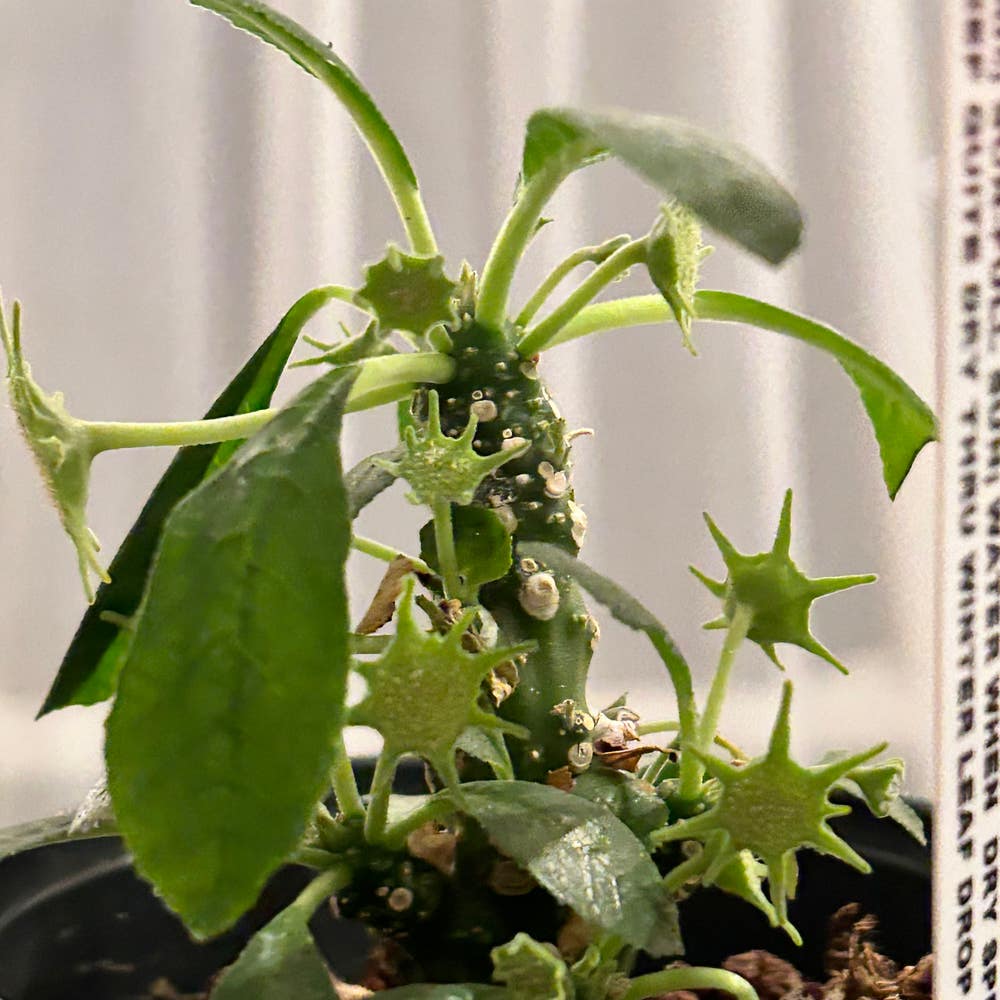
Black Spots on My Dorstenia foetida subsp. foetida Leaves
Dorstenia foetida subsp. foetida
By the Greg Editorial Team
Jun 13, 2024•3 min read
This article was created with the help of AI so we can cover more plants for you. May contain errors. See one? Report it here.
- 🌱 Overwatering leads to fungal black spots; let soil dry before watering.
- 💨 Good airflow and 40-60% humidity prevent bacterial black spots.
- ☀️ Bright, indirect light protects from sunburn-induced black spots.
Spotting the Trouble: Identifying Black Spots
🕵️ What Do They Look Like?
Black spots on Dorstenia foetida leaves are like red flags waving for attention. Tiny specks to large blotches, they often have a distinct edge, sometimes circled by a yellowish halo. These spots can be raised or sunken, and a foul odor is a dead giveaway that something's amiss.
🌿 Where to Find Them?
These pesky spots prefer the undersides of leaves, but they'll show up anywhere they please. Keep an eye out for their presence on new growth or mature leaves, as their location can be a telltale sign of the underlying issue. Regular inspections are key—think of it as preventive health care for your plant.
Rooting Out the Causes
🌊 Too Much Love: Overwatering Woes
Overwatering is a silent killer, often mistaken for generosity. It's a classic case of too much of a good thing, leading to a fungal free-for-all. The soil should feel dry before you decide to water again—think of it as a thirst meter for your plant's health.
🌬 Stuffy Conditions: The Bacterial Breeding Ground
Poor air circulation and high humidity are like a welcome party for bacteria. These conditions allow moisture to hang around, turning your plant's habitat into a bacterial playground. Ensuring good airflow is like setting up a no-entry zone for these microscopic party crashers.
🌞 Sun Kissed or Sun Scorched?
Sunburn can masquerade as black spots, a result of your plant getting more light than it can handle. It's not just about pathogens; sometimes, it's an environmental faux pas. Adjusting your plant's sun exposure is akin to applying sunscreen—preventative care to keep those leaves spot-free.
Nipping It in the Bud: Treatment and Recovery
💧 Drying Out: Adjusting Watering Habits
Check the soil before you water—two inches dry is your green light. Water early in the day, so the sun can help with evaporation. Direct watering at the soil to keep leaves dry and happy.
🌬 Air It Out: Improving Circulation
Airflow is your plant's best friend. Space out your green buddies to let air circulate freely. Consider a fan if your indoor jungle feels more like a stuffy closet.
🌥 Shady Solutions: Protecting from Harsh Sunlight
Bright, indirect light is the sweet spot for your plant. If it's getting too much sun, find a shadier hangout spot. Remember, sunburnt leaves are as unhappy as a cat in a bathtub.
Keeping It Spotless: Prevention Tips
💧 The Right Mix: Soil and Drainage
Well-draining soil is non-negotiable for Dorstenia foetida subsp. foetida. Opt for a mix that includes perlite or pumice to ensure roots aren't waterlogged. A light, airy mix promotes healthy roots and prevents the onset of black spots.
🌿 The Ideal Environment: Circulation and Humidity
Maintain 40-60% humidity to strike the perfect moisture balance. Too much invites fungal growth, too little desiccates leaves. Ensure consistent temperatures and use a fan or position your plant in a naturally breezy area to boost air circulation.
☀️ Safe Sun Exposure: Preventing Sun Damage
Bright, indirect light is the sweet spot for your plant. Direct sunlight can scorch leaves, causing black spots. If your plant's getting too much sun, dial it back. Think of it as creating a partly cloudy day, every day, for your green companion.
⚠️ Safety First
This content is for general information and may contain errors, omissions, or outdated details. It is not medical, veterinary advice, or an endorsement of therapeutic claims.
Always consult a qualified healthcare professional before using any plant as food, medicine, or supplement.
Never eat any plant (or feed one to pets) without confirming its identity with at least two trusted sources.
If you suspect poisoning, call Poison Control (800) 222-1222, the Pet Poison Helpline (800) 213-6680, or your local emergency service immediately.
Spotted an error? Please report it here.
Keep your Dorstenia foetida spot-free and thriving 🌱 with Greg's custom watering reminders and environmental tips that directly tackle overwatering, humidity, and sun exposure issues.