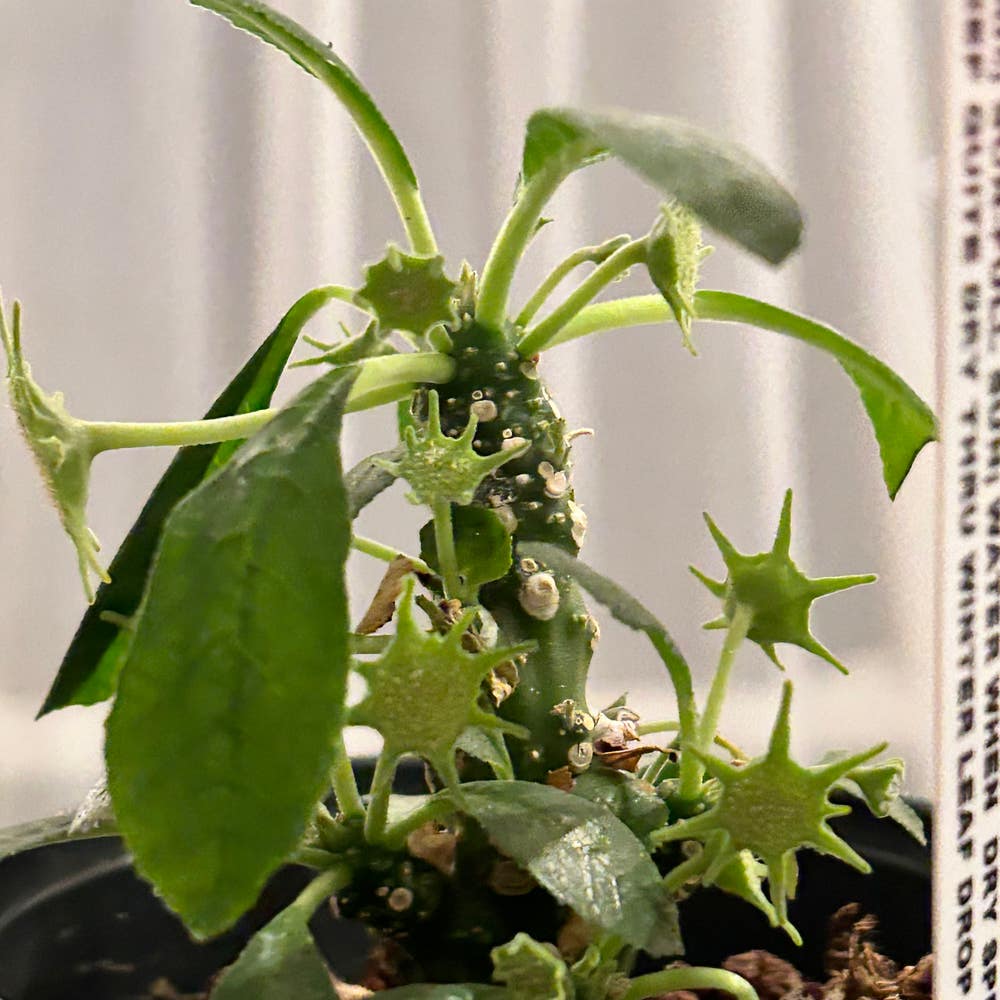
🐜 What Are The Bugs on My Dorstenia foetida subsp. foetida?
Dorstenia foetida subsp. foetida
By the Greg Editorial Team
Jun 13, 2024•4 min read
This article was created with the help of AI so we can cover more plants for you. May contain errors. See one? Report it here.
- Spot pests early to protect Dorstenia foetida's health.
- Combat tactics vary: water spray, insecticidal soap, neem oil.
- Prevent with care: manage soil moisture, regular inspections.
Introduction
🐛 Spotting the Signs: Is Your Dorstenia foetida subsp. foetida Hosting Pests?
Pests can be the bane of your Dorstenia foetida subsp. foetida's existence, turning lush leaves into lackluster letdowns. Webbing, sticky secretions, or the sight of the critters themselves are glaring red flags. It's like your plant is sending an SOS; your prompt response is crucial.
🚨 Quick Action: The First Line of Defense for Plant Health
Acting fast when pests strike is not just good practice—it's a lifesaver for your plant. The longer you wait, the more entrenched the invaders become, and the harder your battle. Think of early intervention as your plant's personal bodyguard against the pest onslaught.
Meet the Unwanted Guests: Common Pests on Dorstenia foetida subsp. foetida
🕷️ Spider Mites: The Sneaky Sap-Suckers
Webbing and leaf damage are the red flags waving a not-so-warm welcome to spider mites on your Dorstenia foetida subsp. foetida. These tiny terrors are stealthy, but their handiwork is not.
🛡️ Combat tactics
Blast them with a water spray or introduce insecticidal soap into your plant care routine. Weekly applications are your best bet for sending these pests packing.
Keeping them at bay
To prevent a spider mite shindig, keep the humidity up. They're not fans of a spa-like atmosphere. Regular misting could be your plant's knight in shining armor.
🦟 Scale: The Sticky Freeloaders
Scales are the undercover agents of the pest world, masquerading as harmless bumps on your plant's stems and leaves. Their sticky residue, however, is a telltale sign of their sap-sucking parties.
🛡️ Combat tactics
Manual removal with a dab of alcohol on a cotton swab can work wonders. For a full-blown infestation, insecticidal soap is your weapon of choice.
Keeping them at bay
Regular inspections are key. Keep an eagle eye on your Dorstenia foetida subsp. foetida, and you might just catch these freeloaders before they settle in.
🦟 Fungus Gnats and Fruit Flies: The Soil-Dwelling Nuisances
If you're seeing more flying critters than usual around your plant, it's a sign that fungus gnats or fruit flies are crashing the party. Their larvae love overwatered soil, so if you spot tiny worms, it's time for action.
🛡️ Combat tactics
Soil treatments and sticky traps are your go-to defenses. They're like bouncers at the door, keeping these pests from turning your plant's soil into a rave.
Keeping them at bay
Manage soil moisture like a pro. Overwatering is an open invitation for these nuisances, so keep the soil on the drier side to avoid unwanted guests.
🐛 Mealybugs: The Fluffy White Destroyers
Mealybugs are the ones throwing a cotton ball fiesta on your Dorstenia foetida subsp. foetida. They leave fluffy white deposits in their wake, a clear sign they've made themselves at home.
🛡️ Combat tactics
Targeted treatments with neem oil or insecticidal soap will show these fluffy destroyers the door without harming your plant.
Keeping them at bay
Quarantine new plants and perform regular check-ups. Think of it as a bouncer checking IDs before anyone gets into the club.
🦗 Other Frequent Invaders: Aphids, Thrips, and Whiteflies
Aphids, thrips, and whiteflies are the usual suspects when it comes to common pests. They're the ones that just can't resist the sap of your Dorstenia foetida subsp. foetida.
🛡️ Combat tactics
Each pest has its kryptonite—insecticidal soaps for aphids, neem oil for thrips, and yellow sticky traps for whiteflies. Arm yourself accordingly.
Keeping them at bay
General preventative measures include keeping your plant clean and dust-free. A healthy plant is like a fortress—less appealing to critters looking for their next conquest.
Conclusion
🐜 The Pest Patrol Recap
In the trenches of Dorstenia foetida subsp. foetida care, vigilance is your shield. Regular inspections are like a neighborhood watch, keeping those pesky pests in check. Flip leaves, scrutinize stems, and probe the soil. Spotting the early signs of infestation—discoloration, sticky residues, or fine webbing—is akin to catching a typo before hitting send. It saves your plant from a world of hurt.
🚨 Stay Vigilant
Immediate action is the name of the game. When you spot an unwanted critter, think of it as hitting the mute button on an annoying Zoom call—swift and decisive. Keep records, track progress, and adjust care as needed. Your Dorstenia foetida subsp. foetida will thank you with robust health, free from the clutches of common invaders. Remember, the best offense is a good defense; so, keep those inspections regular and your treatments ready.
⚠️ Safety First
This content is for general information and may contain errors, omissions, or outdated details. It is not medical, veterinary advice, or an endorsement of therapeutic claims.
Always consult a qualified healthcare professional before using any plant as food, medicine, or supplement.
Never eat any plant (or feed one to pets) without confirming its identity with at least two trusted sources.
If you suspect poisoning, call Poison Control (800) 222-1222, the Pet Poison Helpline (800) 213-6680, or your local emergency service immediately.
Spotted an error? Please report it here.
Banish pests from your Dorstenia foetida with proactive care 🕷, as Greg nudges you for regular check-ups and provides the best defense strategies.