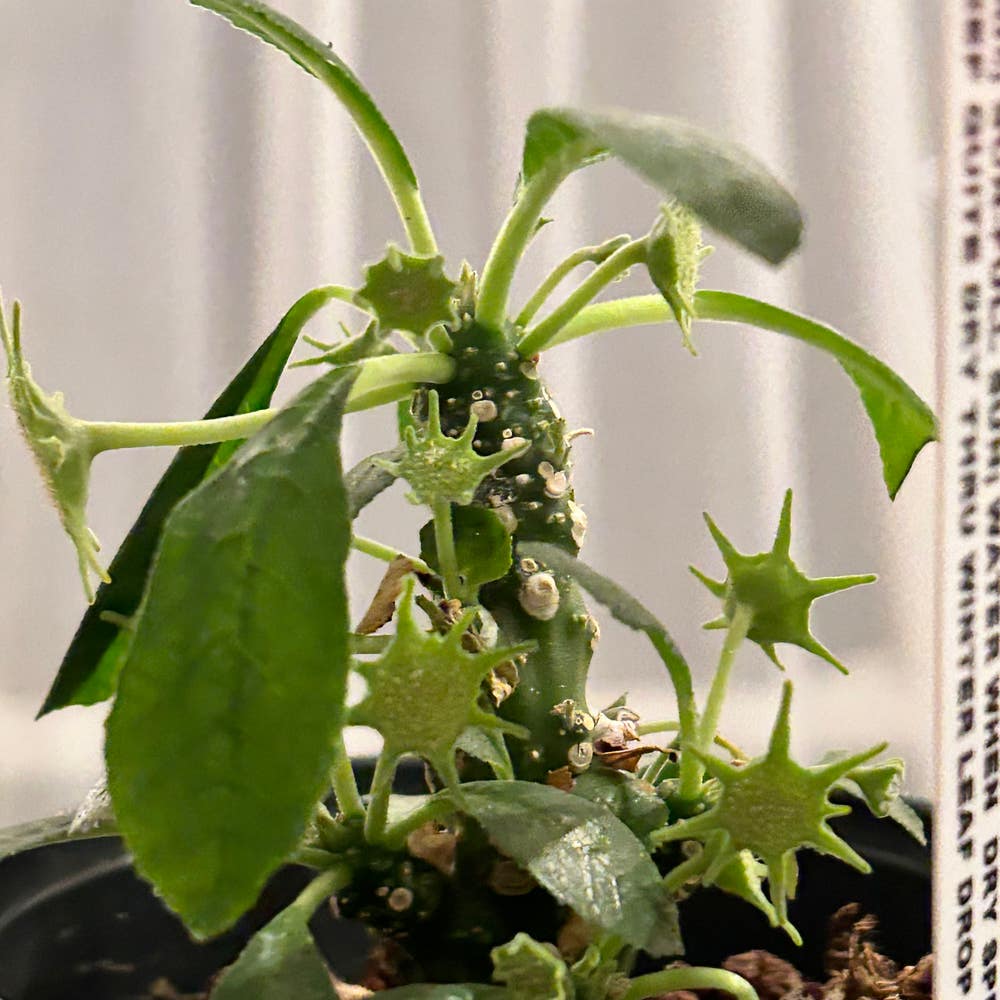
How Much Should I Water My Dorstenia foetida subsp. foetida?
Dorstenia foetida subsp. foetida
By the Greg Editorial Team
Jun 13, 2024•4 min read
This article was created with the help of AI so we can cover more plants for you. May contain errors. See one? Report it here.
- Check top inch of soil to see if your Dorstenia foetida needs water.
- Seasonal adjustments are key for proper watering habits.
- 🚰 Filtered water is best to avoid chemicals that harm your plant.
When to Water: Timing is Everything
🚰 Spotting Thirsty Plants
Wilting leaves are a telltale sign that your Dorstenia foetida is thirstier than a marathon runner at the finish line. If the foliage droops like it's had a rough day, it's time to water. Dry soil is another clue; if the top inch feels like a barren wasteland, your plant is sending out an SOS for hydration.
🌞 Seasonal Watering Shifts
As the seasons turn, so should your watering habits. Summer calls for a more generous pour, as your plant is likely soaking up the sun and growing more vigorously. Think of it as keeping the party going. Come winter, it's time to ease off the watering can. Your plant is probably kicking back in its dormant phase, so overwatering is like offering an extra round of drinks when the night's already over. Keep an eye on the temperature and light levels—they're your cues for when to switch up your watering routine.
Perfecting Your Pour: Watering Techniques
💧 The Right Amount
Finding the sweet spot for watering your Dorstenia foetida subsp. foetida is crucial. Check the top inch of soil; if it's dry, it's time to water. Aim for a thorough soak until water runs out of the drainage holes, ensuring deep hydration without waterlogging the roots.
🌊 The Bottom-Up Approach
Bottom watering is a game-changer. Submerge the pot in a shallow dish of water and let the soil drink up the moisture through the drainage holes. It's a root's dream, promoting deep growth and keeping those leaves high and dry, away from the clutches of fungal foes.
The Soil Factor: Setting the Stage for Success
🌱 Choosing the Best Potting Mix
Selecting the ideal potting mix for your Dorstenia foetida subsp. foetida is like picking the right teammate for a relay race – it's half the battle. Aim for a mix that's the botanical equivalent of a Swiss Army knife: versatile and ready for anything. A blend of peat, perlite, and pine bark hits the sweet spot between retaining moisture and letting air in. It's the Goldilocks of soils – not too dense, not too loose, just right.
🚰 Drainage: The Escape Route for Excess Water
When it comes to drainage, think of your pot as a lifeguard, always ready to save your plant from drowning. Drainage holes are a must-have; they're like the emergency exits in a crowded theater. And let's not forget the role of the pot itself – terracotta is the unsung hero, wicking away moisture like a pro. Remember, a pot without holes is a recipe for soggy disaster. Keep it breathable, keep it draining, and your Dorstenia foetida will thank you with growth that's nothing short of spectacular.
Water Quality and Plant Health
💧 Tap Water vs. Filtered Finesse
Tap water can be a mixed bag when it comes to watering your Dorstenia foetida subsp. foetida. Sure, it's convenient, but it's also often laced with chemicals like chlorine and fluoride, not to mention various minerals that can accumulate in the soil over time. These unwelcome additives can lead to leaf discoloration, stunted growth, or even a full-on plant meltdown.
🕵️ The Unseen Culprits in Your Water
Chlorine is a common tap water additive that helps keep our water supply safe for drinking, but it's not exactly a plant's best friend. It can cause the tips of your Dorstenia foetida's leaves to brown and curl – a definite cry for help. Fluoride is another sneaky element that can cause trouble, particularly for sensitive plants, leading to a condition known as fluoride toxicity.
💦 Filtered Water: The Plant Elixir
Opting for filtered water can be like giving your plant a health elixir. It strips away those harsh chemicals and balances the mineral content, giving your green buddy exactly what it needs to thrive. If you're feeling extra, rainwater is like the premium vintage wine of the plant world – full of natural goodness without the artificial nasties.
🕰 Let It Sit: A Simple Hack
If filtered water isn't on the cards, here's a pro tip: let your tap water sit out overnight. This allows time for some of the chlorine to evaporate, making it less harsh on your plant's delicate system. It's a simple step, but think of it as giving your water a chance to chill out before it mingles with your plant.
🚰 The Bottom Line on H2O
Remember, your Dorstenia foetida subsp. foetida isn't just picky; it's telling you what it needs for that optimal growth. Water quality isn't just a detail – it's a cornerstone of plant care. So next time you water, think about what's in your watering can. Your plant will reward you with lush growth and vibrant health, and that's the real tea.
⚠️ Safety First
This content is for general information and may contain errors, omissions, or outdated details. It is not medical, veterinary advice, or an endorsement of therapeutic claims.
Always consult a qualified healthcare professional before using any plant as food, medicine, or supplement.
Never eat any plant (or feed one to pets) without confirming its identity with at least two trusted sources.
If you suspect poisoning, call Poison Control (800) 222-1222, the Pet Poison Helpline (800) 213-6680, or your local emergency service immediately.
Spotted an error? Please report it here.
Keep your Dorstenia foetida vibrant 🌿 with Greg's tailored watering reminders, ensuring peak health and growth from our plant care insights.