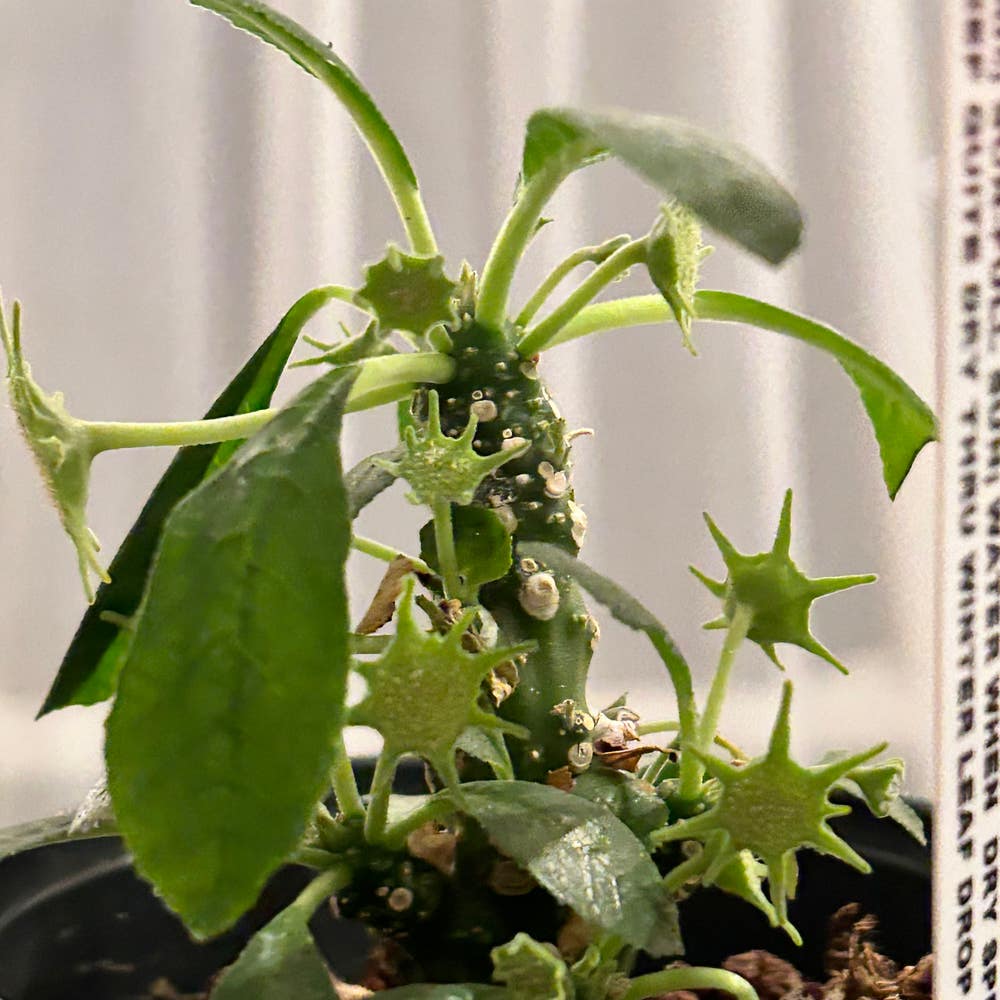
Why Are My Dorstenia foetida subsp. foetida Leaves Curling?
Dorstenia foetida subsp. foetida
By the Greg Editorial Team
Jun 13, 2024•4 min read
This article was created with the help of AI so we can cover more plants for you. May contain errors. See one? Report it here.
- 🌡️ Temperature and humidity affect leaf curling; avoid extremes.
- 💧 Watering balance and drainage are key to preventing curling.
- 🐛 Pests and diseases can cause curling; inspect and treat promptly.
Spot the Signs: Types of Leaf Curling
🌿 Upward Curling
Upward curling, or leaf cupping, is like a silent alarm for your Dorstenia foetida subsp. foetida. Thirst might be the culprit, with the plant's tips reaching skyward in a bid for moisture. Alternatively, it could be protesting against excessive heat or too much direct sunlight, both of which can cause leaves to curl up defensively.
🍃 Downward Curling
When leaves curl downwards, it's a sign that your plant could be in trouble. Often, this leaf clawing indicates overwatering or a nutrient imbalance. It's a visual white flag, possibly hinting at the onset of root rot. Keep an eye out for this downward spiral; it's a clear call to action.
🌀 Twisting Leaves
Twisted leaves are the plant's way of throwing a curveball, signaling that something's off. This could be a reaction to an unbalanced environment, such as fluctuating temperatures or improper watering. If your plant's leaves are twisting more than a dancer in a 60s sock hop, it's time to investigate.
The Usual Suspects: Environmental and Watering Culprits
🌡️ Temperature Tantrums
Heat and cold can throw your Dorstenia foetida subsp. foetida into a state of disarray, causing leaves to curl as a distress signal. Avoid placing your plant near air conditioners, heaters, or drafty windows. A stable temperature is the comfort zone for your plant's leaves to thrive.
💦 Humidity and Dryness Drama
Your plant craves a humid environment, much like a tropical retreat. Too dry, and the leaves will curl in protest. Consider a humidifier or a pebble tray to maintain that moisture-rich atmosphere. It's a simple fix that can prevent a world of curl.
🚰 Thirsty Roots: Watering Woes
Finding the hydration sweet spot is crucial. Overwatering leads to soggy, suffocating soil, while underwatering leaves roots desperate for a drink. Feel the soil; it should be moist, not waterlogged or bone-dry. Adjust your watering habits with the rhythm of your home's environment.
🌱 Soil and Drainage: The Foundation of Health
Good drainage is the unsung hero in the fight against leaf curl. Ensure your potting mix is well-draining and your pots have holes to let excess water escape. This will keep your Dorstenia foetida subsp. foetida's roots healthy and its leaves curl-free.
Uninvited Guests: Pests and Diseases
🐛 Bug Battles
Pests can turn your Dorstenia foetida subsp. foetida into an all-you-can-eat buffet. Spider mites, aphids, and mealybugs are the usual suspects. They're small but mighty in their ability to wreak havoc.
To spot these tiny terrors, flip those leaves and inspect the stems. If you see them, it's time to pull out the big guns: insecticidal soap or neem oil. These are your go-to weapons for pest control. Alternatively, consider releasing predatory insects like ladybugs into the mix. They're the natural hit squad that'll take down pests without mercy.
🍄 Fungal Foes and Bacterial Bullies
Fungal and bacterial infections are stealthy. You might notice black spots or a funky smell—these are your plant's SOS signals. Act fast, as these invaders can escalate quickly.
Prevent these issues by ensuring good air circulation and not overwatering. If you're already under siege, remove any infected foliage and apply a fungicide—stat. Remember, regular plant check-ups are your best defense. Think of it as putting your plant on a health plan with regular doctor visits.
Feeding Finesse: Nutrients and Root Care
💡 Nutrient Know-How
Recognizing deficiency signs in your Dorstenia foetida subsp. foetida is crucial. Yellowing leaves might scream for nitrogen, while stunted growth whispers for phosphorus. Potassium, the unsung hero, keeps overall health in check. Supplement smartly; a balanced fertilizer with an NPK ratio of 10-10-10 is often a safe bet. But remember, your plant isn't trying to win a nutrient-eating contest. Overfeeding can lead to nutrient burn, akin to scorching your taste buds on a hot pizza slice.
🍽️ Root Rundown
Root health is the foundation of your plant's well-being. When repotting, think of it as moving to a new home with better facilities. Choose a pot that's a size up and ensure it has proper drainage. This isn't just a cosmetic upgrade; it's about giving those roots the VIP treatment they deserve. Aftercare is key. Keep an eye on the new leaves—they're like the plant's thumbs-up (or down) to your efforts. If they're thriving, you're on the right track. If not, it's time to reassess your plant care strategy.
⚠️ Safety First
This content is for general information and may contain errors, omissions, or outdated details. It is not medical, veterinary advice, or an endorsement of therapeutic claims.
Always consult a qualified healthcare professional before using any plant as food, medicine, or supplement.
Never eat any plant (or feed one to pets) without confirming its identity with at least two trusted sources.
If you suspect poisoning, call Poison Control (800) 222-1222, the Pet Poison Helpline (800) 213-6680, or your local emergency service immediately.
Spotted an error? Please report it here.
Prevent your Dorstenia's leaves from curling by letting Greg tune 🎵 your plant care routine to the perfect harmony of moisture, light, and health.