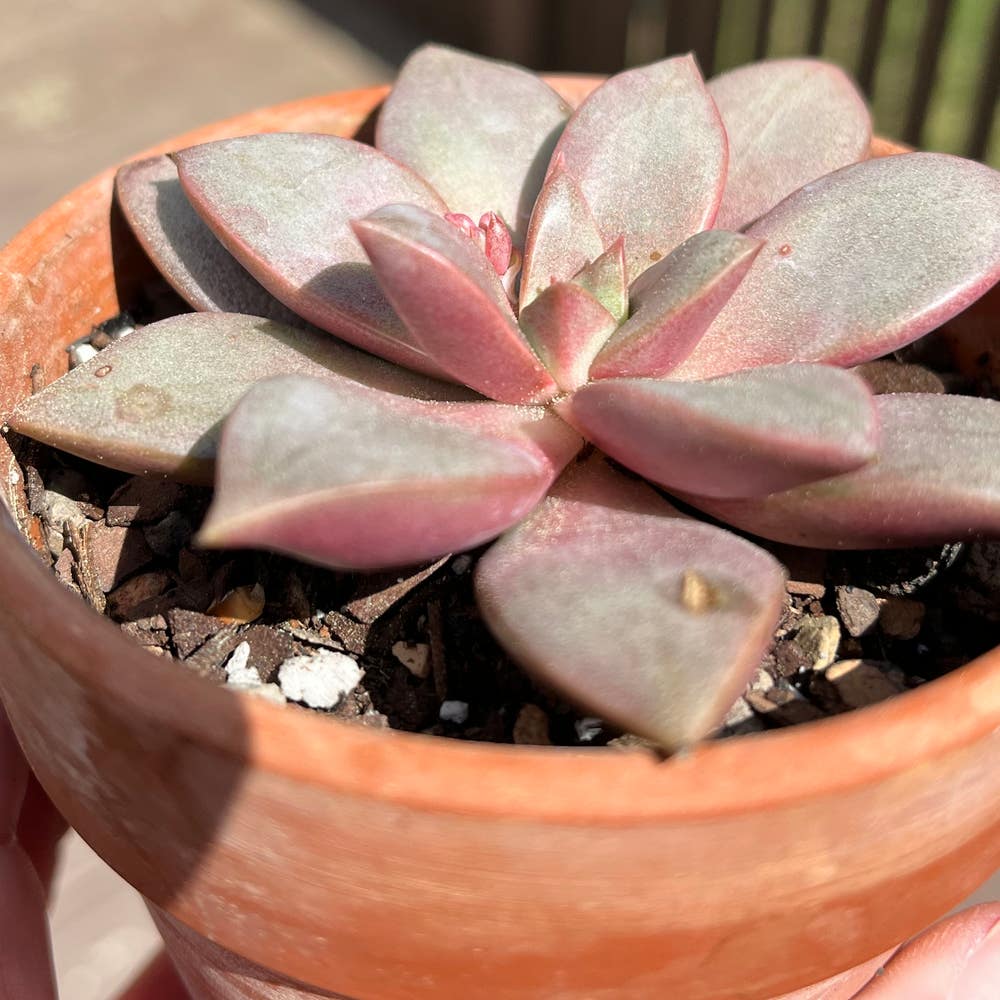
How to Propagate Your Crested Cubic Frost Echeveria
Echeveria f. cristata 'Cubic Frost'
By the Greg Editorial Team
Jun 16, 2024•5 min read
This article was created with the help of AI so we can cover more plants for you. May contain errors. See one? Report it here.
Multiply your succulent sanctuary 🌵 with these fail-proof tips for propagating Crested Cubic Frost Echeveria!
- Timing & health are key when choosing offsets, leaves, or stems to propagate.
- Well-draining soil & minimal water prevent rot in new Echeveria plants.
- Monitor and adjust care to troubleshoot propagation issues and ensure success.
Propagation from Offsets
🌱 Identifying and Harvesting Offsets
To successfully propagate your Crested Cubic Frost Echeveria, timing is crucial. Look for offsets—those mini versions of the mother plant with their own roots. They should be plump and healthy-looking, indicating they're ripe for separation.
Sterilize your tools before you start. This is gardening with a surgeon's precision. Gently twist the offset from the mother plant or use a clean cut for stubborn ones. Ensure a clean break to minimize damage and prevent disease.
🌿 Planting and Initial Care
Once you've liberated the offsets, it's time to settle them into their new homes. Opt for a well-draining soil mix and containers with drainage holes to create the perfect environment for growth.
Watering should be minimal at first to avoid rot. Provide bright, indirect light, steering clear of the intense midday sun. This initial care sets the stage for a robust life ahead for your new Echeveria plants.
Leaf Cuttings: A Step-by-Step Guide
🍃 Choosing and Preparing Leaves
Selecting healthy leaves is the cornerstone of propagation. Look for plump, vibrant specimens, free from any discoloration or damage. Using sterilized scissors, snip the leaf as close to the stem as possible.
Callousing is crucial; let the cut end dry out for a few days to form a protective layer. This step is like equipping your leaf with armor against rot and disease.
🌱 Planting and Caring for Leaf Cuttings
For planting, use a well-draining soil mix; a blend of potting soil and sand or perlite works wonders. Lay the callused leaf on the soil, callus side down, and press gently—no deep burials needed.
Maintain consistent moisture without waterlogging your hopefuls. Think damp, not drenched. Provide bright, indirect light and keep the faith; roots may take time to appear, but patience pays off.
Stem Cuttings: The Quick Propagation Method
🌱 Taking and Preparing Stem Cuttings
Selecting the right stem is crucial. Look for one that's healthy, robust, and shows no signs of distress. With disinfected shears or a knife, make a clean, angled cut just below a leaf node. This increases the surface area for roots to develop and helps the stem absorb more water.
After cutting, let the stem callous over for a few days. This drying period forms a protective barrier, reducing the risk of rot when planted.
🌿 Rooting and Potting Stem Cuttings
For rooting, stick the calloused end into a well-draining soil mix. Consider a sprinkle of rooting hormone to give your cutting a success boost. Keep the soil moist but not soggy, and avoid deep burying to let the stem breathe.
Once roots appear, it's time to transplant. Choose a permanent pot with proper drainage and a similar soil mix. Keep a vigilant eye on moisture levels and adjust as needed to promote healthy growth.
Division: Multiplying Mature Plants
🌱 The Division Process Explained
Dividing your Crested Cubic Frost Echeveria is like unlocking its potential to multiply. Spring is your go-to season for this task, as the plant is primed for growth. Ensure your Echeveria is mature, with several rosettes, before you play plant surgeon. Gently remove the plant from its pot, shaking off old soil to reveal the root system. With a sterilized knife, make decisive cuts to separate the rosettes, ensuring each has a portion of roots. It's a straightforward process, but handle with care to avoid unnecessary damage.
🌿 Aftercare for Divided Plants
Once divided, your Echeveria's sections need a cozy setup to thrive. Plant them at the same soil depth they were accustomed to, and choose a spot with bright, indirect light—think of it as their recovery room. Water sparingly, as enthusiastic hydration can lead to root rot. And remember, no flowers for the first year; let your plants focus on root development. Adjust care as seasons change, and watch your Echeveria clan expand with a bit of patience and TLC.
Ensuring Propagation Success
🌱 Monitoring Growth and Root Development
In the quest for propagation success, observing new growth is akin to witnessing a plant's first steps. Vigilance is key; look for sprouting shoots and leaves as indicators of progress. Root development can be stealthy, but when white, firm roots emerge, it's a high-five moment. Transparent containers can serve as a sneak-peek window into this underground world, revealing a thriving root network.
🛠 Troubleshooting Propagation Problems
When your plant's growth seems more sluggish than a Sunday morning, it's time to reassess. Lighting and nutrients might need a tweak. Root rot, the silent assassin of propagation, demands immediate action: repot in sterile soil and snip the dead weight. Drainage is your plant's lifeline—don't skimp on it.
Pests and diseases are the party crashers you didn't invite. Regular inspections are your bouncer at the door. Spot an infestation? Bring out the organic pest control artillery. Remember, early detection is your best defense, and a clean environment is your fortress.
Keep a log of your propagation escapades. It's not just a diary; it's a treasure map to navigate the choppy waters of plant parenting. Every challenge is a chance to level up your green thumb game. So, when your plants throw a curveball, swing with confidence.
⚠️ Safety First
This content is for general information and may contain errors, omissions, or outdated details. It is not medical, veterinary advice, or an endorsement of therapeutic claims.
Always consult a qualified healthcare professional before using any plant as food, medicine, or supplement.
Never eat any plant (or feed one to pets) without confirming its identity with at least two trusted sources.
If you suspect poisoning, call Poison Control (800) 222-1222, the Pet Poison Helpline (800) 213-6680, or your local emergency service immediately.
Spotted an error? Please report it here.
Propagate your Crested Cubic Frost Echeveria with confidence by using Greg's personalized reminders 🌱 to ensure perfect timing and care for your new plants.