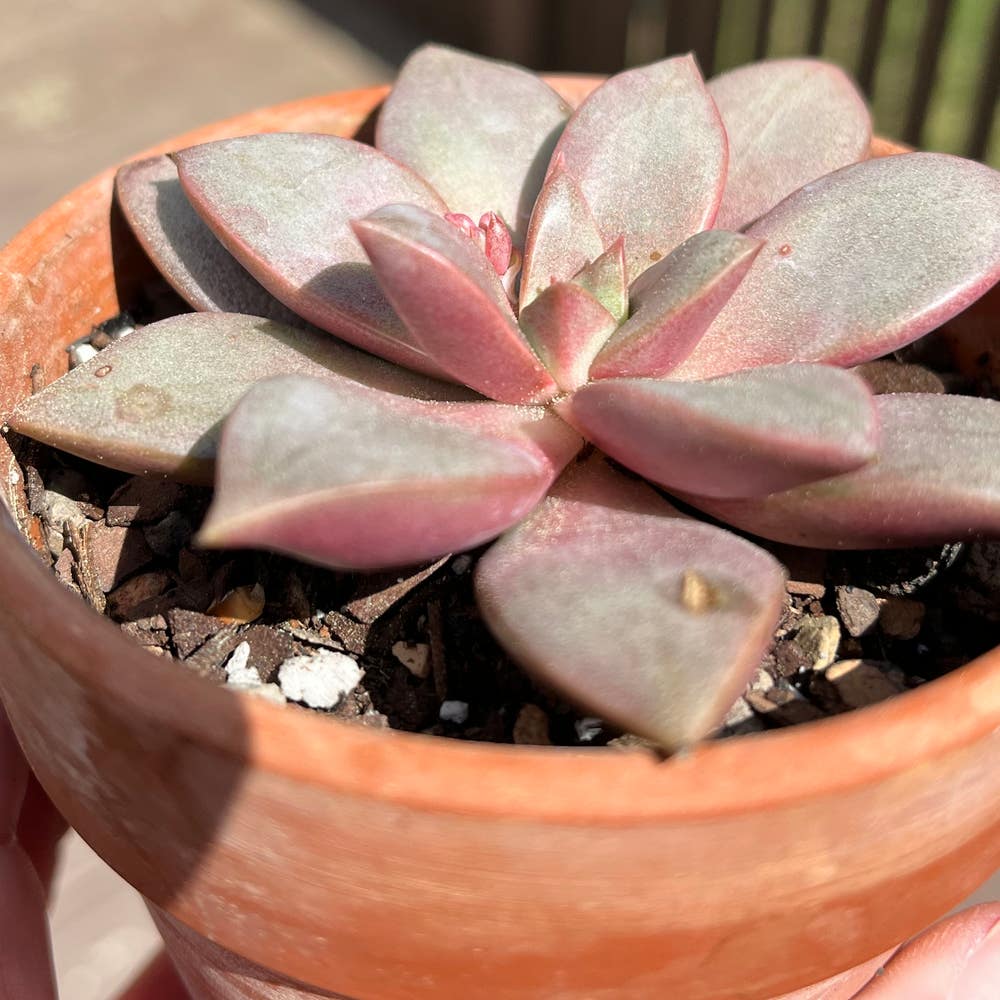
My Crested Cubic Frost Echeveria's Light Requirements
Echeveria f. cristata 'Cubic Frost'
By the Greg Editorial Team
Jun 16, 2024•3 min read
This article was created with the help of AI so we can cover more plants for you. May contain errors. See one? Report it here.
Nurture a robust 🌵 Echeveria with perfect light to prevent stretching and maximize blooms! 🌞
- Bright, indirect light is ideal, especially in the morning.
- Rotate and adjust to prevent stretching and encourage blooms.
- LED grow lights mimic natural sunlight for indoor Echeverias.
Soaking Up the Sun: Outdoor Light Perfection
🌞 Ideal Sunlight Conditions
The Crested Cubic Frost Echeveria flourishes in the sweet spot of light intensity. This succulent's ideal is a Goldilocks zone of bright, indirect light, particularly in the gentler morning hours. As seasons turn, be ready to tweak its placement; longer summer days call for a bit more shade, while spring beckons for increased sun exposure.
🛡️ Avoiding Sunburn
Midday sun can be a brute to your Echeveria's delicate skin. To prevent the equivalent of a plant sunburn, introduce protective measures like a sheer curtain or a temporary umbrella during peak hours. Sunburn manifests as discolored or damaged leaves, a clear sign to dial back on the direct sunlight. Remember, the goal is a sun-kissed, not sun-slapped, appearance.
Bringing the Sunshine In: Indoor Light Mastery
🌞 Window Wisdom
South-facing windows are the jackpot for your Crested Cubic Frost Echeveria, bathing it in the most consistent light. If you're in the Northern Hemisphere, that is. Otherwise, north-facing gets the crown. East or west-facing windows are the runners-up, offering a decent mix of light throughout the day.
When the sun's enthusiasm gets a bit too intense, sheer curtains or blinds can act as a light diffuser, protecting your succulent from the harsher rays without leaving it in the dark.
🔄 Light Distribution Tricks
Rotate your Echeveria periodically to promote even growth and prevent it from leaning into its own version of the Leaning Tower of Pisa. Each side deserves its time in the spotlight.
To gauge if your plant is getting enough light, observe its posture. A well-lit Echeveria will stand proud and compact, while a light-starved one will stretch out, reaching for a sun that's just too far away.
Light's Green Thumb: Boosting Flower Power
🌞 Sunlight and Blooms
Sunlight is the maestro of the flowering symphony for Crested Cubic Frost Echeveria. Bright light is non-negotiable; it cues the plant to produce those show-stopping blooms.
🎛 Adjusting Light to Encourage Vibrant Blooms
To coax out flowers, play with light like a DJ tweaks a track. Start with ample brightness, then watch for cues—new growth signals it's go-time for blooms. If your Echeveria is slacking, up the ante with more light, but keep it cool—no scorching.
Supplemental Glow: Grow Light Insights
💡 Choosing the Right Grow Light
LEDs are the superstars of grow lights for your Crested Cubic Frost Echeveria. They're efficient, don't turn your space into a sauna, and most importantly, they mimic the sun's full spectrum. Full-spectrum LEDs are like a buffet of light, offering all wavelengths your plant could crave.
💡 Grow Light Setup Tips
Positioning is crucial. Keep the light close enough for your Echeveria to feel the warmth without getting a sunburn. Use a timer to replicate the natural day-night cycle; it's like an alarm clock for your plant's internal rhythm. If your succulent starts to stretch or fade, it's begging for more light. Conversely, signs of burn mean it's time to dial back the intensity or raise the light. Keep it clean for maximum brightness; it's like wiping your glasses for HD clarity. Remember, even plants need their beauty sleep, so don't leave the lights on all night.
⚠️ Safety First
This content is for general information and may contain errors, omissions, or outdated details. It is not medical, veterinary advice, or an endorsement of therapeutic claims.
Always consult a qualified healthcare professional before using any plant as food, medicine, or supplement.
Never eat any plant (or feed one to pets) without confirming its identity with at least two trusted sources.
If you suspect poisoning, call Poison Control (800) 222-1222, the Pet Poison Helpline (800) 213-6680, or your local emergency service immediately.
Spotted an error? Please report it here.
With Greg's PlantVision, effortlessly maintain your Crested Cubic Frost Echeveria in bright, indirect light 🌤, ensuring it stays healthy and blooms beautifully without the guesswork.