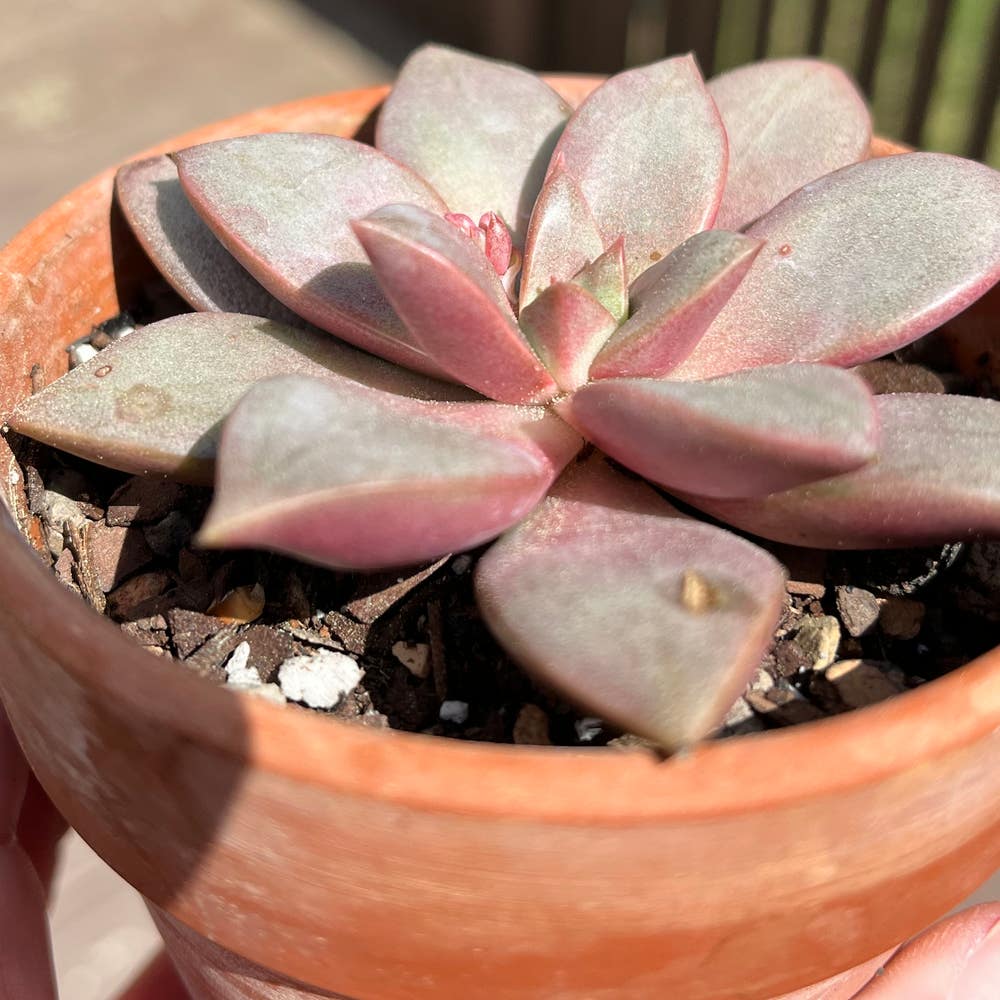
Should I Repot My Crested Cubic Frost Echeveria?
Echeveria f. cristata 'Cubic Frost'
By the Greg Editorial Team
Jun 16, 2024•4 min read
This article was created with the help of AI so we can cover more plants for you. May contain errors. See one? Report it here.
Ensure your Echeveria thrives 🌱 by learning the signs it's time to repot for peak health and beauty!
- 🌱 Root escape and color loss signal it's repotting time.
- Spring repotting aligns with Echeveria's growth spurt.
- Terracotta pots and proper drainage are crucial for health.
Spotting the Telltale Signs It's Time to Repot
🌱 Roots on the Run
When your Crested Cubic Frost Echeveria's roots start to escape through the drainage holes, it's more than a quirky behavior—it's a desperate plea for space. A quick peek at the bottom of the pot can reveal roots that are cramped and tangled, much like a crowded elevator during rush hour. This is a surefire sign that your plant is root-bound and needs a new home.
📉 Growth Gone Awry
Stunted growth or a noticeable change in the vibrancy of your Echeveria's leaves isn't just an aesthetic concern—it's a distress signal. If your succulent's growth has plateaued or the leaves have lost their luster, it's not slacking off; it's indicating that the current pot can no longer sustain its growth. This is your cue to start the search for a new pot that will allow your Echeveria to thrive.
Choosing the Best Season for Repotting
🌱 Syncing with the Succulent's Clock
Spring is prime time for repotting your Crested Cubic Frost Echeveria. This season aligns with the plant's natural growth spurt, giving it the best shot at thriving post-transplant.
💭 Growth Phase Considerations
Active growth is your cue. Look for signs like new leaves or buds. These are your Echeveria's way of saying, "I'm ready for some new digs."
❄️ Seasonal Timing
Avoid repotting in winter; it's the plant's time to chill, literally. Disturbing it then is like waking a bear during hibernation—not a good idea.
🌡️ Weather the Transition
If you've missed the spring window, early fall is your backup. Just make sure you're not repotting during a heatwave or a frost advisory. Extreme temperatures can stress your succulent out more than a last-minute pot switch.
🌍 Adaptability is Key
Monitor your local climate. If you're living in a colder region, your Echeveria's growth cycle might kick off a bit later. Adjust your repotting schedule accordingly.
Picking the Perfect Pot
🏺 Material Matters
Terracotta is the breathable champion, wicking away moisture like a pro and keeping those roots dry. But watch out; it'll have you watering more often than your forgetful mind might remember. Ceramic pots are the stylish middle ground, holding moisture a tad longer and adding a touch of class to your space. Just ensure they've got those crucial drainage holes. Plastic pots are the lightweights, easy to shuffle around and kind to your wallet, but they'll cling to moisture like a needy ex, so be cautious with your watering can.
Size and Drainage
Size does matter. Go too big and you're inviting root rot to the party. Too small, and your Echeveria's growth will be as stunted as a bonsai. Aim for the Goldilocks zone—just right. And let's talk drainage; it's non-negotiable. Without those escape routes for excess water, you're basically giving your plant a one-way ticket to Soggy Root City. Whether you're team terracotta, ceramic, or plastic, make sure those holes are there. Your Echeveria's health depends on it.
The Repotting Rundown
🌱 Gentle Extraction
Gently coax your Crested Cubic Frost Echeveria from its current pot. Think of it as a negotiation, not a forceful eviction. If the plant resists, a few soft taps on the pot's bottom or a strategic poke through the drainage hole should do the trick. Handle the root ball with the care of a bomb technician—steady and focused.
🌿 Root Review
Lay your Echeveria on a flat surface and brush away the old soil. It's time for a root health check-up. Snip any dead or overgrown roots, but remember, you're giving a trim, not a full haircut. Treat any fresh cuts with a dab of fungicide to ward off infection, like applying a band-aid to a skinned knee.
🌵 Soil Selection
Mix the perfect potting medium like a barista crafting a signature blend. Aim for a well-draining mix that's one part grit to two parts soil, ensuring it's fluffy, not swampy. If you're not into DIY, a commercial succulent mix will suffice—just make sure it's free of added fertilizers. This soil is your Echeveria's bed; make it comfortable and nurturing.
Aftercare: Helping Your Echeveria Settle In
💧 The First Water
After the repotting show, your Crested Cubic Frost Echeveria is not ready for a drink right away. Wait a week, let the roots chill after their upheaval. When it's time, think damp sponge, not wet mop—light watering is key. Overdo it, and you're on a fast track to root rot city.
👀 Observation and Adjustment
Keep your eyes peeled. New growth is your Echeveria giving you a thumbs up. Yellow leaves or a droopy look? That's a red flag. No fertilizers for the first month—your plant's not ready for a full course meal, just a light snack of water and care. Adjust your watering based on the plant's vibe, and remember, it's not needy, just acclimating.
⚠️ Safety First
This content is for general information and may contain errors, omissions, or outdated details. It is not medical, veterinary advice, or an endorsement of therapeutic claims.
Always consult a qualified healthcare professional before using any plant as food, medicine, or supplement.
Never eat any plant (or feed one to pets) without confirming its identity with at least two trusted sources.
If you suspect poisoning, call Poison Control (800) 222-1222, the Pet Poison Helpline (800) 213-6680, or your local emergency service immediately.
Spotted an error? Please report it here.
Repot your Crested Cubic Frost Echeveria with confidence by using Greg to get customized care alerts 🌱 that ensure perfect timing and conditions for your plant's new beginning.