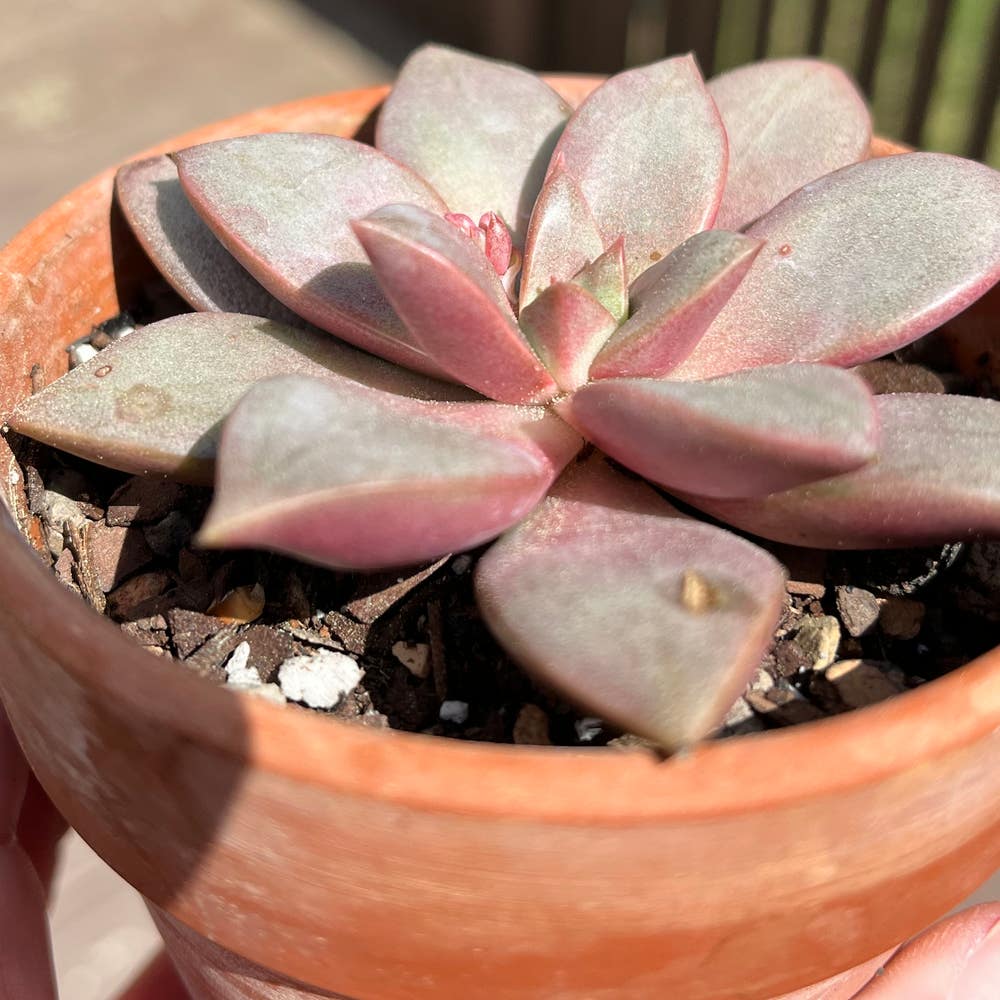
❄️ What Temperature Does My Crested Cubic Frost Echeveria Need?
Echeveria f. cristata 'Cubic Frost'
By the Greg Editorial Team
Jun 16, 2024•4 min read
This article was created with the help of AI so we can cover more plants for you. May contain errors. See one? Report it here.
Discover the secret to a flourishing Echeveria by keeping it in the perfect temperature sweet spot! 🌡️🌿
- 🌡️ Ideal temperature: 60-75°F for Crested Cubic Frost Echeveria.
- Watch for leaf discoloration and texture changes as stress signs.
- Avoid drafts and heat waves, and maintain stable temperatures for plant health.
Spotting the Signs of Temperature Trouble
🍁 Leaf Tells
Leaf discoloration and texture changes are critical indicators of temperature stress in your Crested Cubic Frost Echeveria. A healthy plant boasts vibrant, firm leaves, but when they start to look discolored or feel too soft or brittle, it's a sign that your plant is not in its happy place.
🌱 Growth Gripes
Temperature stress can hit the pause button on your Echeveria's growth. If you notice that your plant has stopped growing or the leaves are dropping like flies, it's likely crying out for help. These symptoms are your plant's non-verbal way of telling you that the current temperature is more foe than friend.
Keeping It Cool (or Warm): The Ideal Temperature Range
♨️ Just Right: The Goldilocks Zone
60 to 75 degrees Fahrenheit—that's the sweet spot for your Crested Cubic Frost Echeveria. It's not just a random range; it's the difference between a plant that's merely existing and one that's thriving. Sure, it can handle a bit more heat, up to 90 degrees, but think of that as its tolerance limit, not its preference.
🌡️ When It Gets Extreme
Dip below 15 degrees, and you're entering the danger zone. Frost is a no-go; it's like kryptonite to your succulent's superpowers. On the flip side, constant high heat is a stress test that can push your plant into survival mode—dehydration and stunted growth are the likely outcomes. Keep it in the Goldilocks zone, and you'll avoid these temperature-induced tantrums.
What's Cooking Your Crested Cubic Frost?
🌬️ Drafty Dilemmas
Drafts are the silent troublemakers for your Crested Cubic Frost Echeveria. They're like unwanted guests, bringing sudden chills that can stress your plant. To prevent your Echeveria from becoming as cold as a forgotten cup of coffee, keep it away from open windows, doors, and air conditioning vents.
☀️ Heat Wave Woes
Heat waves can turn your Echeveria into a wilted mess. It's like leaving chocolate in the sun – it just doesn't hold up. Protect your plant from prolonged high temperatures by placing it in a spot that avoids direct, scorching sunlight. Consider using shade cloths or positioning it in a cooler part of your home to dodge the heat.
🌡️ Fluctuation Frustration
Temperature fluctuations are the mood swings of the climate world, and your Echeveria isn't here for the drama. Sudden changes can shock the plant, potentially leading to a full-on growth halt. Strive for stability; it's like setting the perfect ambient playlist for your plant's life. Use a thermometer to monitor the environment and maintain that climate sweet spot.
Quick Dip into Humidity
💃 Humidity's Handshake with Temperature
Humidity and temperature are in a constant tango, each step affecting the other. For your Crested Cubic Frost Echeveria, this dance is critical.
Temperature swings can turn your plant's environment from a tropical paradise to a desert wasteland. As the mercury climbs, the air holds more moisture, potentially turning up the humidity. Conversely, a drop in temperature can squeeze the moisture out, leaving the air dry.
Hygrometers are your go-to gadgets here, letting you keep an eye on humidity without breaking a sweat. It's not just about keeping your plant warm or cool; it's about maintaining that perfect moisture balance in the air.
Remember, when the air feels like a sponge, it's probably too humid for your echeveria. On the flip side, if you're reaching for the lip balm, it's time to dial up the humidity. Adjustments might be as simple as moving your plant away from the radiator or as involved as investing in a humidifier.
Stay sharp and be ready to adapt. Your Crested Cubic Frost Echeveria's lush leaves depend on it.
Emergency Care: When Temperature Takes a Toll
🚑 First Response
Immediate steps to take when temperature stress is detected.
- Assess the damage: Look for wilted leaves or dark, mushy spots.
- Change the environment: Move your plant away from harmful drafts or intense heat sources.
- Insulate: If cold is the issue, wrap your plant in a protective layer.
🌱 Long-Term Recovery
How to adjust your care routine to help your plant bounce back.
- Prune the affected areas: This stops decay and encourages new growth.
- Monitor hydration: Water with care, considering the plant's delicate state.
- Temperature control: Keep a vigilant eye on the thermometer to prevent further stress.
- Stay consistent: Adapt your care based on the plant's response, maintaining a stable environment.
- Patience is key: Recovery takes time, so don't rush the process.
⚠️ Safety First
This content is for general information and may contain errors, omissions, or outdated details. It is not medical, veterinary advice, or an endorsement of therapeutic claims.
Always consult a qualified healthcare professional before using any plant as food, medicine, or supplement.
Never eat any plant (or feed one to pets) without confirming its identity with at least two trusted sources.
If you suspect poisoning, call Poison Control (800) 222-1222, the Pet Poison Helpline (800) 213-6680, or your local emergency service immediately.
Spotted an error? Please report it here.
Ensure your Crested Cubic Frost Echeveria flourishes 🌵 with Greg's personalized environment tracking, keeping those temps just right for your succulent's success.