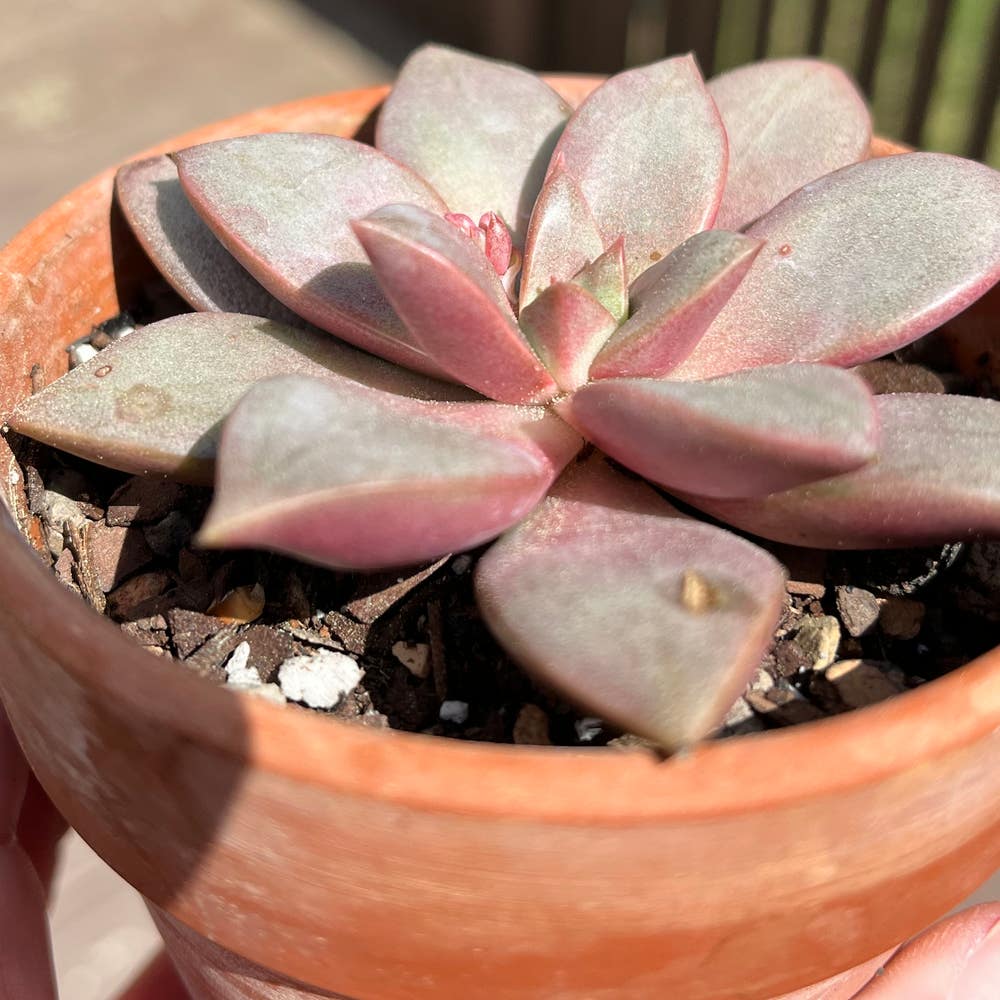
Why Are My Crested Cubic Frost Echeveria Leaves Curling?
Echeveria f. cristata 'Cubic Frost'
By the Greg Editorial Team
Jun 16, 2024•3 min read
This article was created with the help of AI so we can cover more plants for you. May contain errors. See one? Report it here.
Unravel the mystery of curling Echeveria leaves and revive your plant's 🌵 charm!
- 🚩 Curling leaves signal distress; watch for discoloration and softness.
- 💧🌞 Balance water and light to prevent over/underwatering and sunburn.
- 🌡️ Maintain stable temperature and humidity for Echeveria health.
Spotting the Signs: When Your Echeveria Needs Help
🚩 Visual Symptoms of Distress
Curling leaves in your Crested Cubic Frost Echeveria are red flags. This succulent's distress signals range from subtle waves to tight spirals, often folding inward. Crispy edges and leaves that resemble a gymnast's ribbon are not part of the plant's usual repertoire and warrant immediate attention.
🌀 Beyond the Curl: Other Symptoms to Watch For
Leaf curling is often accompanied by discoloration, a halt in growth, or leaves that feel softer and thinner. If your plant's leaves are drooping like they've just heard bad news or the soil is pulling away from the pot's edge, it's a clear sign of underwatering. Conversely, overwatering may cause leaves to become soft and translucent. Keep an eye on the progression: Is it just a leaf or two, or is the whole plant affected? Leaves curling at the tips or edges before moving inward suggest a gradual issue, while widespread curling points to an immediate problem.
Unraveling the Curl: Common Culprits
💦 Too Much Love: Overwatering Woes
Curling leaves on your Crested Cubic Frost Echeveria might signal they're drowning in your affection. Overwatering leads to waterlogged roots, a condition where the plant's roots are so saturated with water that they can't function properly. The result? Leaves that curl and yellow as they struggle to breathe.
☀️ Sunburnt or Shady: Light Issues
Lighting is a balancing act. Too much sun scorches leaves, causing them to curl and crisp up as if they're trying to shield themselves. On the flip side, insufficient light makes leaves reach and curl in odd ways, seeking out those elusive rays. Your Echeveria needs that sweet spot of bright, indirect light to avoid a curling crisis.
🌡️ Feeling the Extremes: Temperature and Humidity Stress
Temperature and humidity swings are like unexpected plot twists for your Echeveria. Too hot or too cold, and the leaves curl up in protest. Humidity levels are equally critical; too low, and the leaves start to curl, too high, and they might become soft and mushy. Keeping your plant in a consistent environment is key to preventing these dramatic leaf contortions.
The Rescue Plan: Fixing and Preventing Curling Leaves
💧 Fine-Tuning Watering Habits
Watering your Crested Cubic Frost Echeveria is less about sticking to a schedule and more about responding to its needs. Check the soil; if the top inch feels dry, it's time to water. But don't just sprinkle on a whim—drench it until water runs free from the drainage holes, then hold off until it's dry again.
🌞 Creating the Perfect Sunbath
Your Echeveria's leaves are curling? Might be a sign it's time to reassess its sunlight situation. Aim for that sweet spot of bright, indirect light. Too much direct sun can lead to a sunburn, while too little can cause your plant to stretch out weirdly. Adjust the blinds, shuffle some pots around, or maybe invest in a sheer curtain.
🌡️ Climate Control: Managing Temperature and Humidity
Keep your Echeveria away from drafts and fluctuating heat sources. Think stable, think serene—like a mild spring day that never ends. If your home's air is drier than a stand-up comedian's wit, consider a humidifier or a pebble tray to up the humidity without making it rainforest-level moist.
⚠️ Safety First
This content is for general information and may contain errors, omissions, or outdated details. It is not medical, veterinary advice, or an endorsement of therapeutic claims.
Always consult a qualified healthcare professional before using any plant as food, medicine, or supplement.
Never eat any plant (or feed one to pets) without confirming its identity with at least two trusted sources.
If you suspect poisoning, call Poison Control (800) 222-1222, the Pet Poison Helpline (800) 213-6680, or your local emergency service immediately.
Spotted an error? Please report it here.
Revive your Echeveria from curling woes with Greg's personalized care reminders 🌱, ensuring the perfect balance of water, light, and humidity for your plant pal!